Photo: Anna Anichkova, CC BY-SA 3.0 · Wikimedia Commons
Southern Magnolia
Magnolia grandiflora
Also called bull bay, evergreen magnolia, large-flower magnolia, loblolly magnolia, Magnolia foetida.
An evergreen shade tree with glossy leaves, often felted rusty brown beneath, and lemon-scented white flowers 8 to 12 inches across in late spring.
Southern Magnolia at a glance
- Type
- Large tree
- Mature height
- 60–80 ft
- USDA zones
- 6–10
- Growth rate
- Medium
- Sun
- Full, Part
- Soil moisture
- Average
- Grows wild in
- Floodplain forests, stream banks, rich moist slopes and the coast
- Native range
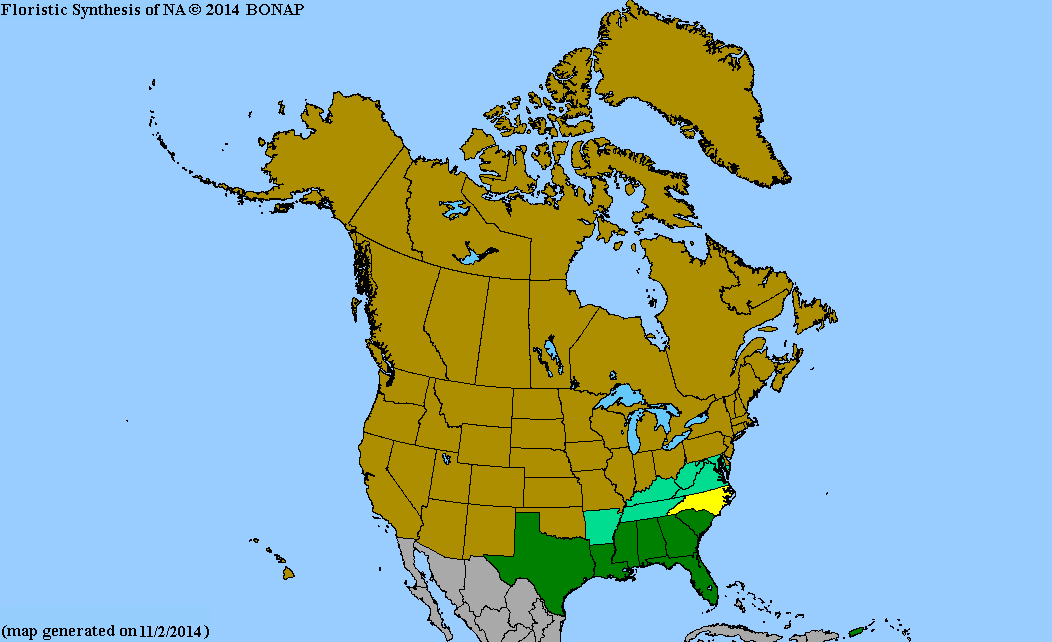
- 8 states, north to North Carolina, south to Florida and west to Texas Also recorded in 6 other states, outside its native range. See what is native in your state
List all 8
Alabama, Florida, Georgia, Louisiana, Mississippi, North Carolina, South Carolina and Texas
Southern magnolia is an evergreen tree of rich woods on the southern Coastal Plain, and the state tree of Mississippi. Its thick, leathery leaves stay on the tree about two years before they fall. Seedlings vary a great deal, some narrow and dense and others broad and open. It is a far larger cousin of the sweetbay magnolia we also grow, and breeders have crossed the two. With the lower limbs removed it makes a street tree, one that stands up to hurricanes. Give it a lawn of its own, where the low branches can sweep the ground and nothing needs to grow beneath it.
Size, growth and what to expect
Southern magnolia grows at a medium pace, about a foot and a half a year in our growth estimator. Open-grown wild trees have kept up that rate to age 50. Expect 60 to 80 feet with a crown 30 to 50 feet wide.
Creamy white flowers 8 to 12 inches across open from April to June, with a few more through the summer. Each lasts two to four days and smells strongly of lemon. The cone-like fruit ripens from September into late fall, and its red seeds hang on silky threads before they drop. Squirrels, opossums, quail, wild turkeys and songbirds eat them.
It grows wild on the Coastal Plain from southeastern North Carolina to central Florida and west to eastern Texas. Its home is rich woods near streams, hammocks and wooded dunes. Birds carry its seed from planted trees, and it now grows wild well north and inland of that range.
How to grow Southern Magnolia
Southern magnolia grows best in part shade or full sun, in a rich, moist, well-drained soil on the acid side. It takes clay, sand or a slightly alkaline soil, and it stands salt spray, but not standing water or long flooding. At the cold end of its range, give it shelter from winter wind and sun. Its roots spread far wider than the crown, and now and then they lift a curb or walk. Plant it 25 feet from a wall and more than 50 feet from overhead wires, and set trees 30 feet apart.
Saplings ship potted. Magnolia roots are thick and fleshy, and moved trees recover slowly, so plant in late winter or spring rather than in fall. Cut any roots that circle the root ball, since magnolias are prone to girdling roots. Dig a hole wider than the root ball and no deeper, and set the root flare about 2 inches above the surrounding soil. Put the native soil back in, and keep a wide ring of mulch clear of the trunk. Rub the red coat off the seed, and never let it dry. Sow it outdoors in fall, half an inch deep, under hardware cloth against mice. For spring, hold it damp in the refrigerator for two to three months first.
Water weekly through the first two summers, then in dry spells for three to five years, until the roots are established. Frost can kill young seedlings, so shelter them through their first winters. Deer browse it only moderately. Prune after it flowers, during the growing season, since cuts made while it is dormant heal poorly. Leave the low branches on if you can.
Each flower carries both male and female parts, and beetles and bees carry the pollen. Isolated trees are known to bear cones with seed, so a lone tree can set seed. Seed-grown trees can take ten years or more to flower, and the best seed crops come from about 25 years. Heavy infestations of magnolia scale can kill branches, and leaf spots are common but seldom serious. Old leaves drop in spring and fall and are slow to rot.
Heights and zones are typical ranges for the species in cultivation; local conditions and seed source shift them.
Sources (15)
- USDA Forest Service, Silvics of North America: Southern Magnolia, Outcalt 1990
- USDA Forest Service, Fire Effects Information System: Magnolia grandiflora, Coladonato 1991
- USDA Forest Service, Woody Plant Seed Manual (2008), Magnolia chapter, Barbour
- USDA NRCS Plant Guide: Southern Magnolia, Magnolia grandiflora, Sheahan 2015
- Flora of North America, vol. 3: Magnolia grandiflora
- NC State Extension Gardener Plant Toolbox: Magnolia grandiflora
- UF/IFAS Extension, ENH-530/ST371: Magnolia grandiflora, Southern Magnolia
- Missouri Botanical Garden Plant Finder: Magnolia grandiflora
- Lady Bird Johnson Wildflower Center: Magnolia grandiflora
- Trees and Shrubs Online (International Dendrology Society): Magnolia grandiflora, Sutton 2022
- Virginia Tech Dendrology: southern magnolia
- Heiser, C. B. 1962. Some observations on pollination and compatibility in Magnolia. Proceedings of the Indiana Academy of Science 72: 259-266
- NatureServe Explorer: Magnolia grandiflora
- North Carolina Natural Heritage Program: List of Rare Plant Species of North Carolina
- BONAP North American Plant Atlas (2014): Magnolia grandiflora state map
Check your site for it What to plant with it How big, how fast How much to water How to sow it How many for a crop When it flowers and fruits
- Ten planting mistakes that quietly kill trees
- Transplanting young trees: timing, water and protection
- Protecting young trees from voles, rabbits, deer and squirrels
- Six trees not to plant near a house, and what to plant instead
- Pruning at the branch collar, and when to make the cut
- Native trees and shrubs for butterflies and moths: host plants first, nectar second
Grows in the same conditions
Plants that share its sun and soil


More like this