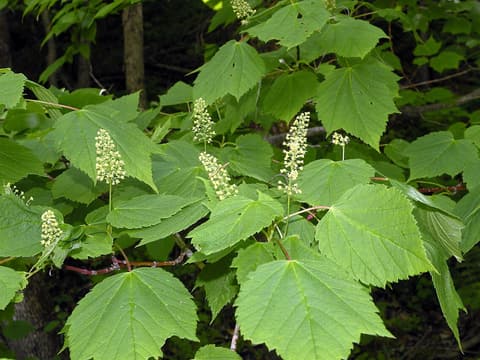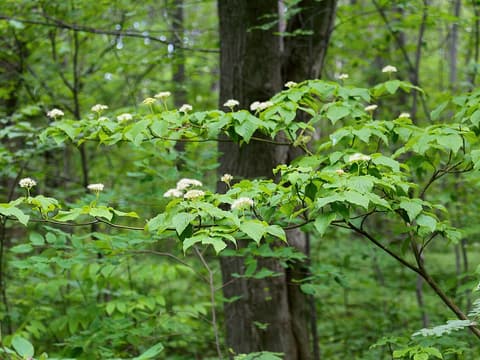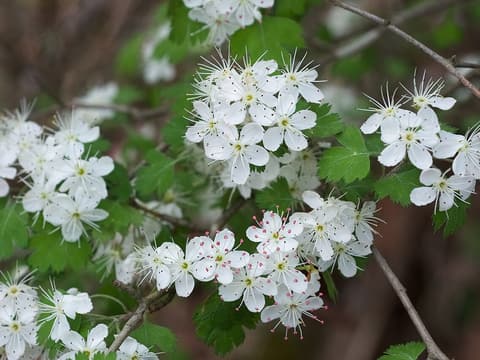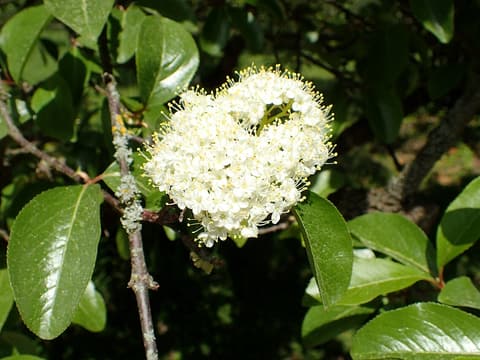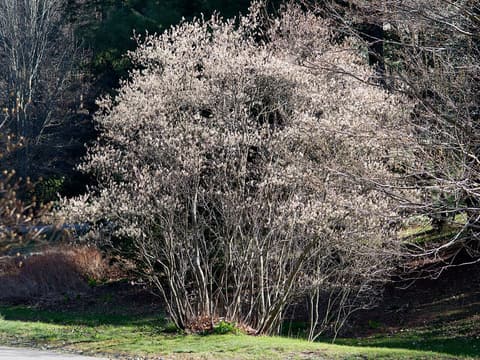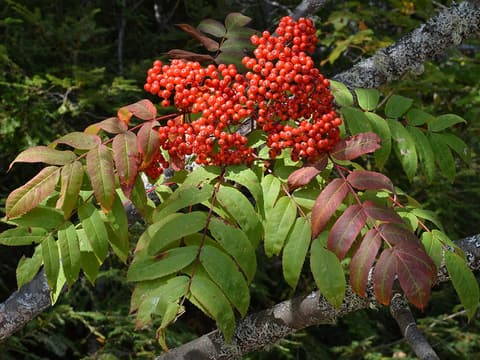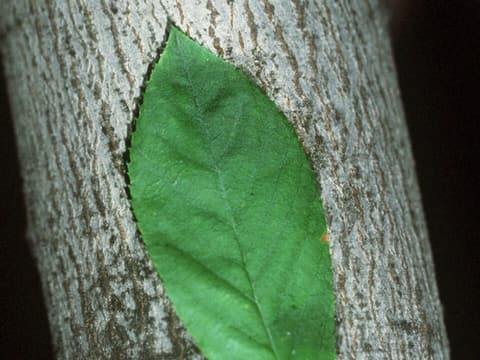
Allegheny Serviceberry
Amelanchier laevisSmall treeZones 3–915–25 ft
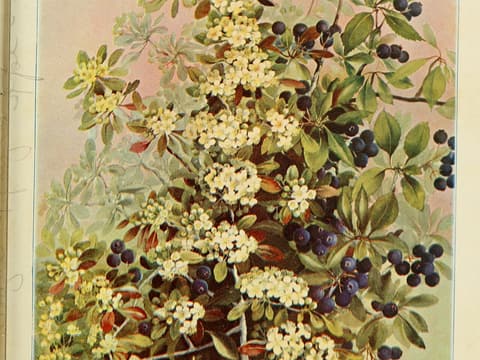
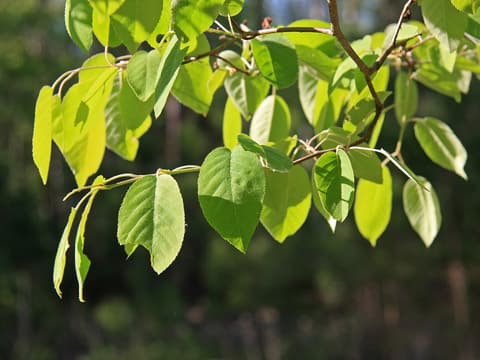
Bronze-purple new leaves under white flowers, and the sweetest fruit of the serviceberries.
Find the right native tree or shrub for your site by filtering on USDA hardiness zone, mature size, sun, soil moisture and what you want from each species. The list narrows as you set each filter. Every result is a tree or shrub we grow from seed, so anything it shows can be requested now and ordered once it is priced.
An example. Change any input for your own answer.
Best fits first: those that list your sun and soil outright, then those that only tolerate them.
Still a long list. or set a height limit.
Want one of these? Email me when it is ready to order. Notify me
Bronze-purple new leaves under white flowers, and the sweetest fruit of the serviceberries.
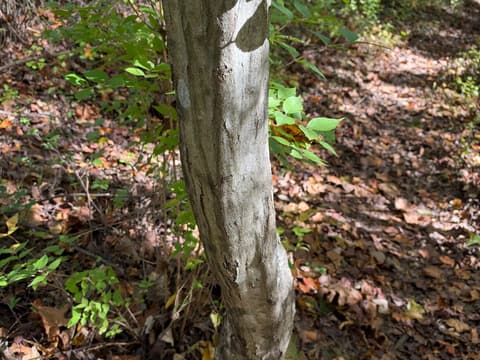
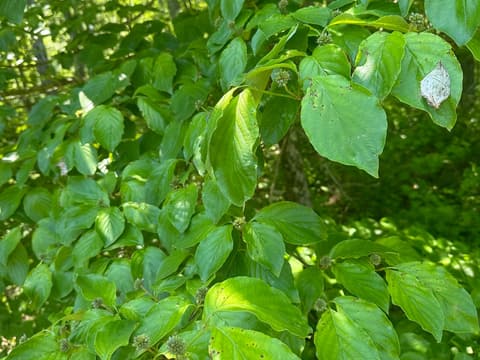
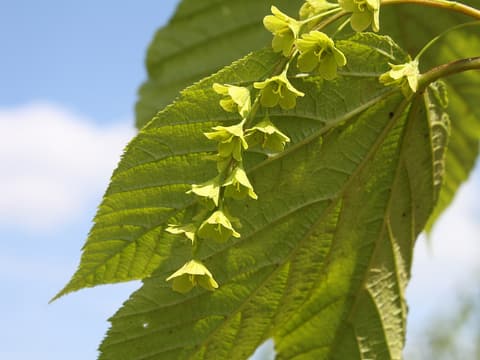
Smooth, sinewy gray trunks, orange-red fall color and complete comfort in shade and damp soil.
Flat white flower clusters, orange-red berries and brilliant fall color for cold, cool-summer regions.
A tall southern hawthorn whose fruit wears a waxy blue bloom in late summer, with white spring flowers and brilliant orange and red fall color.
A small maple with chalky white bark and fall color from yellow to deep red, at home in sun or deep shade and on dry, rocky ground.
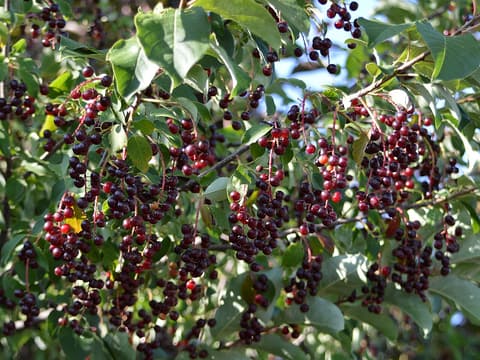
A tough, thicket-forming native cherry with fragrant white flower spikes in spring and dark red to black cherries for jelly, syrup and birds.
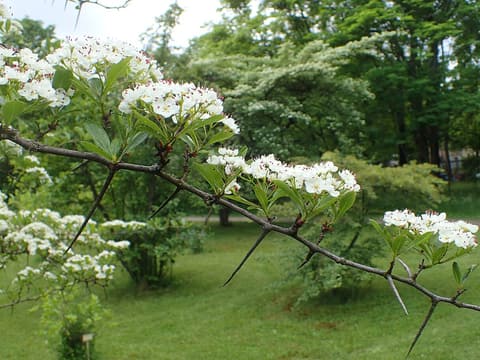
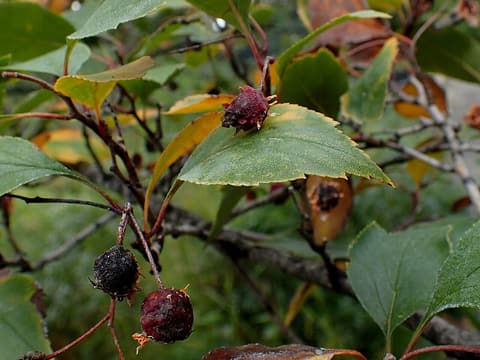
A flat-topped native hawthorn with thorns 2 to 3 inches long, white flowers in May and June, and dull red haws that often hang on until January.
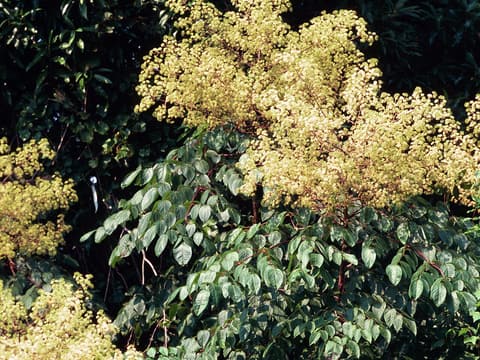
Two-foot heads of white flowers in August when little else blooms, then purple-black fruit for thrushes and waxwings, on a stem with leaves up to 5 feet long.
First to bloom in the woods, first fruit of summer, and orange-red fall color. A four-season small tree.
The classic spring understory tree: white bracts in April, red berries and burgundy leaves in fall.
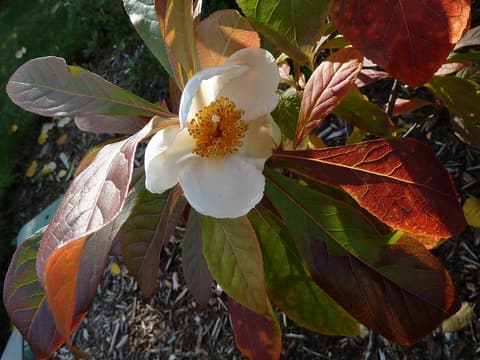
Extinct in the wild since 1803, the Franklin tree opens fragrant white flowers from July until frost among leaves that turn red in fall.
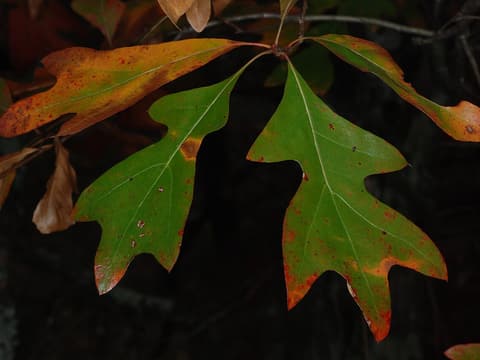
A rare red oak from the granite outcrops of Georgia and Alabama, with glossy lobed leaves that turn red in fall and hang on into winter.
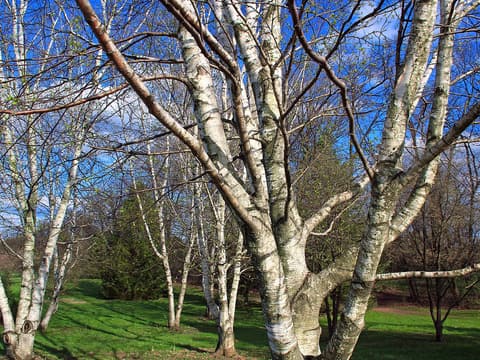
A fast, small birch with chalky white bark that does not peel, often growing as a clump of slender trunks on poor, sandy ground.
A southern bottomland hawthorn, often with few thorns, that bears white flowers in spring and small red fruit that holds on well into winter.
The smallest of the walnuts, a drought-hardy tree of Texas and the southern Plains with fine, narrow leaflets and marble-sized nuts.
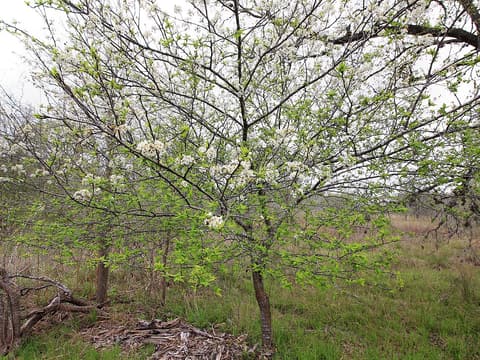
A single-trunked wild plum that does not sucker, with fragrant white bloom before the leaves and purple plums for eating fresh or for jelly.
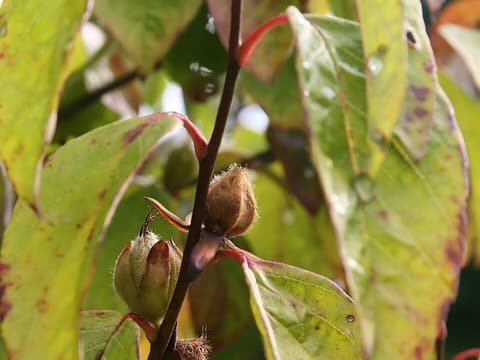
Large white camellia-like flowers in July on a rare Appalachian small tree with orange-red fall color.
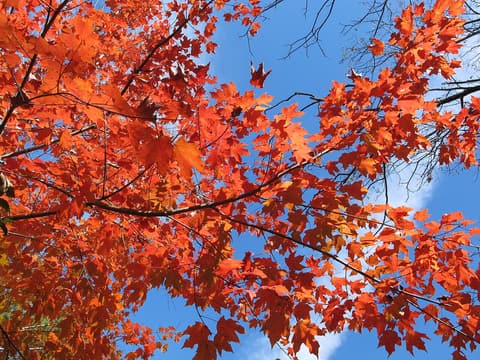
A shade-loving small maple with upright spikes of tiny flowers in early summer and leaves that turn yellow, orange and red in fall.
A small dogwood with branches held in flat tiers like a pagoda, cream flower clusters in late spring and blue-black fruit on red stalks.
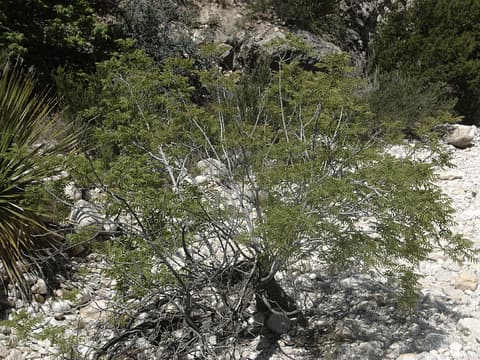
A small southern hawthorn with leaves cut fine as parsley, white flowers with red anthers in early spring, peeling bark and glossy scarlet fruit.
Glossy, leathery leaves that turn deep red in fall, white flower clusters in spring and sweet blue fruit, on a small southern tree.
A clump-forming serviceberry of swamps and wet thickets, with upright white flower clusters in early spring and sweet purple-black berries by June.
A small maple for deep, cool shade, with green bark striped in white and big three-lobed leaves that turn bright yellow in fall.
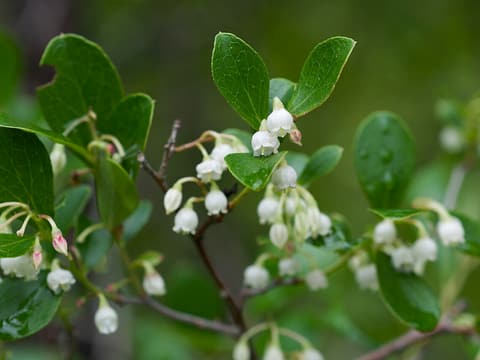
The tree of the blueberry genus, with fragrant white bells in spring, glossy leaves that redden in fall and black berries that hang into winter.
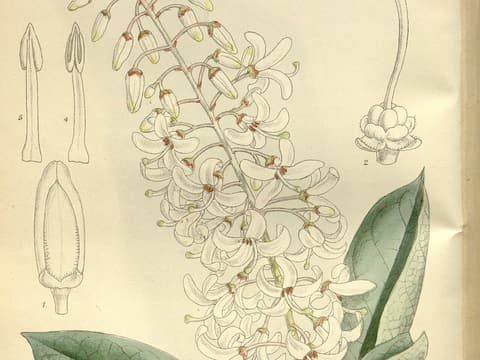
Upright plumes of white flowers in midsummer and bright red leaves in fall, on a rare small tree found wild only in Georgia.
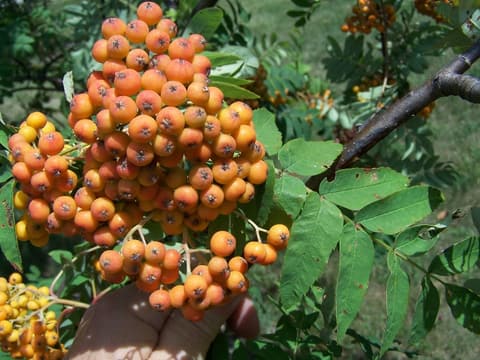
A small tree of the far North, with flat clusters of white flowers and heavy bunches of scarlet berries that bend the branches and feed birds.
The finder answers as you choose and has a height limit. The shop lists the same trees and shrubs, with a search box and a native state filter: see these in the shop.
The address follows your filters, so the link saves this list.
Narrow the list to 12 or fewer and we can email you when any of them is ready to order.
Be first
One email per plant you tick, when it is priced, and nothing else. Each carries a code for 10% off the plants in that order, not shipping or tax. Or ask, and we reply with what is ready now.
While you wait, ask what is ready now.
In the finder's list the best fit comes first: trees and shrubs whose pages list your sun and soil outright, then those that only tolerate them. Within each group, those with your zone in the middle of their range come before those at its edge.
No: the finder lists native trees and shrubs to plant, matched to your zone, size, sun and soil. To name a tree you found, use the tree identification tool, which names it from a photo of a leaf, the bark, a twig, fruit or a flower.
Set the finder's height limit to the room you have: it matches the top of each species' typical mature height. Our article on small trees for a small yard says how far each one goes from a house.
Within 15 feet of the wires, the International Society of Arboriculture says a tree should mature at 20 feet or lower. Virginia Cooperative Extension allows trees to 25 feet within 20 feet of the wires, and suggests large shrubs under 15 feet directly under them.
Divide the hedge's length by the spacing, round down and add one, since a straight row has one at each end: a 40-foot hedge at 4 feet apart takes 11. On its Hedge or screen list, the finder gives each species the spacing its own page sets.
The address carries every choice, so a copied link opens the same list. The page draws that list before any script runs, so a shared link and the page's Markdown copy show the trees and shrubs themselves. These are its keys:
Each tree's facts come from its own page: its zones, mature height, sun, soil, labels and hedge spacing. The 20 and 40 ft height steps are the International Society of Arboriculture's zones by overhead wires (Avoiding Tree & Utility Conflicts, 2021). Within 15 feet of distribution wires, the species chosen "should have a mature height of 20 feet (6 meters) or lower". From 15 to 50 feet out, it should have "a potential mature height of 40 feet (12 meters) or lower". The planting-site check follows the same zones. The 30 ft step is the small-tree ceiling the growth estimator uses for its generic small tree. Virginia Cooperative Extension draws the low zone wider, to 20 feet from the line, where "trees in the low zone should not exceed 25 feet at maturity" (Selecting and Managing Trees to Avoid Conflicts with Overhead Utility Lines, 2024). Under the line itself it suggests large shrubs with "a mature height of less than 15 feet", the limit's first step. A ZIP code's zone is the 2023 USDA Plant Hardiness Zone Map's ZIP code listing, prepared by the PRISM Climate Group at Oregon State University.
When nothing fits, the site is usually the problem rather than the catalog: tell us the zone, soil, sun and what the tree needs to do, and we will suggest something.
The address carries the tree finder's inputs, so a link opens it filled in, and Copy link on a result writes one: zone (a whole number from 2 to 10), size (shrub, small-tree, medium-tree or large-tree), height (a mature height to stay under: 15, 20, 30, 40 or 60 feet, or 60-plus), sun (full, part or shade), moisture (dry, average or wet), want (one or more of flowers, fall-color, winter-interest, wildlife, honey, edible, evergreen, rare, early-bearing, screening, nitrogen-fixing, salt, street-tree, erosion-control, shade, wet-tolerant or drought, joined by commas), hedge (a hedge or screen length in feet, for a plant count), sort (featured, name, price-asc, price-desc, height, hardy or fast), compare (the slugs of the plants to compare, joined by commas). For example, /tools/tree-finder/?zone=6&size=small-tree&sun=part&moisture=average&want=fall-color.