Hawaii: none of the trees and shrubs we grow is native there
We ship within the contiguous United States only, so we cannot send trees or shrubs to Hawaii.
None of our trees or shrubs is native to Hawaii
The USDA PLANTS Database records 2 of our species there, both introduced. Most of what we grow is eastern. The tree finder still shows what suits your zone.
Recorded in Hawaii
Introduced, not native
PLANTS records these growing wild in Hawaii and lists them as introduced to the region.
Recorded in Hawaii
4 we do not grow, growing wild here but not native
The USDA PLANTS Database records these growing wild in Hawaii, beyond the native range their records give, so they count here as introduced, not native. We do not grow them; each name opens a page of what our tools say about it.
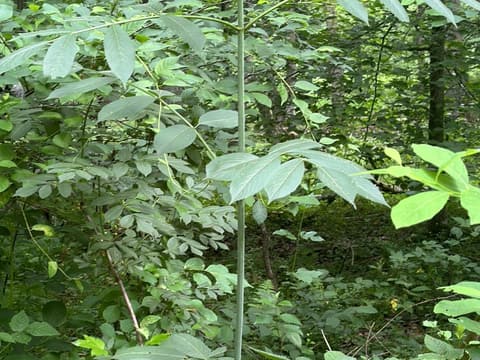
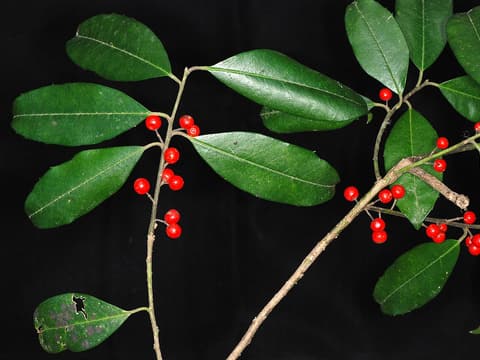
Honey Mesquite Prosopis glandulosa (introduced)Velvet Mesquite Prosopis velutina (introduced)Wax Myrtle Morella cerifera (introduced)White Ash Fraxinus americana (introduced)
442 of our trees and shrubs are not recorded in Hawaii
Not recorded growing wild there by PLANTS. Many still grow well there when planted: hardiness, soil and sun decide that, not the state line. Every tree and shrub we grow, A to Z gives each one's zones, and the tree finder narrows them to your zone, sun and soil.
Hawaii's native trees and shrubs are a flora of their own, different from the eastern one we grow. Native Plants Hawaiʻi, a knowledgebase kept at the University of Hawaiʻi's Leeward Community College, profiles native plants with their Hawaiian names, growing needs and natural ranges. Hawaii's Division of Forestry and Wildlife sells native and noninvasive tree seedlings from its state nurseries. Orders are taken online on Maui and Hawaiʻi Island and through the local branch office on the other islands.
A tree or shrub shipped into Hawaii may fall under the state's own quarantine rules. The National Plant Board publishes each state's summary for shippers, and our terms ask you to comply with your state's plant-import rules. For the spot itself, the planting-site check asks about its zone, sun and soil.
More about this tool
How the lists are made
A tree or shrub is listed when the USDA PLANTS Database records it growing wild in the state. It counts as native there unless PLANTS lists it as introduced, or a narrower native range is on record. The range records come from the Forest Service's Silvics of North America, NatureServe Explorer, the NRCS plant guides or the state floras. Then it is listed as introduced, or apart under its page's own range sentence. The ten rules in full, their sources and what a state line can and cannot tell you are on the native trees by state page. Each plant page states its native range in words. Every species we grow, with the states where it is native, is in the native range table, A to Z.
Sources: USDA, NRCS. The PLANTS Database (https://plants.usda.gov), state records read between 2026-09-23 and 2026-11-09. National Plant Data Team, Greensboro, NC USA. NatureServe. 2026. NatureServe Explorer (https://explorer.natureserve.org), state records read on 2026-10-05. NatureServe, Arlington, Virginia.
The address carries the native trees by state tool's inputs, so a link opens it filled in, and Copy link on a result writes one: state (a state's two letters, such as OH), sort (featured, name, price-asc, price-desc, height, hardy or fast). For example, /tools/native/?state=MD.