Photo: Gilles Ayotte, CC BY-SA 4.0 · Wikimedia Commons
Clammy Locust
Robinia viscosa
Also called Robinia glutinosa.
A rare southern Appalachian locust with clusters of pale rose flowers in spring and sticky glands on its twigs, leaf stalks and pods.
Clammy Locust at a glance
- Type
- Small tree
- Mature height
- 30–40 ft
- USDA zones
- 3–8
- Growth rate
- Medium
- Sun
- Full, Part
- Soil moisture
- Dry, Average
- Grows wild in
- The Appalachians, sandy barrens, old fields and edges
- Native range
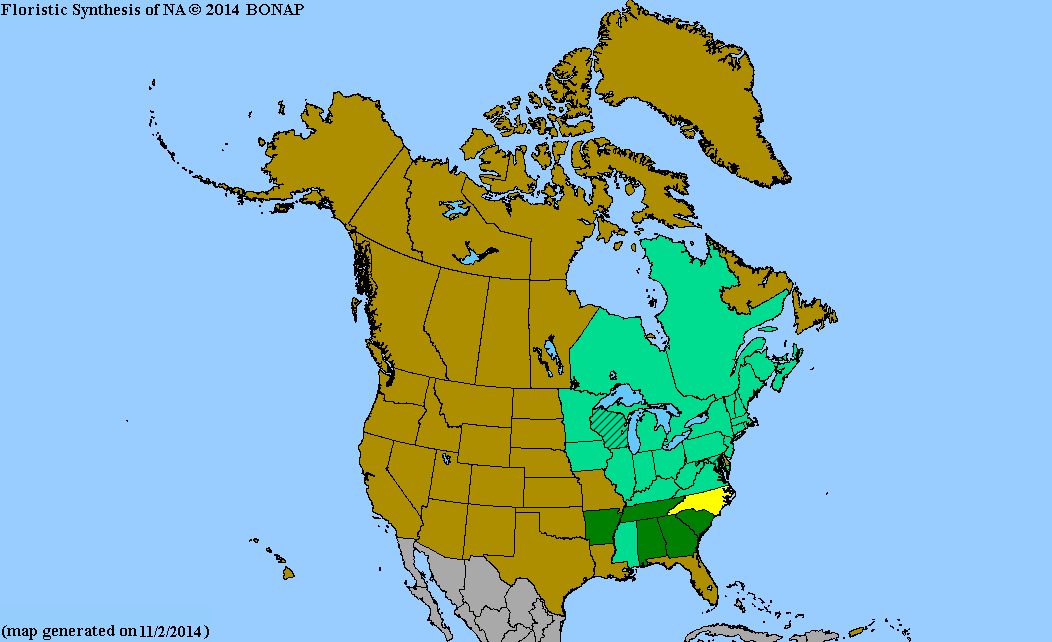
- Alabama, Georgia, North Carolina, South Carolina and Tennessee Also recorded in 19 other states, outside its native range. See what is native in your state
Clammy locust is a small, pink-flowered cousin of black locust, named for the sticky glands on its young twigs, leaf stalks and pods. William Bartram found it in 1776, and it reached France in 1791. From then until 1882 no one found it growing wild, and it was once counted among the rarest American trees. Plant it for bees on a sunny bank or at a wood's edge, where its thicket has room to spread.
Size, growth and what to expect
Clammy locust is a smaller, more stunted tree than black locust. Our growth estimator gives it the medium rate, about a foot and a half a year, as a default. Expect 30 to 40 feet, though many stay shorter.
Clusters of 10 to 15 flowers, pale rose with a yellow blotch and no scent, open from March into June. They are of special value to native bees and honey bees.
NatureServe ranks it vulnerable. It is probably native only to the mountains of western North Carolina and Tennessee, and perhaps nearby states, at 500 to 4,000 feet. North Carolina tracks it as significantly rare throughout its range. Planted for its flowers, it has escaped and spread far beyond that range, north to Nova Scotia and west to Wisconsin.
How to grow Clammy Locust
Clammy locust wants full sun or light shade, like the open woods, clearings and sandy ridges where it grows wild. Give it average to dry soil. Locusts grow very well on limy soil. It suckers from the roots into thickets, so give it room. Plant it 15 feet from a wall and at least 15 feet from overhead wires, and set trees 15 feet apart.
Saplings ship bare-root or potted. Plant them dormant, from leaf fall until bud swell, in a hole wider than the roots and no deeper. Set the root flare at the soil line, put the native soil back in, and keep the mulch clear of the trunk. The seed has a hard coat, so drop it into water just off the boil and let it soak overnight as it cools. Sow the swollen seed in spring, a quarter inch deep.
Water weekly through the first summer. Guard young trees against rabbits and deer with a tube or cage for the first two winters. Mow or cut the suckers wherever you do not want the thicket to spread.
Each flower carries both male and female parts, and bees carry the pollen. Its close relative black locust sets about half as much seed with its own pollen as with another tree's, so a second clammy locust nearby should improve the crop. The pods, 2 to 3½ inches long and sticky with glands, ripen in fall.
Heights and zones are typical ranges for the species in cultivation; local conditions and seed source shift them.
Sources (8)
- Trees and Shrubs Online: Robinia viscosa, from Bean
- Lady Bird Johnson Wildflower Center: Robinia viscosa
- USDA Forest Service, Woody Plant Seed Manual: Robinia chapter (Olson and Karrfalt)
- NatureServe Explorer: Robinia viscosa
- Native Plant Trust, Go Botany: Robinia viscosa
- North Carolina Natural Heritage Program: List of Rare Plant Species of North Carolina, 2024, revised 11/03/2025
- BONAP, North American Plant Atlas, state map for Robinia viscosa
- USDA ARS and the PRISM Climate Group, 2023 Plant Hardiness Zone Map ZIP code listing
Check your site for it What to plant with it How big, how fast How much to water How to sow it How many for a crop When it flowers and fruits
- Ten planting mistakes that quietly kill trees
- Transplanting young trees: timing, water and protection
- Protecting young trees from voles, rabbits, deer and squirrels
- Multistem or single stem? Sometimes the trunk is hiding the answer
- Leaf litter, not wood chips, under the canopy
- Native trees and shrubs for butterflies and moths: host plants first, nectar second
Grows in the same conditions
Plants that share its sun and soil


More like this