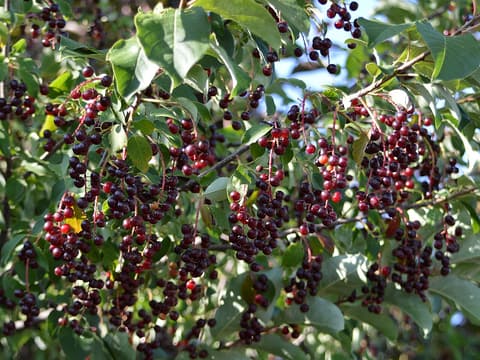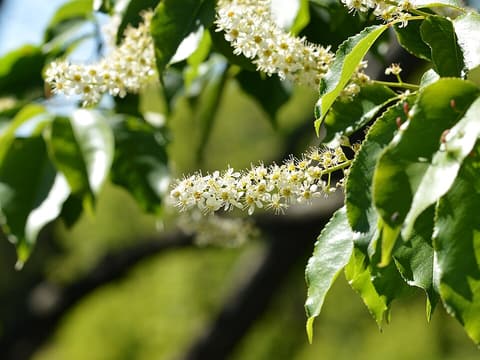
Black Cherry
Prunus serotina Large tree Zones 2–9 50–80 ft
Shares rich moist slopes and dry uplands in the wild.

A native we do not grow
Chrysolepis chrysophylla. Large tree, 16 to 100 feet, zones 7 to 9; full sun or part shade; dry or average ground.
We do not grow giant chinquapin, and it is not in our shop. This page gathers what our tools say about it and the natives we grow for the same ground.
| Other names | Golden chinquapin, western chinquapin, giant chinkapin, golden chinkapin, western chinkapin, giant golden chinkapin, giant evergreen-chinkapin, goldenleaf chestnut, golden chestnut |
|---|---|
| Form | Large tree |
| Height, feet | 16 to 100; up to 130 in its native stands |
| Spread, feet | Up to 50 |
| Zones | 7 to 9 |
| Sun | Full sun or part shade |
| Soil moisture | Dry or average ground |
| Growth | Slow |
| Leaves | Evergreen |
| Traits | Wildlife value, edible |
| Flowers | April to August |
| Fruit | Nuts, August to October |
| Pollination | Not known whether one bears alone |
| Lifespan | Lives up to 500 years. |
| Black walnut | Not named on the Morton Arboretum's lists |
| Ground | Rich moist slopes, rocky ground, the forest understory and dry uplands |
| Native in | 3 states |
Giant chinquapin is native in 3 states: California, Oregon and Washington. The states are the USDA PLANTS Database's records, with the native range read from the Fire Effects Information System.
Its growth rate, its lifespan and its state champions are in the growth rate table, the lifespan table and the state champion table.
These trees we grow share the most of giant chinquapin's natural communities in the wild, by the companion species tool's rules.
Shares rich moist slopes and dry uplands in the wild.
Its figures come from Silvics of North America, the Forest Service's Fire Effects Information System, the Woody Plant Seed Manual, the USDA PLANTS Database, Oregon State University's Landscape Plants, the Wildflower Center, the Burke Herbarium, Calscape and Cal Poly's SelecTree.