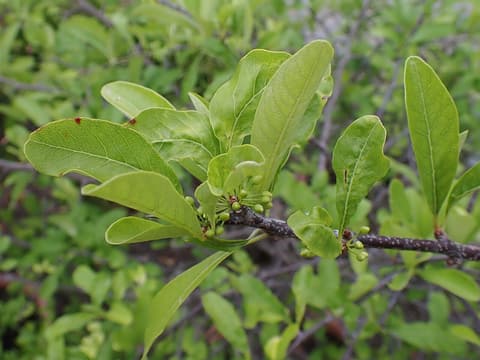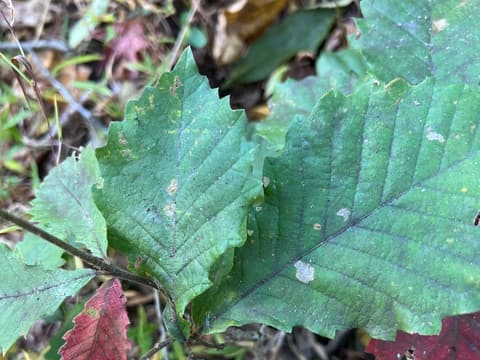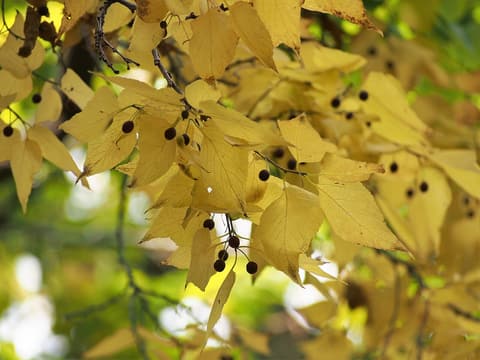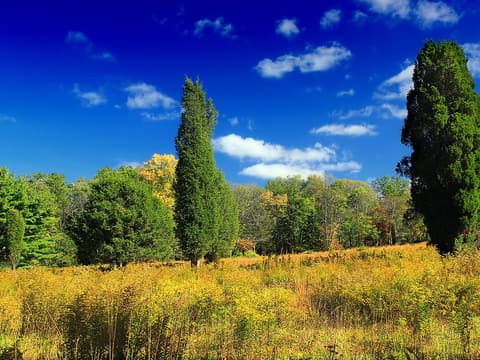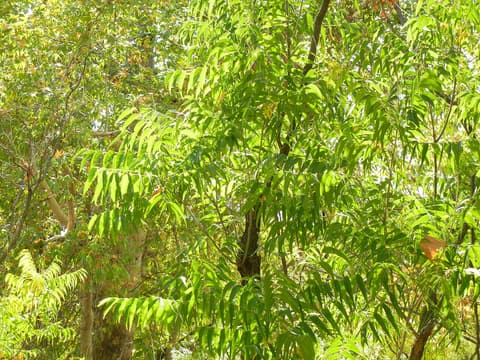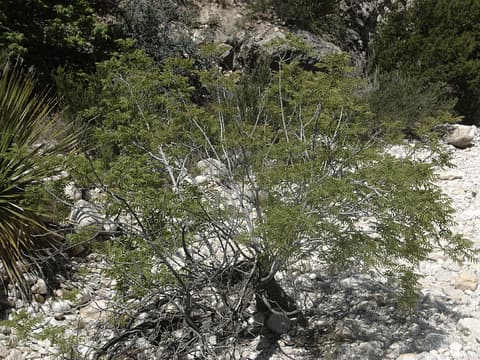
Little Walnut
Juglans microcarpa Small tree Zones 5–9 20–30 ft
Shares rocky ground and dry uplands in the wild.

A native we do not grow
Pinus aristata. Small tree, 8 to 20 feet where planted, zones 3 to 7; full sun; dry or average ground.
We do not grow Rocky Mountain bristlecone pine, and it is not in our shop. This page gathers what our tools say about it and the natives we grow for the same ground.
| Other names | Colorado bristlecone pine, Interior bristlecone pine |
|---|---|
| Form | Small tree |
| Height, feet | 8 to 20 where planted; up to 76 in its native stands |
| Spread, feet | Up to 15 |
| Zones | 3 to 7 |
| Sun | Full sun |
| Soil moisture | Dry or average ground |
| Growth | Slow |
| Leaves | Evergreen |
| Traits | Wildlife value, erosion control |
| Pollen | June to August |
| Fruit | Cones, September to October |
| First crop | 10 to 40 years |
| Pollination | Not known whether one bears alone |
| Lifespan | The oldest tree dated by its rings reached 2,435 years. Only a tiny share of trees has ever been ring-counted or cross-dated. |
| Black walnut | Not named on the Morton Arboretum's lists |
| Ground | Rocky ground and dry uplands |
| Native in | 3 states |
Rocky Mountain bristlecone pine is native in 3 states: Arizona, Colorado and New Mexico. The states are the USDA PLANTS Database's records, with the native range read from the Fire Effects Information System, the Gymnosperm Database and Oregon State University.
Its growth rate, its lifespan and its state champions are in the growth rate table, the lifespan table and the state champion table.
These trees we grow share the most of Rocky Mountain bristlecone pine's natural communities in the wild, by the companion species tool's rules.
Shares rocky ground and dry uplands in the wild.
Shares rocky ground and dry uplands in the wild.
Shares rocky ground and dry uplands in the wild.
Shares rocky ground and dry uplands in the wild.
Shares rocky ground and dry uplands in the wild.
Shares rocky ground and dry uplands in the wild.
Its figures come from the Forest Service's Fire Effects Information System, the Woody Plant Seed Manual, the USDA PLANTS Database, the Gymnosperm Database, NC State Extension, Oregon State University's Landscape Plants, Colorado State University Extension and Rocky Mountain Tree-Ring Research.