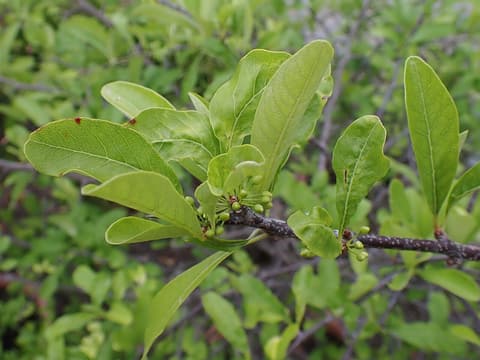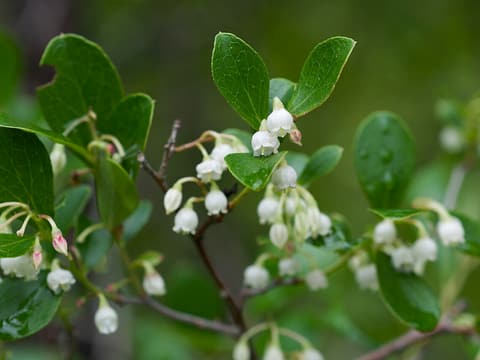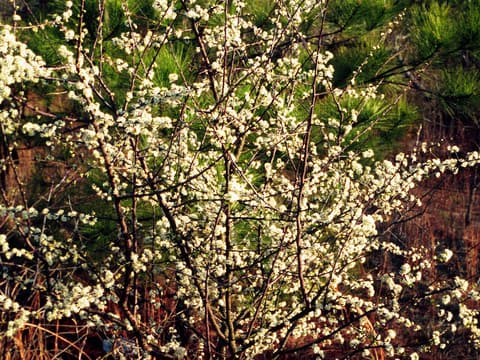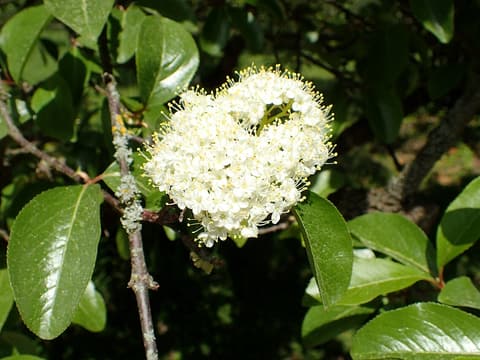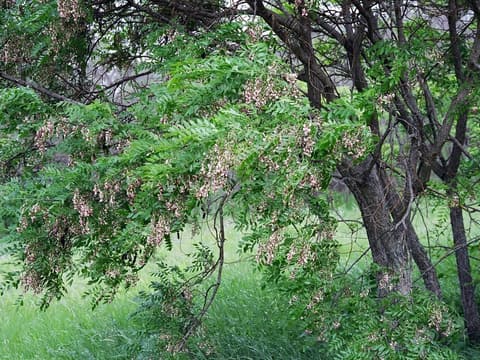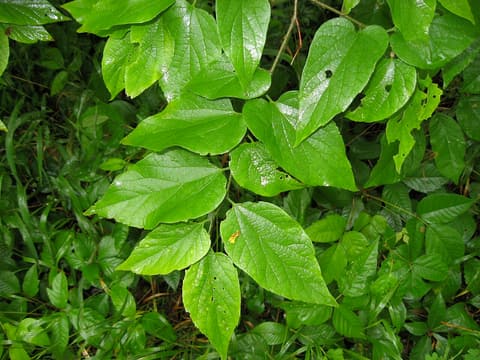
Dwarf Hackberry
Celtis tenuifolia Small tree Zones 4–9 15–30 ft
Shares rocky ground, dry uplands, sandy barrens, old fields and edges in the wild.

A native we do not grow
Juniperus scopulorum. Small tree, 20 to 40 feet where planted, zones 3 to 7; full sun or part shade; dry or average ground.
We do not grow Rocky Mountain juniper, and it is not in our shop. This page gathers what our tools say about it and the natives we grow for the same ground.
| Other names | Rocky Mountain cedar, river juniper, weeping juniper, seaside juniper, Colorado red cedar, mountain red cedar, Rocky Mountain red cedar |
|---|---|
| Form | Small tree |
| Height, feet | 20 to 40 where planted; up to 66 in its native stands |
| Spread, feet | Up to 20 |
| Zones | 3 to 7 |
| Sun | Full sun or part shade |
| Soil moisture | Dry or average ground |
| Growth | Slow |
| Leaves | Evergreen |
| Traits | Wildlife value, hedge or screen, erosion control |
| Pollen | April to June |
| Fruit | Berries, September to April |
| First crop | 10 to 20 years (most seed from 50 to 200) |
| Pollination | Separate male and female trees. Male and female cones grow on separate trees, so a female tree bears berries only with a male nearby. |
| Lifespan | Usually lives 250 to 300 years or more and is reputed to reach 3,000, and the oldest dated one reached 1,889. Only a tiny share of trees has ever been ring-counted or cross-dated. |
| Planting season | Spring. The NRCS plant guide says junipers move easily in early spring, before new growth starts. |
| Black walnut | Not named on the Morton Arboretum's lists |
| Ground | Rocky ground, dry uplands, sandy barrens, old fields and edges |
| Native in | 15 states |
Rocky Mountain juniper is native in 15 states: Arizona, Colorado, Idaho, Montana, Nebraska, Nevada, New Mexico, North Dakota, Oklahoma, Oregon, South Dakota, Texas, Utah, Washington and Wyoming. The states are the USDA PLANTS Database's records, with the native range read from the Fire Effects Information System, the NRCS plant guide, Silvics of North America and the Kansas Forest Service. The USDA PLANTS Database also records it growing wild beyond that range in Kansas, where it is naturalized, not native.
These trees we grow share the most of Rocky Mountain juniper's natural communities in the wild, by the companion species tool's rules.
Shares rocky ground, dry uplands, sandy barrens, old fields and edges in the wild.
Shares rocky ground, dry uplands, sandy barrens, old fields and edges in the wild.
Shares rocky ground, dry uplands, sandy barrens, old fields and edges in the wild.
Shares dry uplands, sandy barrens, old fields and edges in the wild.
Shares rocky ground, dry uplands, old fields and edges in the wild.
Shares rocky ground, dry uplands, old fields and edges in the wild.
Its figures come from Silvics of North America, the Forest Service's Fire Effects Information System, the Woody Plant Seed Manual, the USDA PLANTS Database, NC State Extension, the Wildflower Center, Cal Poly's SelecTree, Oregon State University's Landscape Plants, Utah State University Extension, Kansas State University's Kansas Forest Service, NDSU Extension, the Gymnosperm Database and Rocky Mountain Tree-Ring Research.