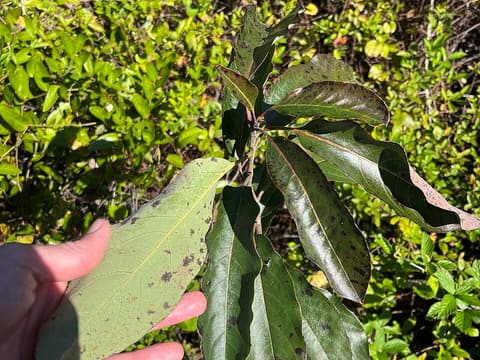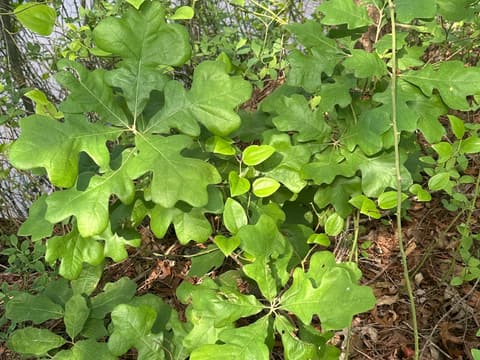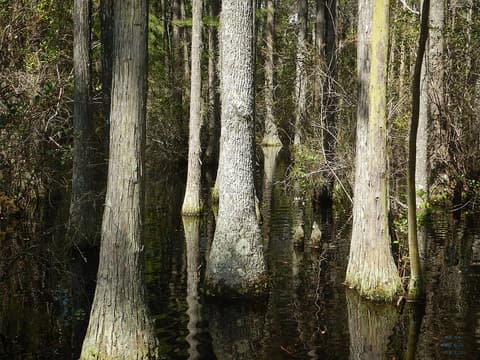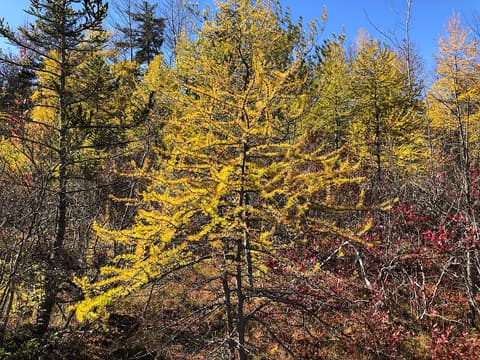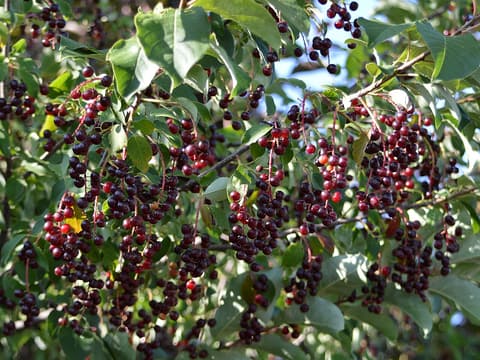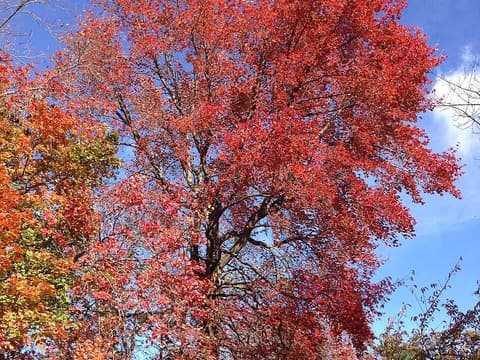
Black Gum (Tupelo)
Nyssa sylvatica Large tree Zones 4–9 40–70 ft
Needs only 20 ft from a wall. Also a large tree with fall color and wildlife value.
Try black gum in part shade on wet ground, white oak in full sun or spicebush in shade.
Pick a species and describe the spot: your USDA zone, the sun it gets, how wet the soil stays, the distance to the nearest power line and the distance to the nearest wall. We compare that with what the species is known to take and give a plain verdict: thrive, struggle or fail, along with a few others that would thrive in the same spot. The link carries your answers, so you can send it to whoever is digging the hole.
0 of 1 condition fits. The problem is room to spread.
Judged on the distance to the wall alone. Add the zone, the sun and the soil moisture for a full verdict.
Large tree, 50–80 ft, zones 3–9; full sun or part shade; dry or average soil.
See White Oak in the catalog| Condition | Your site | Verdict | Why, and what helps |
|---|---|---|---|
| Room to spread | 20 ft from a wall | Marginal | Its own page puts it 40 ft from a wall; at 20 ft, branches will meet the wall and roof. Plant it a few more feet out, or plan on pruning the wall side as it grows. Roots are rarely the problem people fear; branches on the roof are. More on how far from a house. The planting-distance tool draws it to scale. |
Better fits
Needs only 20 ft from a wall. Also a large tree with fall color and wildlife value.
Needs only 20 ft from a wall. Also has fruit or nuts to eat and fall color.
Needs only 20 ft from a wall. Also has fall color and wildlife value.
Needs only 20 ft from a wall. Also a large tree with fall color and wildlife value.
Needs only 20 ft from a wall. Also a large tree with fall color and wildlife value.
Needs only 15 ft from a wall. Also has fruit or nuts to eat and fall color.
The most like White Oak in size, height and traits come first, with the plants of the shop's opening page ahead of others about as alike. Try the tree finder for the full list.
Be first
For White Oak, Black Gum (Tupelo), American Persimmon, Sassafras, Swamp Tupelo, Tamarack, Chokecherry: one email per plant when it is priced or back in stock, and nothing else. Each carries a code for 10% off the plants in that order, not shipping or tax.
The wire zones are the International Society of Arboriculture's, from its brochure Avoiding Tree & Utility Conflicts (2021). "The low zone extends 15 feet (4.5 meters) on either side of distribution wires", and a tree there "should have a mature height of 20 feet (6 meters) or lower". "The medium zone extends between 15 and 50 feet (4.5 and 15 meters) from distribution lines", for a tree "with a potential mature height of 40 feet (12 meters) or lower". "The tall zone is at least 50 feet (15 meters) away from distribution lines." A spot exactly 15 feet out counts as the medium zone, as on the plant pages that say to plant a tree 15 feet from overhead wires. The wall rule is the University of Maryland Extension's, from Planting Trees in Our Changing Climate: "Plant small trees a minimum of 15’ away from the foundation", or half the mature canopy. The same page allows a taller tree under wires: "Choose trees that are 25’ tall or lower at maturity." The check follows the stricter ISA figure of 20 feet. Each species' zones, light and soil moisture are those shown on its own page. Native street trees covers the strip and the wires, and Small native trees and large shrubs for a small yard covers placing a tree near a house.
What this cannot see: soil pH, salt, wind, compaction, drainage below the surface, and the difference between a healthy young tree and a stressed one. A wet answer for a spot that only puddles in spring is too harsh, and a full-sun answer for a spot shaded by a house after two in the afternoon is too generous. When in doubt, run University of Maryland Extension's drainage test: dig a hole 12 inches deep and about 12 inches across, fill it with water, and the next day fill it again. All of the water should drain out within eight hours. More than 4 inches an hour means the ground is probably very sandy, and less than an inch an hour is too slow. For a spot that gets road salt or salt spray, start from the trees and shrubs labelled Salt tolerant.
The address carries the planting-site check's inputs, so a link opens it filled in, and Copy link on a result writes one: species (a plant's slug, the last part of its page's address, such as white-oak, or the id of a native we do not grow from its reference list), zone (a whole number from 2 to 10), sun (full, part or shade), moisture (dry, average or wet), distance (the feet from a house or wall, 0 to 200), line (the feet from overhead wires, 0 to 500), sort (featured, name, price-asc, price-desc, height, hardy or fast, for the better fits). For example, /tools/site-check/?species=white-oak&zone=6&sun=part&moisture=average&distance=40.