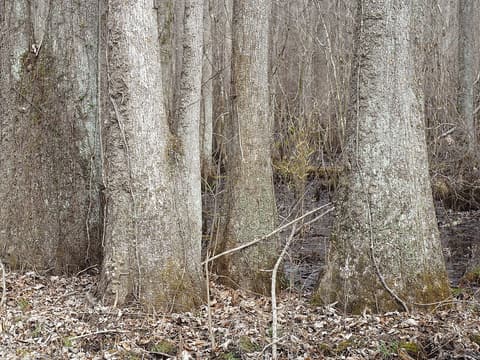
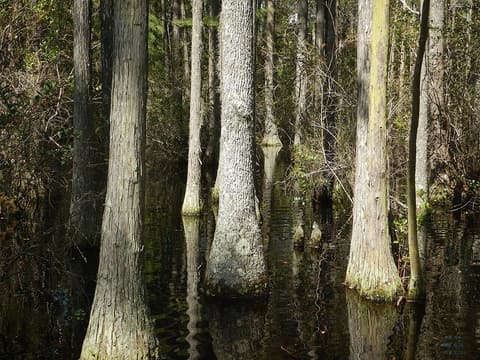
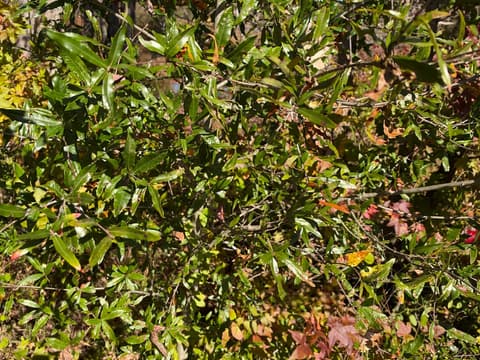
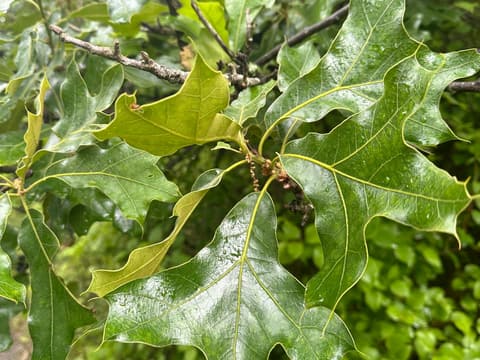
Photo: Blue Whale Trees
Black Gum (Tupelo)
Scientific name: Nyssa sylvatica
Also called black tupelo, sour gum, pepperidge.
Blazing scarlet fall color, superb bee forage, and one of the longest-lived hardwoods in the East.
Be first when black gum is priced
Saplings ship bare-root, usually 12 to 18 inches tall, in the dormant season, and their height and age are stated here with the price, once available.
We grow it as saplings and seed. One email when it is listed with prices, and nothing else. Or ask, and we reply with what is ready now. Live plants ship February to May.
Limited timeSign up now and get 10% off when it is ready.
Share: copy link
Black Gum at a glance
Fall color, Honey tree, Wildlife value, Tolerates wet soil, Street tree, Erosion control, Salt tolerant
- Type
- Large tree
- Mature height
- 40–70 ft
- USDA zones
- 4–9
- Growth rate
- Slow
- Flowers
- May to June
- Fruit
- Berries, September to October
- First crop
- 2 years from sprouts
- Mature spread
- 35 ft
- Sun
- Full, Part
- Soil moisture
- Dry, Average, Wet
- Grows wild in
- Floodplain forests, dry uplands, swamps and wet flats, old fields and edges
- Native range
- 31 states and the District of Columbia, north to Maine, south to Florida and west to Texas Also recorded, not native, in Kansas. See what is native in your state
List all 32
Alabama, Arkansas, Connecticut, Delaware, Florida, Georgia, Illinois, Indiana, Kentucky, Louisiana, Maine, Maryland, Massachusetts, Michigan, Mississippi, Missouri, New Hampshire, New Jersey, New York, North Carolina, Ohio, Oklahoma, Pennsylvania, Rhode Island, South Carolina, Tennessee, Texas, Vermont, Virginia, West Virginia, Wisconsin and the District of Columbia
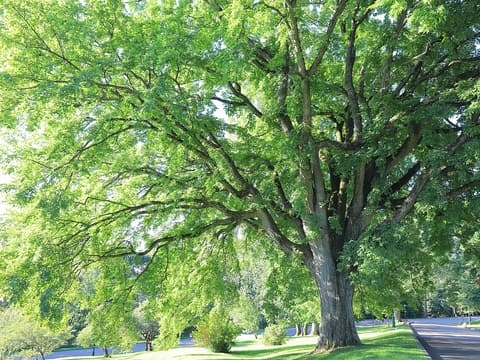
Black gum turns color earlier and more brilliantly than almost any other native tree, and its small spring flowers feed bees for weeks. Cross-dated trees in New England have exceeded 600 years. Slow to start, worth the wait. As a street tree it stands the wet, compacted clay found in many cities, even in a sidewalk tree pit. Perfect as the one shade tree on a lawn, chosen for fall color over fast growth.
Size, growth and what to expect
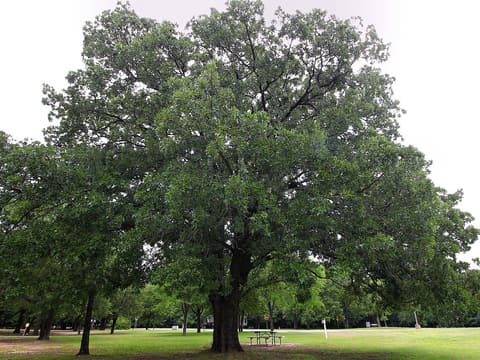
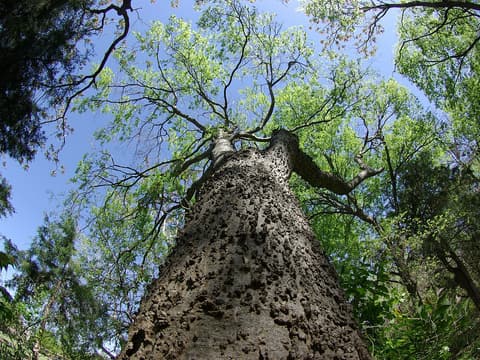
Patience is the first thing to expect from black gum. A young tree stands 12 to 15 feet after about ten years, and our growth estimator models it at about a foot a year in youth. Forest trees reach 40 to 70 feet with a trunk 1 to 2 feet through and a crown 20 to 35 feet wide. Trees can live more than 600 years, and one in New Hampshire was dated to 679. Most begin to decline at 80 to 150 years.
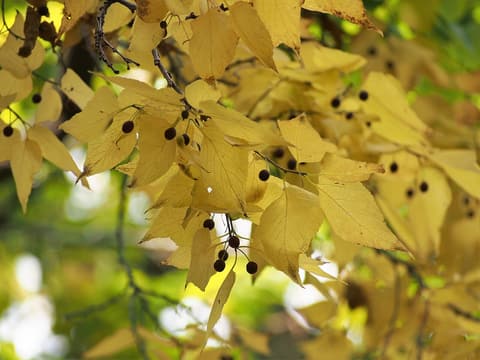
No bearing age is on record for black gum itself; a sprouting swamp tupelo bears in two years. Heavy seed comes once the trunk is about 8 inches through, and the tupelos fruit abundantly every year. Small greenish flowers open in May and June and feed bees well. The blue-black fruit, three eighths to half an inch long and quite sour, ripens in September and October. Migrating thrushes, wild turkeys, black bears and foxes eat it.
It grows wild from Maine and southern Ontario west to Michigan and Missouri and south to eastern Texas and Florida, in wet bottoms and on dry rocky slopes alike. The long taproot rules out moving an older tree.
How to grow Black Gum
Black gum takes full sun or part shade on almost any ground: wet bottomland, dry ridges, heavy clay. It prefers acid soil and turns yellow on limestone. At full size it should stand 20 feet from a house and clear of overhead wires. Set trees 20 feet apart.
Tupelo grows a taproot and resents being moved, so plant it small and in spring. Bare-root saplings go into a hole twice the width of the roots and deep enough for the taproot, root flare at grade, backfilled with the same soil. Mulch a wide ring three inches deep, kept off the trunk. Sow seed in fall an inch deep under hardware cloth; it germinates the next spring.
Black gum is slow to establish, so water deeply once a week through the first summer and during dry spells for two more. Deer browse the tips, so use a tube or cage for three or four years. There is no need to prune it.
Most trees are male or female, so only some seedlings will fruit. Color begins in early September, well before the maples.
Heights and zones are typical ranges for the species in cultivation; local conditions and seed source shift them.
Sources (14)
- USDA Forest Service, Silvics of North America: black tupelo
- NC State Extension Gardener Plant Toolbox: Nyssa sylvatica
- Missouri Botanical Garden Plant Finder: Nyssa sylvatica
- USDA Forest Service, Woody Plant Seed Manual: Nyssa chapter
- Eastern OLDLIST of maximum tree ages (Pederson), Virginia Tech Dendrology: Nyssa sylvatica
- USDA Fire Effects Information System: Nyssa sylvatica, N. biflora
- USDA NRCS Plant Guide: blackgum, Nyssa sylvatica
- Lady Bird Johnson Wildflower Center: Nyssa sylvatica
- Flora of North America, vol. 12: Nyssa sylvatica
- Trees and Shrubs Online: Nyssa sylvatica
- The Morton Arboretum: tupelo
- USDA NRCS PLANTS Database: Nyssa sylvatica
- USDA NRCS Plant Fact Sheet: blackgum, Nyssa sylvatica
- University of Illinois Extension, Technical Forestry Bulletin NRES-502: Maximum Tree Age & Longevity, J. C. Hayek, updated May 2019
Plan the planting
Check your site for it What to plant with it How big, how fast How much to water How to sow it How many for a crop When it flowers and fruits When to plant it where you live How far from the house and wires How old is yours Moving one you already have
Read before planting
- Ten planting mistakes that quietly kill trees
- Transplanting young trees: timing, water and protection
- Protecting young trees from voles, rabbits, deer and squirrels
- Native trees for the Southeast: the Carolinas, Georgia, north Florida, Tennessee and Kentucky
- A tree for a birth, a wedding or in memory of someone: the long-lived natives and their size at twenty years
- Six trees not to plant near a house, and what to plant instead
Other tupelos (Nyssa) we grow: Dwarf Tupelo, Ogeechee Tupelo, Swamp Tupelo and Water Tupelo.
Grows in the same conditions
Plants that share its sun and soil
Under its canopy: Dangleberry, Sheep Laurel and Gray Dogwood.
More like this