Photo: Eric Hunt, CC BY-SA 4.0 · Wikimedia Commons
Sweetleaf
Symplocos tinctoria
Also called horse sugar, common sweetleaf, wild laurel, dyebush.
A small understory tree with fluffy, fragrant cream flowers on its bare twigs in early spring and leaves with a faintly sweet taste.
Sweetleaf at a glance
- Type
- Small tree
- Mature height
- 15–30 ft
- USDA zones
- 7–9
- Growth rate
- Medium
- Sun
- Full, Part, Shade
- Soil moisture
- Dry, Average, Wet
- Grows wild in
- The forest understory, floodplain forests, stream banks, sandy barrens and rich moist slopes
- Native range
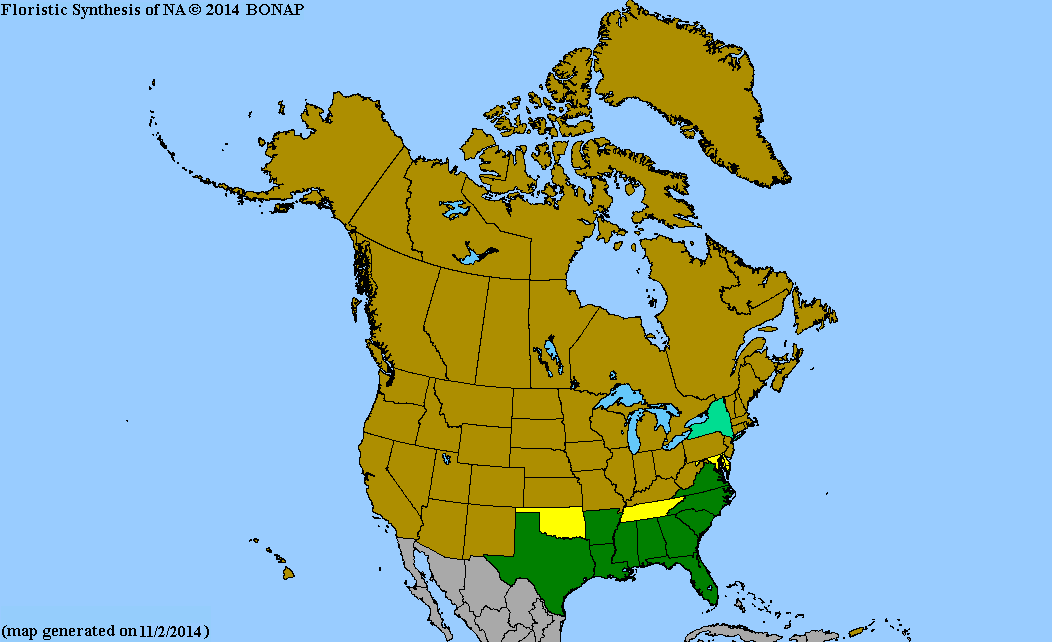
- 14 states, north to Delaware, south to Florida and west to Texas Also recorded in 1 other state, outside its native range. See what is native in your state
List all 14
Alabama, Arkansas, Delaware, Florida, Georgia, Louisiana, Maryland, Mississippi, North Carolina, Oklahoma, South Carolina, Tennessee, Texas and Virginia
Sweetleaf, or horse sugar, is a shrub or small tree of southeastern woods whose leaves taste faintly sweet, like apple. Cattle and horses seek them out. The name tinctoria recalls the yellow dye once made from its bark and leaves, and the plant is a natural source of alum, used to fix dyes in fabric. The leaves hang on into winter and fall a few at a time. Few nurseries grow it. Plant it in the light shade of tall pines or hardwoods, where its early flowers feed butterflies and other pollinators.
Size, growth and what to expect
Sweetleaf grows at a medium rate, about a foot and a half a year in our growth estimator. Expect a small tree of 15 to 30 feet with a crown 15 to 20 feet wide. Wild plants range from shrubs of about 7 feet to trees of nearly 50.
Fragrant clusters of 6 to 14 cream to pale yellow flowers, fluffy with stamens, open along last year's twigs from March into May, before the new leaves. The dry, orange-brown fruit, about half an inch long, ripens in August and September. Birds and small mammals eat it, and King's hairstreak caterpillars feed on the buds and leaves.
It grows wild from Delaware to Florida and west to Texas, Oklahoma and Tennessee, up to 4,600 feet in the mountains. Tennessee lists it as a species of special concern. In New York, far north of that range, it grows only where it was brought in.
How to grow Sweetleaf
Sweetleaf grows in part shade, full sun or deep shade. Give it a moist, acid soil, sandy or alluvial, though in the wild it ranges from dry pine-oak woods to creek swamps. Plant it 15 feet from a wall and at least 15 feet from overhead wires, and set trees 15 feet apart.
Saplings ship bare-root or potted. Plant them in a hole wider than the roots and no deeper. Set the root flare at the soil line, put the native soil back in, and keep the mulch clear of the trunk. Sweetleaf is difficult to propagate, and no tested sowing method is published. Treat any sowing of its seed as a trial.
Water weekly through the first summer and in dry spells after that. Deer relish the sweet leaves, so cage young trees for their first several years. It suckers, so cut the suckers to keep one trunk or let it grow as a clump.
Each flower carries both male and female parts, and how well a lone tree sets fruit is not known. A fungus causes galls in spring but does no serious damage.
Heights and zones are typical ranges for the species in cultivation; local conditions and seed source shift them.
Sources (8)
- NC State Extension Gardener Plant Toolbox: Symplocos tinctoria
- Lady Bird Johnson Wildflower Center: Symplocos tinctoria
- Flora of North America, vol. 8: Symplocos tinctoria (Almeda and Fritsch 2009)
- Trees and Shrubs Online: Symplocos tinctoria (Johnson 2024)
- Virginia Tech Dendrology: common sweetleaf
- NatureServe Explorer: Symplocos tinctoria
- Tennessee Department of Environment and Conservation: Tennessee Rare Plant List, October 2025
- BONAP, North American Plant Atlas, state map for Symplocos tinctoria
Check your site for it What to plant with it How big, how fast How much to water How to sow it How many for a crop When it flowers and fruits
- Ten planting mistakes that quietly kill trees
- Transplanting young trees: timing, water and protection
- Protecting young trees from voles, rabbits, deer and squirrels
- Multistem or single stem? Sometimes the trunk is hiding the answer
- Leaf litter, not wood chips, under the canopy
- Native trees and shrubs for birds: caterpillars, fruit, mast, nests and winter cover, month by month
Grows in the same conditions
Plants that share its sun and soil


More like this