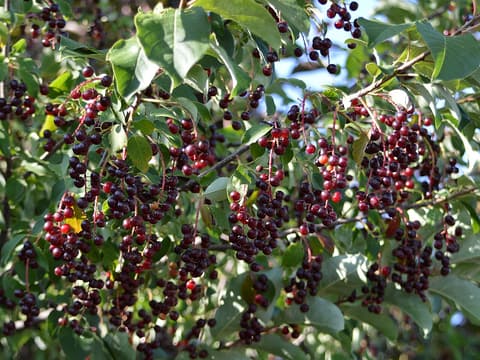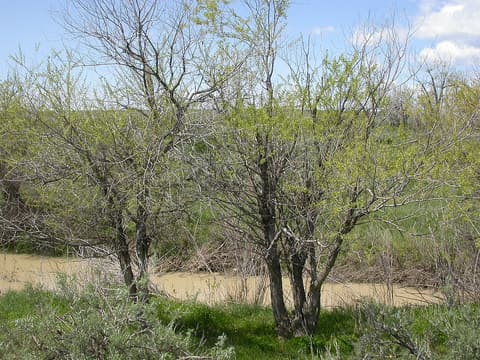
Peachleaf Willow
Salix amygdaloides Medium tree Zones 2–8 35–60 ft
Shares floodplain forests and stream banks in the wild.

A native we do not grow
Umbellularia californica. Large tree, 25 to 75 feet where planted, zones 7 to 9; full sun, part shade or shade; dry, average or wet ground.
We do not grow California bay laurel, and it is not in our shop. This page gathers what our tools say about it and the natives we grow for the same ground.
| Other names | California laurel, California bay, Oregon myrtle, pepperwood, myrtlewood, spice-tree, Pacific myrtle, California olive, headache tree, peppernut tree, cinnamon bush |
|---|---|
| Form | Large tree |
| Height, feet | 25 to 75 where planted; up to 175 in its native stands |
| Spread, feet | Up to 75 |
| Zones | 7 to 9 |
| Sun | Full sun, part shade or shade |
| Soil moisture | Dry, average or wet ground |
| Growth | Medium |
| Leaves | Evergreen |
| Traits | Showy flowers, wildlife value, hedge or screen, salt tolerant, street tree, erosion control |
| Flowers | November to May |
| Fruit | Drupes, September to December |
| First crop | 30 to 40 years |
| Pollination | Not known whether one bears alone |
| Transplanting | Silvics of North America says: "They soon develop a moderately stout taproot and are difficult to transplant if more than 1 year old unless grown in containers." The Fire Effects Information System says: "California laurel is started from seed and transplants best when under 1 year of age." The USDA Natural Resources Conservation Service's plant guide says: "Transplant container grown seedlings when they are under 1 year old if possible." |
| Black walnut | Not named on the Morton Arboretum's lists |
| Toxicity | The leaves and their oil are poisonous to people. |
| Ground | Floodplain forests, stream banks, rich moist slopes, rocky ground and the coast |
| Native in | 2 states |
California bay laurel is native in 2 states: California and Oregon. The states are the USDA PLANTS Database's records, with the native range read from the Fire Effects Information System.
These trees we grow share the most of California bay laurel's natural communities in the wild, by the companion species tool's rules.
Shares floodplain forests and stream banks in the wild.
Shares stream banks and rocky ground in the wild.
Its figures come from Silvics of North America, the Forest Service's Fire Effects Information System, the Woody Plant Seed Manual, the USDA PLANTS Database, Oregon State University's Landscape Plants, Cal Poly's SelecTree, the Wildflower Center, Calscape, the Jepson eFlora, University of California Agriculture and Natural Resources and NC State Extension.