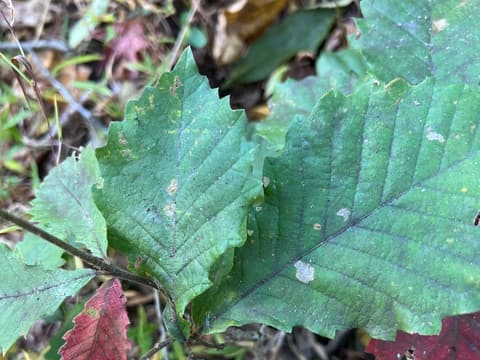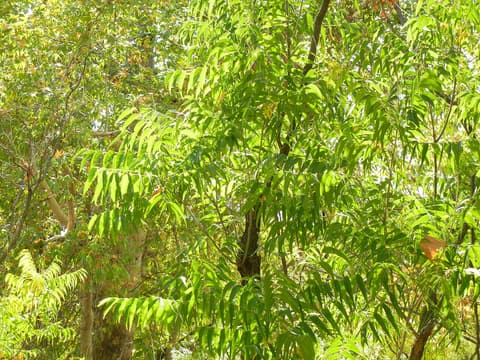
Western Soapberry
Sapindus saponaria var. drummondii Medium tree Zones 5–9 20–50 ft
Shares dry uplands and rocky ground in the wild.

A native we do not grow
Quercus emoryi. Medium tree, 30 to 60 feet where planted, zones 6 to 9; full sun or part shade; dry or average ground.
We do not grow Emory oak, and it is not in our shop. This page gathers what our tools say about it and the natives we grow for the same ground.
| Other names | Western black oak, desert live oak, Apache oak |
|---|---|
| Form | Medium tree |
| Height, feet | 30 to 60 where planted; up to 80 in its native stands |
| Spread, feet | Up to 40 |
| Zones | 6 to 9 |
| Sun | Full sun or part shade |
| Soil moisture | Dry or average ground |
| Growth | Slow |
| Leaves | Evergreen |
| Traits | Wildlife value |
| Flowers | March to May |
| Fruit | Acorns, June to October |
| Pollination | Needs a second, unrelated tree. The flowers are wind pollinated, and an acorn crop wants another oak nearby, since oaks seldom set acorns with their own pollen. |
| Black walnut | Not named on the Morton Arboretum's lists |
| Ground | Dry uplands and rocky ground |
| Native in | 3 states |
Emory oak is native in 3 states: Arizona, New Mexico and Texas. The states are the USDA PLANTS Database's records, with the native range read from the Fire Effects Information System, the Wildflower Center and the Flora of North America.
Its growth rate and its state champions are in the growth rate table and the state champion table.
These trees we grow share the most of Emory oak's natural communities in the wild, by the companion species tool's rules.
Of the oaks we grow, sand post oak, blackjack oak and post oak share its ground, states and zones.
Shares dry uplands and rocky ground in the wild.
Shares dry uplands and rocky ground in the wild.
Shares dry uplands and rocky ground in the wild.
Shares dry uplands and rocky ground in the wild.
Shares dry uplands and rocky ground in the wild.
Shares dry uplands and rocky ground in the wild.
Its figures come from the Forest Service's Fire Effects Information System, the Woody Plant Seed Manual, the USDA PLANTS Database, the Wildflower Center, Cal Poly's SelecTree, Oregon State University's Landscape Plants, New Mexico State University Extension, the UC Davis Arboretum, the University of Arizona Cooperative Extension, Trees and Shrubs Online, Virginia Tech's dendrology site and SEINet.