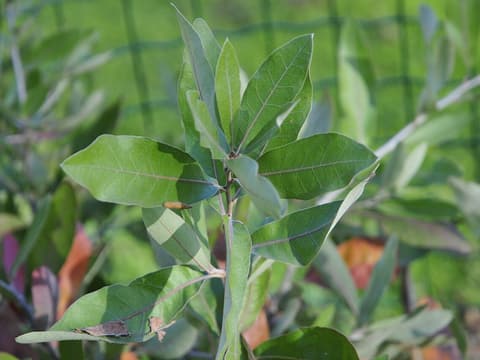
Photo: Bruce Kirchoff, CC BY 2.0, cropped · Wikimedia Commons
Sand Post Oak
Scientific name: Quercus margaretta
Also called scrubby post oak, dwarf post oak.
A compact post oak of deep coastal-plain sands, built for drought and heat.
Be first when sand post oak is priced
Saplings ship bare-root or in a pot, usually 12 to 18 inches tall, in the dormant season, and their height and age are stated here with the price, once available.
We grow it as saplings and acorns. One email when it is listed with prices, and nothing else. Or ask, and we reply with what is ready now. Live plants ship February to May and October to November.
Limited timeSign up now and get 10% off when it is ready.
Share: copy link
Sand Post Oak at a glance
- Type
- Small tree
- Mature height
- 15–40 ft
- USDA zones
- 6–9
- Growth rate
- Slow
- Flowers
- March to May
- Fruit
- Acorns, September to November
- First crop
- 20 to 30 years
- Mature spread
- 40 ft
- Sun
- Full
- Soil moisture
- Dry
- Grows wild in
- Sandy barrens and dry uplands
- Native range
- 13 states, north to Missouri, south to Florida and west to Texas See what is native in your state
List all 13
Alabama, Arkansas, Florida, Georgia, Louisiana, Mississippi, Missouri, North Carolina, Oklahoma, South Carolina, Tennessee, Texas and Virginia
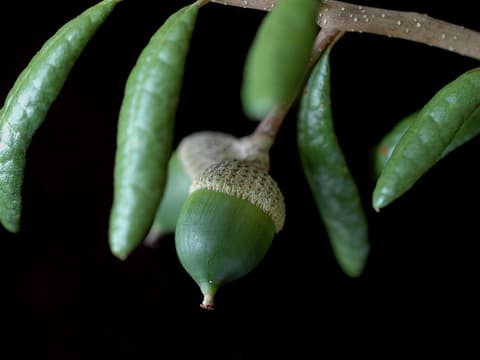
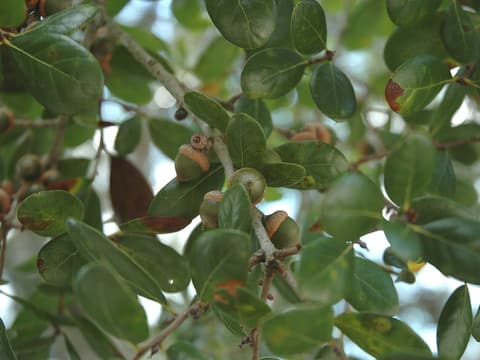
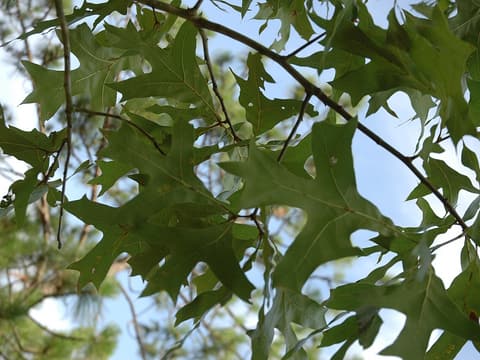
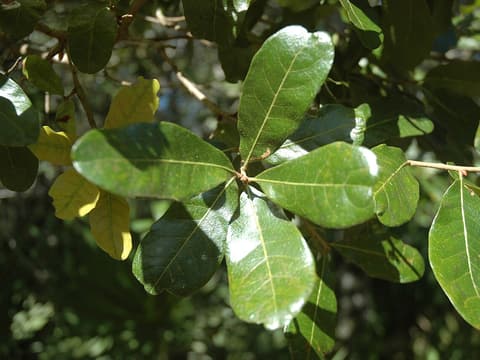
Sand post oak, sometimes treated as a variety of post oak, grows on the driest sandhills and scrub of the Southeast from Virginia to Texas. It stays smaller than post oak, with rounded, lobed leaves and a gnarled habit, and shrugs off drought that kills lawn trees. We offer it for hot, sandy sites. On a sandy slope it helps hold the ground against erosion. A natural choice for a sandhill restoration or a low-water yard tree across the Southeast.
Size, growth and what to expect
A tree of deep coastal-plain sands, sand post oak grows slowly, about a foot a year in its youth on an average site by our growth estimator's model. It is a slow-growing, sometimes scrubby tree. It generally reaches 30 to 40 feet with a dense rounded crown, and it can stay a shrub. Individual trees have reached 234 years.
The first acorns take 20 to 30 years, and in post oak proper, of which this is often treated as a variety, good crops come every 2 to 3 years. It flowers from March to May. The acorns run about a half inch to an inch long and ripen from September to November, and turkeys and other game birds, songbirds and small mammals eat them. The leaves feed the caterpillars of the imperial moth and the banded and Edward's hairstreaks. Dwarf post oak, its other name, describes its smaller stature.
It grows wild on deep sand and gravel from southeastern Virginia west to Missouri and eastern Oklahoma, south to central Texas and east to central Florida, on sandhill ridges and in scrub.
How to grow Sand Post Oak
Sand post oak is for the hot, dry, sandy spot where lawn trees fail: a south-facing bank or deep sand. Full sun, no irrigation once established. It stays small, so 15 feet from a building is enough.
Plant a dormant sapling, bare-root or potted, between leaf fall and bud break, in a hole twice the root width and no deeper. Set the flare at ground level and backfill with the same sand you dug. Compost holds water this oak does not want. White oak acorns sprout on contact with damp ground, so sow them on arrival, an inch deep, under hardware cloth against mice.
Water deeply every two weeks the first summer, then stop; overwatering kills it faster than drought. Mulch lightly with pine straw, off the trunk. Deer browse and rabbits gnaw it, so tube or cage it until the leader is above browse height, about four years on a slow tree. Stake only if it leans.
Like other oaks, sand post oak is wind pollinated and needs pollen from another tree to set acorns, so plant two or more seedlings. The taproot goes down fast, so plant it young and never move it. Growth is slow and acorns are many years off. Oak wilt troubles red oaks far more than white oaks. Keep fill, traffic and lawn sprinklers off its roots.
Heights and zones are typical ranges for the species in cultivation; local conditions and seed source shift them.
Sources (9)
- NC State Extension Gardener Plant Toolbox: Quercus margaretta
- Lady Bird Johnson Wildflower Center: Quercus margaretta
- USDA Forest Service, Silvics of North America: post oak
- Virginia Tech Dendrology: sand post oak, Quercus margaretta
- Flora of North America, vol. 3: Quercus margarettae
- USDA Forest Service, Woody Plant Seed Manual (2008), Quercus chapter
- NatureServe Explorer: Quercus margarettiae, Sand Post Oak
- Carolina Nature (Will Cook): Sand Post Oak, Quercus margaretta
- Eastern OLDLIST of maximum tree ages (Virginia Tech): Quercus margarettae, sand post oak
Plan the planting
Check your site for it What to plant with it How big, how fast How much to water How to sow it How many for a crop When it flowers and fruits When to plant it where you live How far from the house and wires How old is yours Moving one you already have
Read before planting
- Ten planting mistakes that quietly kill trees
- Transplanting young trees: timing, water and protection
- Protecting young trees from voles, rabbits, deer and squirrels
- Native trees and shrubs for dry, sandy soil: the plants of barrens and dunes, and how to grow them
- Red oaks and white oaks, and where each belongs
- Native trees for the Gulf Coast: Florida, Alabama, Mississippi, Louisiana and East Texas
We grow 42 other oaks (Quercus): see them all.
Grows in the same conditions
Plants that share its sun and soil
More like this