
A native we do not grow
Oregon White Oak
Quercus garryana. Large tree, 40 to 90 feet where planted, zones 6 to 9; full sun or part shade; dry, average or wet ground.
We do not grow Oregon white oak, and it is not in our shop. This page gathers what our tools say about it and the natives we grow for the same ground.
At a glance
| Other names | Garry oak, Oregon oak, Brewer oak, shin oak |
|---|---|
| Form | Large tree |
| Height, feet | 40 to 90 where planted; up to 120 in its native stands |
| Spread, feet | Up to 60 |
| Zones | 6 to 9 |
| Sun | Full sun or part shade |
| Soil moisture | Dry, average or wet ground |
| Growth | Slow |
| Leaves | Deciduous |
| Traits | Wildlife value, edible, erosion control |
| Flowers | March to June |
| Fruit | Acorns, August to November |
| First crop | 20 or more years (none under 20 in one survey; crops grew until about 80) |
| Pollination | Needs a second, unrelated tree. The flowers are wind pollinated, and an acorn crop wants another oak nearby, since oaks seldom set acorns with their own pollen. |
| Lifespan | Lives up to 500 years. |
| Planting season | Spring. The NRCS plant guide moves container seedlings in spring; in a Washington trial, most seedlings planted from November to March lived, and most planted in September died. |
| Black walnut | Not named on the Morton Arboretum's lists |
| Toxicity | The acorns, green acorns above all, and the young leaves are poisonous to cattle. |
| Ground | Dry uplands, rocky ground and floodplain forests |
| Native in | 3 states |
Oregon white oak is native in 3 states: California, Oregon and Washington. The states are the USDA PLANTS Database's records, with the native range read from Silvics of North America and the Fire Effects Information System.
What our tools say
How fast it grows and how big it gets, by site Whether it suits your zone, sun and soil How far from a house, wires and a septic field What grows with it in the wild and in a yard When to plant it where you live When it flowers and fruits, month by month How to sow its seed, with dates for your place How many to plant for a crop of seed Whether one you have can be moved, and what the move takes How old one is, from its trunk How a big one scores against the champion trees
For the same ground, we grow
These trees we grow share the most of Oregon white oak's natural communities in the wild, by the companion species tool's rules.
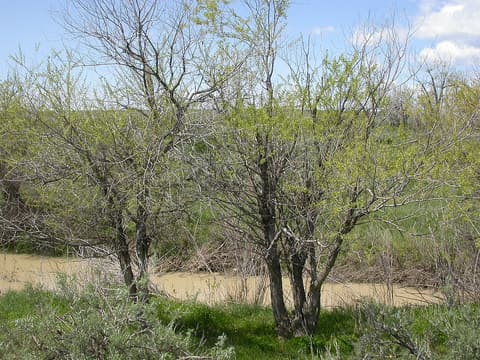
Peachleaf Willow
Salix amygdaloides Medium tree Zones 2–8 35–60 ft
Shares floodplain forests in the wild.
Read from
Its figures come from Silvics of North America, the Forest Service's Fire Effects Information System, the Woody Plant Seed Manual, the USDA PLANTS Database, Oregon State University's Landscape Plants, Cal Poly's SelecTree, the Wildflower Center, Calscape and the Jepson eFlora.