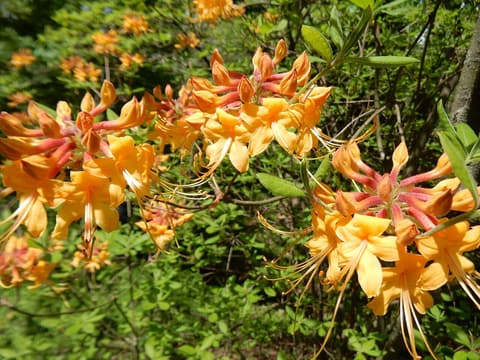
Photo: Nichole Ouellette, CC BY 4.0, cropped · Wikimedia Commons
Labrador Tea
Rhododendron groenlandicum
Also called Ledum groenlandicum, bog Labrador tea, rusty Labrador tea, Hudson Bay tea, muskeg tea, marsh tea, swamp tea.
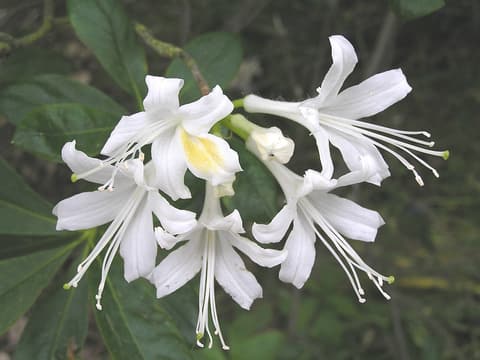
A low evergreen shrub of northern bogs, with rounded clusters of small white flowers and leathery, fragrant leaves felted rusty beneath.
Be first when Labrador tea is priced
Saplings ship in a pot, usually 12 to 18 inches tall, in the dormant season, and their height and age are stated here with the price, once available.
We grow it as saplings and seed. One email when it is listed with prices, and nothing else. Or ask, and we reply with what is ready now. Live plants ship February to May and October to November.
Limited timeSign up now and get 10% off when it is ready.
Share: copy link
Labrador Tea at a glance
- Type
- Shrub
- Mature height
- 1–5 ft
- USDA zones
- 2–8
- Growth rate
- Slow
- Flowers
- April to July
- Fruit
- Capsules, August to October
- First crop
- About 3 years
- Mature spread
- 3 ft
- Sun
- Full, Part
- Soil moisture
- Average, Wet
- Grows wild in
- The Appalachians, rocky ground, swamps and wet flats
- Native range
- Alaska and 17 other states, north to North Dakota, south to New Jersey and west to Oregon See what is native in your state
List all 18
Alaska, Connecticut, Idaho, Maine, Massachusetts, Michigan, Minnesota, New Hampshire, New Jersey, New York, North Dakota, Ohio, Oregon, Pennsylvania, South Dakota, Vermont, Washington and Wisconsin
Labrador tea is a low evergreen shrub of northern bogs, spruce woods and muskeg, and of high mountains in the Northeast. Its leathery leaves are rolled under at the edges and felted rusty beneath, and they are fragrant when crushed. Long placed in the genus Ledum, it is now counted a rhododendron, like our rhodora. Native peoples and early settlers brewed the leaves as a tea, which gave it its name, though it can be toxic in strong doses. New Jersey lists it as endangered, and Connecticut lists it as threatened. Set it in a bog garden or along a wet, acid pond edge where summers stay cool.
Size, growth and what to expect
Labrador tea grows slowly, 6 inches to a foot a year in our growth estimator. It makes a rounded shrub 1 to 5 feet tall, most often 2 to 3 feet tall and as wide, and it widens into a patch by rooting stems and rhizomes. Its leaves stay on for two years. It is a plant of cold northern climates, and heat and drought stress it, so it does best where summers stay cool.
Rounded clusters of 10 to 35 small white flowers open at the branch tips, from late April in the south of its range to July in the far north. Bees, butterflies and moths visit them, and it feeds the caterpillars of the northern blue butterfly. The small capsules ripen in August and split open in fall, and the wind carries off the tiny seed.
It grows wild across Canada and Alaska to Greenland. In the West it reaches south to Oregon and Idaho. In the East it grows south to the Great Lakes states, Pennsylvania, northern New Jersey and New England.
How to grow Labrador Tea
Labrador tea grows in full sun or part shade. It needs a wet or moist, acid, peaty soil free of lime, and drought harms it. Set plants 3 feet apart and keep them 2 feet from a wall. At its size it can go within 15 feet of overhead wires.
Saplings ship potted. Set the top of the root ball level with the ground, in a hole wider than the ball and no deeper, and put the native soil back in. It is hard to raise from seed, since the seedlings are tiny, fragile and slow to grow. The seed needs light but no chilling. Sow it fresh, in late winter or spring, on the surface of damp peat under a clear cover, at room temperature. Seedlings come up in two to four weeks.
Water weekly through the first two summers, and never let the roots dry out. Do not fertilize it, since added nutrients slow its growth.
Each flower carries both male and female parts, and bees are its chief pollinators. Labrador tea sets seed with its own pollen, but fewer seeds than with pollen from another plant, so plant two seedlings from different parents for seed. Deer seldom browse it. Rust fungi that pass between it and conifers, and now and then anthracnose, can spot the leaves, though the harm is mostly cosmetic. Every part of the plant is highly toxic if eaten, and its alkaloids poison sheep and other livestock.
Heights and zones are typical ranges for the species in cultivation; local conditions and seed source shift them.
Sources (13)
- USDA Forest Service, Fire Effects Information System: Ledum groenlandicum, Gucker 2006
- USDA Forest Service, Woody Plant Seed Manual: Ledum chapter, Wurtz
- Flora of North America, vol. 8: Rhododendron groenlandicum
- USDA NRCS Plant Guide: bog Labrador tea, Anderson 2011
- New Jersey Natural Heritage Program: Rhododendron groenlandicum Rare Plant Profile, Dodds 2023
- Lady Bird Johnson Wildflower Center: Ledum groenlandicum
- Go Botany, Native Plant Trust: Rhododendron groenlandicum
- Minnesota Wildflowers: Rhododendron groenlandicum, Labrador tea
- Oregon State University, Landscape Plants: Rhododendron groenlandicum
- Trees and Shrubs Online: Rhododendron groenlandicum
- Michigan Flora: Rhododendron groenlandicum
- NatureServe Explorer: Rhododendron groenlandicum
- State lists: Connecticut 2015
Plan the planting
Check your site for it What to plant with it How big, how fast How much to water How to sow it How many for a crop When it flowers and fruits When to plant it where you live How far from the house and wires How old is yours
Read before planting
- Ten planting mistakes that quietly kill trees
- Transplanting young trees: timing, water and protection
- Protecting young trees from voles, rabbits, deer and squirrels
- How fast every tree and shrub we grow gets tall: growth rate, A to Z
- The habitat around a tree is part of the tree
- Invasive vines and shrubs are what is killing your woods
We grow 21 other rhododendrons and azaleas (Rhododendron): see them all.
Grows in the same conditions
Plants that share its sun and soil
Trees to plant it under: Balsam Fir, Northern White Cedar and Yellow Birch.
More like this