Photo: Syrio, CC BY-SA 4.0, cropped · Wikimedia Commons
Rosebay Rhododendron
Scientific name: Rhododendron maximum
Also called great laurel, great rhododendron.
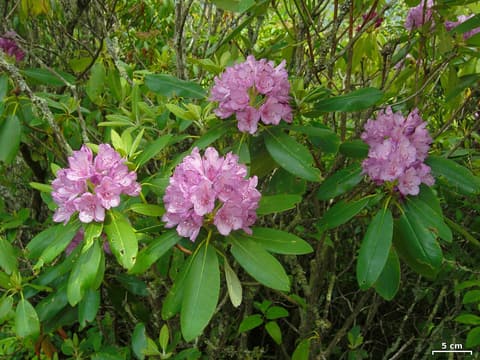
The great evergreen rhododendron of Appalachian stream valleys, with pink-white trusses in July.
Be first when rosebay rhododendron is priced
Saplings ship in a pot, usually 12 to 18 inches tall, in the dormant season, and their height and age are stated here with the price, once available.
We grow it as saplings and seed. One email when it is listed with prices, and nothing else. Or ask, and we reply with what is ready now. Live plants ship February to May and October to November.
Limited timeSign up now and get 10% off when it is ready.
Share: copy link
Rosebay Rhododendron at a glance
- Type
- Shrub
- Mature height
- 10–15 ft
- USDA zones
- 3–7
- Growth rate
- Slow
- Flowers
- June to August
- Fruit
- Capsules, September to October
- First crop
- 3 to 6 years (first flowers)
- Mature spread
- 12 ft
- Sun
- Part, Shade
- Soil moisture
- Average, Wet
- Grows wild in
- The Appalachians, stream banks and the forest understory
- Native range
- 20 states and the District of Columbia, north to Maine, south to Georgia and west to Alabama See what is native in your state
List all 21
Alabama, Connecticut, Delaware, Georgia, Kentucky, Maine, Maryland, Massachusetts, New Hampshire, New Jersey, New York, North Carolina, Ohio, Pennsylvania, Rhode Island, South Carolina, Tennessee, Vermont, Virginia, West Virginia and the District of Columbia
Rosebay forms the impenetrable evergreen thickets of the southern mountains and is hardy to zone 3. Given what it wants it becomes a 12-foot evergreen wall that blooms in midsummer. Every part is toxic, yet deer browse it in fall and winter. Belongs on the north side of a house or along a wooded stream.
Size, growth and what to expect
Expect about a foot of new height a year from a young rosebay rhododendron on an average site, the figure our growth estimator uses for a slow grower. In a garden it stands 10 to 15 feet and spreads 5 to 12 feet, while wild thickets in the southern mountains run 10 to 23 feet tall. The oldest stem dated by its rings was 120 years old.
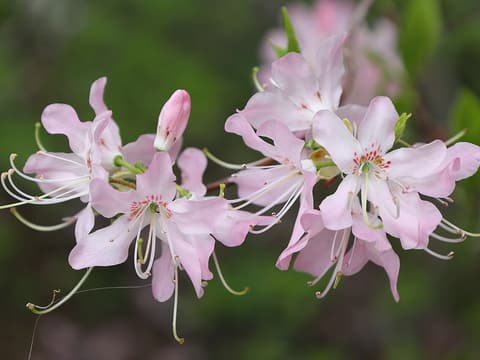
Trusses of pink to white flowers about 2 inches across open from late May in the south to August in the north, and only twigs in full sunlight flower. Each capsule holds about 400 seeds, and a single stem can live 100 years. Deer browse it in fall and winter, grouse and turkeys eat the buds, and the thickets shelter deer, bears and rabbits through the winter. Great laurel is its other common name, and the genus name means rose tree in Greek. The capsules ripen in September and October and shed their seed in November.
It grows wild from Nova Scotia and Ontario south to Georgia and Alabama, most commonly in the eastern mountains, from sea level to 6,000 feet.
How to grow Rosebay Rhododendron
Rosebay rhododendron needs shade, shelter and acid soil. Put it under trees or on the north side of a building, out of winter wind and afternoon sun, in ground that stays moist but drains; it rots in stagnant mud. Space plants 8 feet apart and 6 feet off a foundation.
Saplings ship potted. Plant while dormant, in early spring or fall. Set the root ball in a hole three times as wide and slightly shallower, with the root mass a touch above grade, and use native soil only. If your soil is neutral or limey, choose another plant rather than amending. Mulch with pine needles, kept off the stems. Seed is dust-fine and needs light as soon as it is wet. Sow it on the surface of moist peat mix in winter, uncovered, at room temperature under lights and a clear cover. Seedlings come up in about three weeks.
The shallow roots dry out fast, so water weekly through the first two summers. Deer browse it in fall and winter, and rabbits eat the bark and buds, so cage young plants where either is common. Voles tunnel under deep mulch, so keep it to two inches. Prune only to remove dead wood.
Rosebay rhododendron carries both male and female parts in each flower, and bees carry the pollen. A lone shrub can set seed with its own pollen, but a second shrub from a different parent sets more. Growth is slow and the plant is long-lived. Leaves that curl and droop on cold mornings are normal. Yellow leaves with green veins mean the soil is not acid enough. Never dig around the roots. Every part of the plant is toxic if eaten.
Heights and zones are typical ranges for the species in cultivation; local conditions and seed source shift them.
Sources (12)
- USDA Fire Effects Information System: Rhododendron maximum
- NC State Extension Gardener Plant Toolbox: Rhododendron maximum
- Missouri Botanical Garden Plant Finder: Rhododendron maximum
- Virginia Tech Dendrology: great rhododendron, Rhododendron maximum
- Lady Bird Johnson Wildflower Center: Rhododendron maximum
- USDA Forest Service, Woody Plant Seed Manual (2008), Rhododendron chapter
- Go Botany (Native Plant Trust): Rhododendron maximum, great rosebay
- Flora of North America, vol. 8: Rhododendron maximum
- USDA Forest Service, Seeds of Woody Plants in the United States, Agriculture Handbook 450 (1974), Rhododendron chapter, Olson
- Donald W. Hyatt: Raising Rhododendrons and Azaleas from Seed
- Journal American Rhododendron Society: Roberts 1990, Rhododendrons from Seed: A Novice's Perspective, JARS 44(4)
- Journal of the Torrey Botanical Society: Elliott and Vose 2012, Journal of the Torrey Botanical Society 139:149-166
Plan the planting
Check your site for it What to plant with it How big, how fast How much to water How to sow it How many for a crop When it flowers and fruits When to plant it where you live How far from the house and wires How old is yours
Read before planting
- Ten planting mistakes that quietly kill trees
- Transplanting young trees: timing, water and protection
- Protecting young trees from voles, rabbits, deer and squirrels
- Native trees for the Southern Appalachians: the valleys, the slopes and the high ridges
- Native trees and shrubs for bees: pollen, nectar, nesting and a bloom calendar from willow to witch hazel
- The habitat around a tree is part of the tree
We grow 21 other rhododendrons and azaleas (Rhododendron): see them all.
Grows in the same conditions
Plants that share its sun and soil
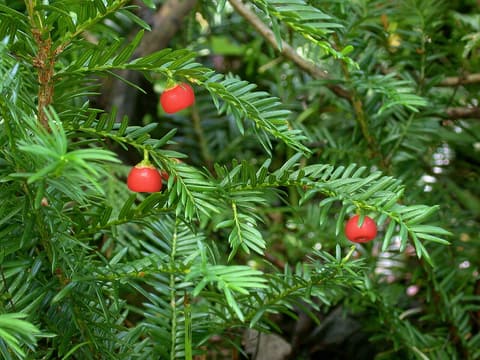
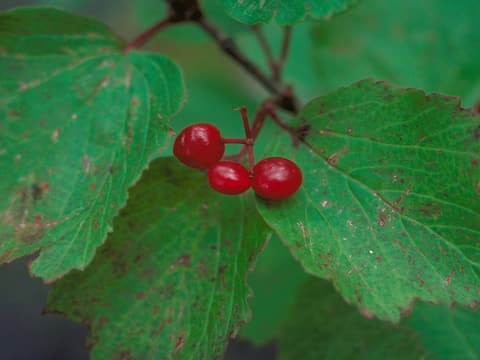
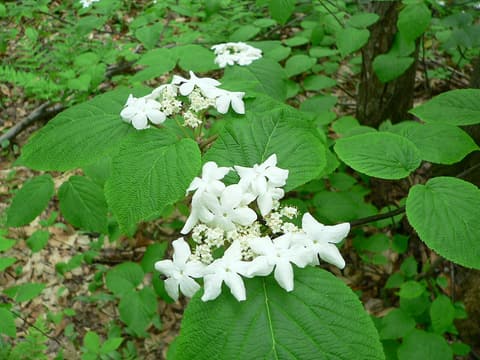
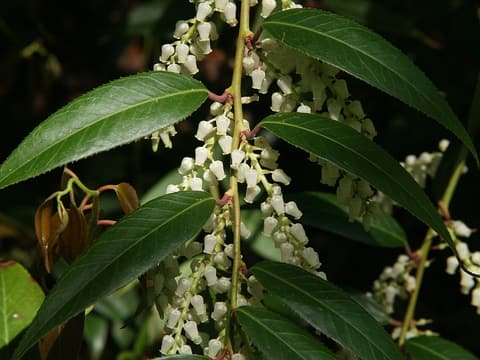
Trees to plant it under: Eastern Hemlock, Yellow Birch and Yellow Buckeye.
More like this