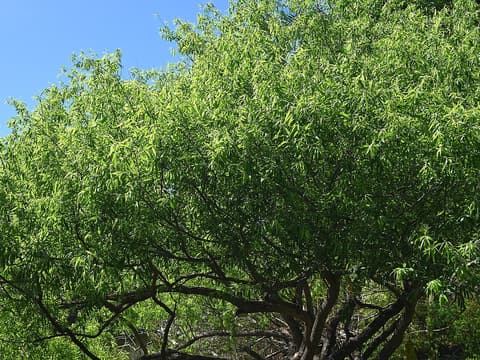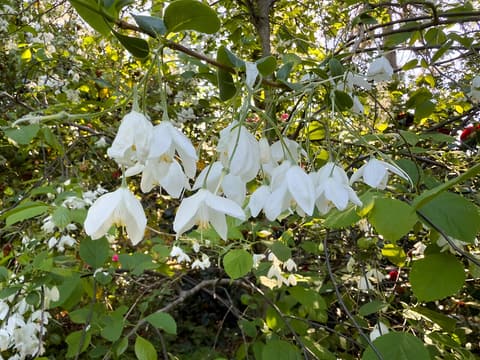
Two-wing Silverbell
Halesia diptera Small tree Zones 4–9 15–30 ft
Shares floodplain forests, stream banks, the forest understory, swamps and wet flats in the wild.

A native we do not grow
Fraxinus caroliniana. Small tree, 20 to 60 feet, zones 7 to 10; full sun, part shade or shade; average or wet ground.
We do not grow Carolina ash, and it is not in our shop. This page gathers what our tools say about it and the natives we grow for the same ground.
Emerald ash borer, a beetle from Asia that has killed millions of ash trees in North America, feeds on every native ash, Carolina ash included. An ash it infests is likely to die, sometimes within a year where the beetle is well established.
| Other names | Pop ash, Florida ash, poppy ash |
|---|---|
| Form | Small tree |
| Height, feet | 20 to 60 |
| Spread, feet | Up to 10 |
| Zones | 7 to 10 |
| Sun | Full sun, part shade or shade |
| Soil moisture | Average or wet ground |
| Growth | Medium |
| Leaves | Deciduous |
| Traits | Wildlife value |
| Flowers | February to May |
| Fruit | Samaras, July to October |
| Pollination | Separate male and female trees. Male and female flowers grow on separate trees, so a female tree bears seed only with a male nearby. |
| Lifespan | Typically lives 50 years. |
| Black walnut | Not named on the Morton Arboretum's lists |
| Ground | Floodplain forests, stream banks, the forest understory, swamps and wet flats |
| Native in | 10 states |
Carolina ash is native in 10 states: Alabama, Arkansas, Florida, Georgia, Louisiana, Mississippi, North Carolina, South Carolina, Texas and Virginia. The states are the USDA PLANTS Database's records, with the native range read from the Woody Plant Seed Manual and NatureServe Explorer.
These trees we grow share the most of Carolina ash's natural communities in the wild, by the companion species tool's rules.
Shares floodplain forests, stream banks, the forest understory, swamps and wet flats in the wild.
Shares floodplain forests, stream banks and the forest understory in the wild.
Shares floodplain forests, stream banks and the forest understory in the wild.
Shares floodplain forests, stream banks and the forest understory in the wild.
Shares floodplain forests, stream banks, swamps and wet flats in the wild.
Shares floodplain forests, stream banks, swamps and wet flats in the wild.
Its figures come from the Woody Plant Seed Manual, the USDA PLANTS Database, NC State Extension, the Wildflower Center, UF/IFAS Extension, Virginia Tech's dendrology site, the Florida Native Plant Society, the Atlas of Florida Plants, NC State University and Texas A&M Forest Service.