Photo: Blue Whale Trees
Pawpaw
Scientific name: Asimina triloba
Also called common pawpaw, Indiana banana, papaw.
The largest native fruit in North America, custard-sweet and tropical, on an understory tree of rich bottomlands.
Be first when pawpaw is priced
Saplings ship in a pot, usually 12 to 18 inches tall, in the dormant season, and their height and age are stated here with the price, once available.
We grow it as saplings and seed. One email when it is listed with prices, and nothing else. Or ask, and we reply with what is ready now. Live plants ship February to May.
Limited timeSign up now and get 10% off when it is ready.
Share: copy link
Pawpaw at a glance
- Type
- Small tree
- Mature height
- 15–30 ft
- USDA zones
- 5–9
- Growth rate
- Medium
- Flowers
- April to May
- Fruit
- Pawpaws, August to October
- First crop
- 5 to 8 years
- Mature spread
- 30 ft
- Sun
- Full, Part, Shade
- Soil moisture
- Average, Wet
- Grows wild in
- The forest understory, floodplain forests and stream banks
- Native range
- 29 states and the District of Columbia, north to Wisconsin, south to Florida and west to Nebraska See what is native in your state
List all 30
Alabama, Arkansas, Connecticut, Delaware, Florida, Georgia, Illinois, Indiana, Iowa, Kansas, Kentucky, Louisiana, Maryland, Michigan, Mississippi, Missouri, Nebraska, New Jersey, New York, North Carolina, Ohio, Oklahoma, Pennsylvania, South Carolina, Tennessee, Texas, Virginia, West Virginia, Wisconsin and the District of Columbia
Pawpaw fruit tastes of banana, mango and vanilla and ripens in September. The tree grows in colonies in the shade of river woods, with big drooping leaves, which host the zebra swallowtail, and maroon spring flowers. Young trees need shade for the first two summers; mature trees fruit best in sun. Plant two unrelated seedlings for pollination. Left to spread in a natural area, its thicket of thin trunks helps hold a stream bank. Ideal for a backyard fruit patch or a creek-bottom grove that the deer leave alone.
Size, growth and what to expect
Pawpaw seedlings begin to bear when they reach about 6 feet, usually at five to eight years, while grafted trees can fruit in as few as three. Growth is slow for the first two years while the roots establish, then picks up. Our growth estimator models it at roughly a foot and a half a year in youth on an average site. It makes a small tree of 15 to 30 feet.
The maroon flowers, 1½ to 2 inches across, open in April or May before the leaves. Flies and beetles pollinate them, and fruit needs pollen from a genetically different tree.
The fruits ripen from August to October, 3 to 6 inches long and 5 to 16 ounces, the largest edible fruit native to America. Opossums, raccoons, foxes and squirrels eat them, and the zebra swallowtail caterpillar feeds on nothing but its leaves. It grows wild from Ontario and Michigan south to Florida and Texas, in the shade of open woods on fertile bottomlands.
How to grow Pawpaw
Pawpaw wants deep, moist soil and takes damp ground. Young trees scorch in full sun, so start them in the shade of a building or bigger tree; established trees take sun and fruit better for it. Space trees 8 to 10 feet apart; a happy pawpaw suckers into a patch.
Plant in early spring. Pawpaw roots are fleshy and break easily, so plant from a pot with the root ball whole, in a hole twice its width, flare at grade, native soil only. Seed must never dry out: sow it fresh in fall an inch deep under hardware cloth, or chill it damp for 100 days and sow in spring. Seedlings surface late, sometimes not until July.
Water weekly through the first two summers and mulch. Deer and rabbits rarely bother pawpaw, so a tree tube is mainly shade; remove it in year three. Top growth stays slow while the taproot forms; no pruning is needed.
Pawpaw will not pollinate itself, so plant at least two seedlings from different parents. Flies and beetles carry the pollen, and a paintbrush moved between trees sets more fruit. Seedlings bear in five to eight years. Ripe fruit bruises easily.
Heights and zones are typical ranges for the species in cultivation; local conditions and seed source shift them.
Sources (13)
- USDA NRCS Plant Guide, Pawpaw
- Kentucky State University, Pawpaw Planting Guide
- Virginia Tech Dendrology: pawpaw, Asimina triloba
- Lady Bird Johnson Wildflower Center: Asimina triloba
- Illinois Wildflowers (John Hilty): Pawpaw, Asimina triloba
- USDA Fire Effects Information System: Asimina triloba
- USDA Forest Service, Woody Plant Seed Manual (2008), Asimina chapter
- NC State Extension Gardener Plant Toolbox: Asimina triloba
- Missouri Department of Conservation field guide: Pawpaw
- The Morton Arboretum: Pawpaw, Asimina triloba
- Flora of North America, vol. 3: Asimina triloba
- Thapa Magar, Pomper, Lowe and Crabtree 2025, Impact of self- and cross-pollination on fruit and seed set in pawpaw in Kentucky, HortScience 60(5): 771-774
- Iowa State University Extension and Outreach, Natural Resources: Common Pawpaw
Plan the planting
Check your site for it What to plant with it How big, how fast How much to water How to sow it How many for a crop When it flowers and fruits When to plant it where you live How far from the house and wires How old is yours Moving one you already have
Read before planting
- Ten planting mistakes that quietly kill trees
- Transplanting young trees: timing, water and protection
- Protecting young trees from voles, rabbits, deer and squirrels
- Native fruit and nut trees to grow and eat: what each bears, when it starts, and which need a partner
- A native food forest: the layers and the species
- Multistem or single stem? Sometimes the trunk is hiding the answer
We grow 7 other pawpaws (Asimina): see them all.
Grows in the same conditions
Plants that share its sun and soil
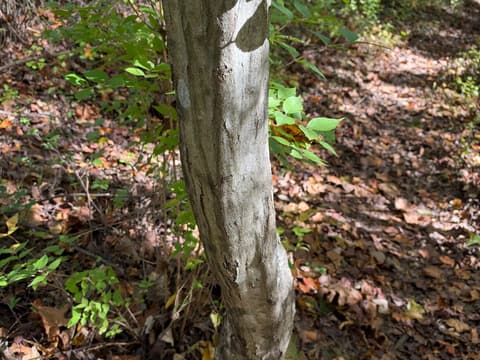
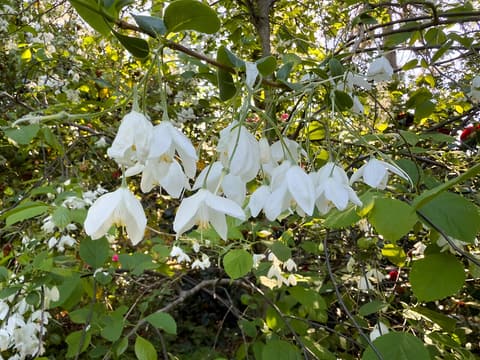
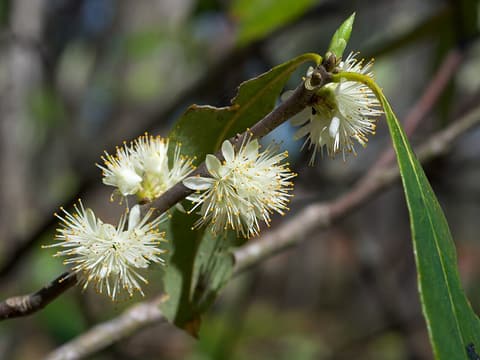
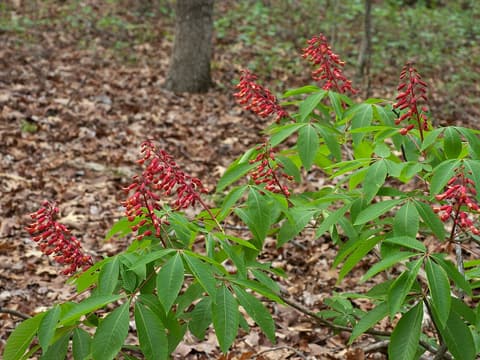
Trees to plant it under: Sugarberry, Swamp Laurel Oak and Spruce Pine.
More like this