Photo: Blue Whale Trees
American Hornbeam (Musclewood)
Scientific name: Carpinus caroliniana
Also called musclewood, ironwood, blue beech.
Smooth, sinewy gray trunks, orange-red fall color and complete comfort in shade and damp soil.
Be first when American hornbeam is priced
Saplings ship bare-root, usually 12 to 18 inches tall, in the dormant season, and their height and age are stated here with the price, once available.
We grow it as saplings and seed. One email when it is listed with prices, and nothing else. Or ask, and we reply with what is ready now. Live plants ship February to May.
Limited timeSign up now and get 10% off when it is ready.
Share: copy link
American Hornbeam at a glance
- Type
- Small tree
- Mature height
- 20–35 ft
- USDA zones
- 3–9
- Growth rate
- Slow
- Flowers
- April to May
- Fruit
- Nutlets, October
- First crop
- About 15 years
- Mature spread
- 35 ft
- Sun
- Full, Part, Shade
- Soil moisture
- Average, Wet
- Grows wild in
- Stream banks, floodplain forests and the forest understory
- Native range
- 33 states and the District of Columbia, north to Minnesota, south to Florida and west to Texas See what is native in your state
List all 34
Alabama, Arkansas, Connecticut, Delaware, Florida, Georgia, Illinois, Indiana, Iowa, Kentucky, Louisiana, Maine, Maryland, Massachusetts, Michigan, Minnesota, Mississippi, Missouri, New Hampshire, New Jersey, New York, North Carolina, Ohio, Oklahoma, Pennsylvania, Rhode Island, South Carolina, Tennessee, Texas, Vermont, Virginia, West Virginia, Wisconsin and the District of Columbia
Hornbeam is the understory tree of stream bottoms, with fluted bark that looks like flexed muscle. It grows slowly into a broad, low crown, tolerates flooding and deep shade, and its hard wood earned the name ironwood. Perfect under tall oaks or along a wet property line. Pruned to one leader, it makes a street tree for a narrow tree lawn, and its sinewy trunk shows all winter. Well suited to a clipped hedge or a small yard where fall color matters more than size.
Size, growth and what to expect
American hornbeam adds 8 to 10 feet of height in ten years, about a foot a year. Our growth estimator models it at the same slow rate in its youth on an average site. Trees top out at 15 to 20 feet in Canada and 25 to 35 feet in the South, with a crown about as wide as the tree is tall. Trees are short-lived, typically about 100 years and seldom past 150.
The first seed comes at about 15 years, with a large crop every 3 to 5 years. Catkins open in April and May, and the ribbed nutlets ripen in October, each hanging under a three-lobed leafy bract about an inch long. Songbirds, grouse, turkeys and squirrels take the seed, buds and catkins. The bark on older trees is smooth slate gray and fluted like a flexed arm, which is where the name musclewood comes from.
It grows wild across most of the eastern United States, from southern Ontario and Quebec to eastern Texas and the Ozarks.
How to grow American Hornbeam
American hornbeam thrives in shade. It takes full sun as well if the soil stays moist, and it is untroubled by wet ground or spring flooding. Plant it on a streambank, in a low corner or beneath oaks. At full size it needs 15 to 20 feet from a building and from other trees.
Set out dormant bare-root saplings in early spring, which suits hornbeam better than fall planting. Dig a broad, shallow hole, position the root flare at the surface, and refill with unamended soil. Water thoroughly, then mulch a ring three inches deep that does not touch the trunk. Pick the seed while the nutlets are still greenish and sow it outdoors that fall, a quarter inch deep under mulch. Seedlings come up the next spring. Seed gathered brown and dry needs two to four months of cold, damp storage, and some of it waits until the second spring.
Musclewood is slow to settle in, so water it weekly through the first summer and in dry weeks for two more years. Deer and rabbits both damage young hornbeams, so use a wire guard until the trunk is two inches thick.
Male and female catkins appear together on the same tree and the wind carries the pollen, so one tree sets seed alone. Expect little top growth for the first few years while the roots establish. Fall color is orange to red and strongest in sun. Prune in summer if you must, since late winter cuts can bleed sap.
Heights and zones are typical ranges for the species in cultivation; local conditions and seed source shift them.
Sources (13)
- USDA Forest Service, Silvics of North America: American hornbeam
- USDA Forest Service, Woody Plant Seed Manual: Carpinus chapter
- The Morton Arboretum: American hornbeam
- USDA Fire Effects Information System: Carpinus caroliniana
- USDA NRCS Plant Guide: American hornbeam, Carpinus caroliniana
- Lady Bird Johnson Wildflower Center: Carpinus caroliniana
- Virginia Tech Dendrology: hornbeam, Carpinus caroliniana
- Flora of North America, vol. 3: Carpinus caroliniana
- Go Botany (Native Plant Trust): Carpinus caroliniana, American hornbeam
- Trees and Shrubs Online: Carpinus caroliniana
- NC State Extension Gardener Plant Toolbox: Carpinus caroliniana
- USDA NRCS PLANTS Database: Carpinus caroliniana
- USDA Forest Service, Northern Research Station, Climate Change Tree Atlas (retired March 2026
Plan the planting
Check your site for it What to plant with it How big, how fast How much to water How to sow it How many for a crop When it flowers and fruits When to plant it where you live How far from the house and wires How old is yours Moving one you already have
Read before planting
- Ten planting mistakes that quietly kill trees
- Transplanting young trees: timing, water and protection
- Protecting young trees from voles, rabbits, deer and squirrels
- What to plant under a big tree: native shrubs for shade, and how to plant without hurting the tree
- Winter identification: telling native trees apart by bark, buds and twigs
- Multistem or single stem? Sometimes the trunk is hiding the answer
Grows in the same conditions
Plants that share its sun and soil
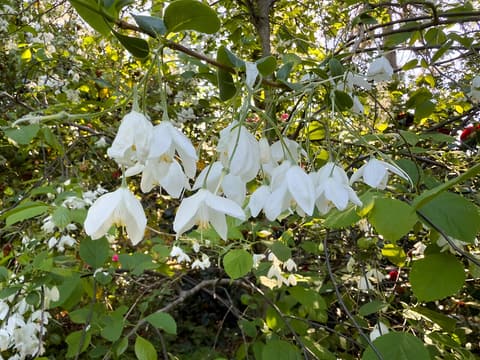
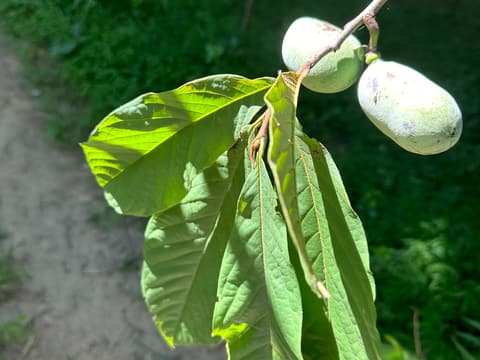
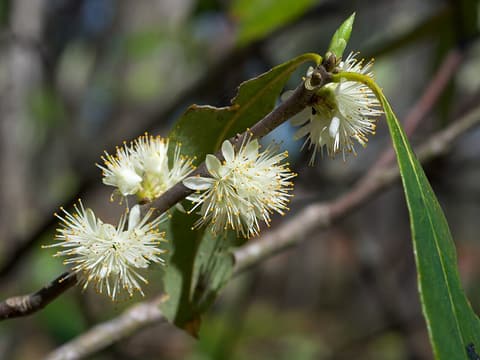
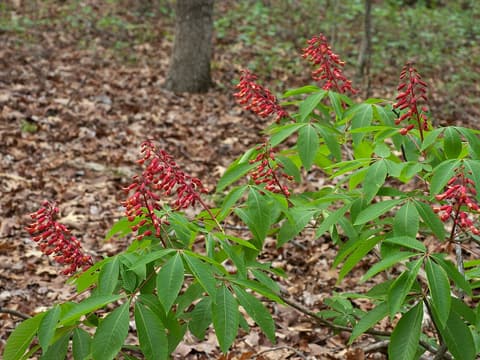
Trees to plant it under: Sugarberry, Swamp Laurel Oak and Spruce Pine.
More like this