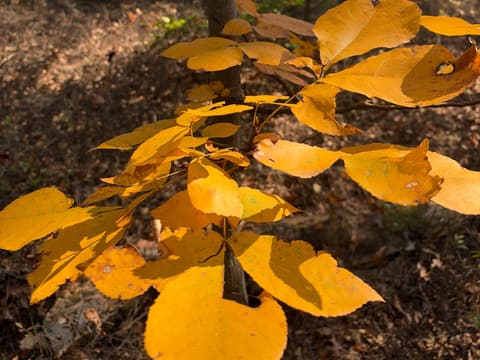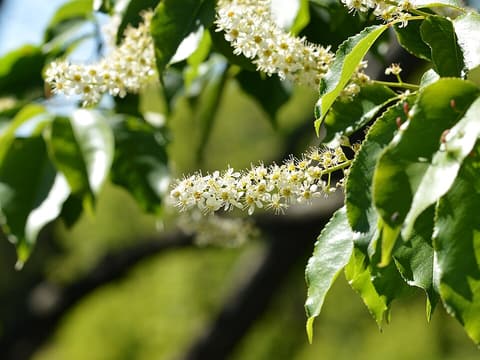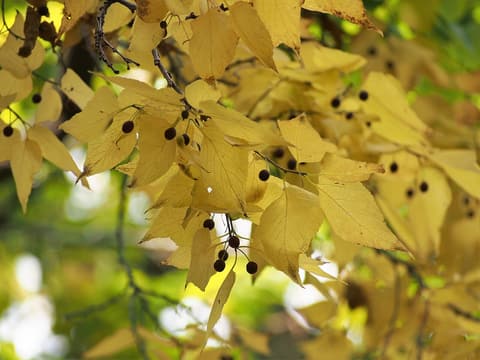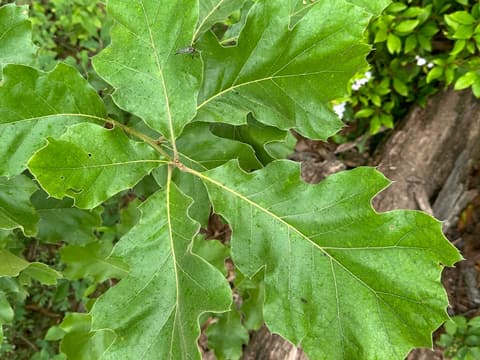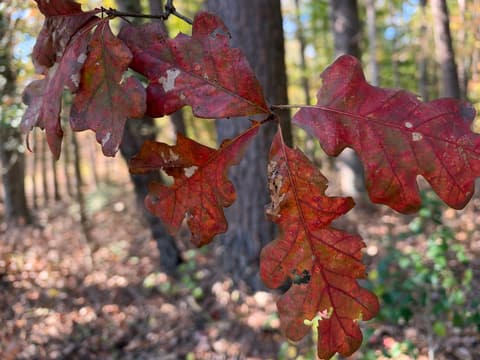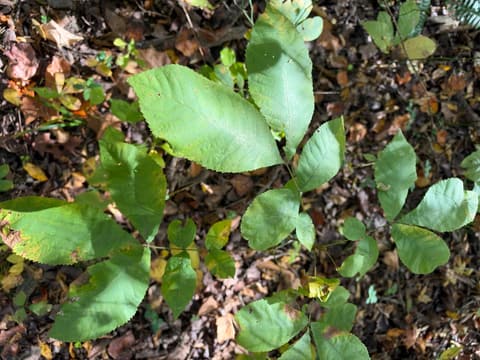
Pignut Hickory
Carya glabra Large tree Zones 4–9 50–80 ft
Shares rich moist slopes, dry uplands and rocky ground in the wild.

A native we do not grow
Pseudotsuga menziesii. Large tree, 40 to 90 feet where planted, zones 4 to 7; full sun or part shade; dry or average ground.
We do not grow Douglas-fir, and it is not in our shop. This page gathers what our tools say about it and the natives we grow for the same ground.
| Other names | Coast Douglas-fir, Rocky Mountain Douglas-fir, interior Douglas-fir, Oregon pine, Douglas spruce |
|---|---|
| Form | Large tree |
| Height, feet | 40 to 90 where planted; up to 327 in its native stands |
| Spread, feet | Up to 60 |
| Zones | 4 to 7 |
| Sun | Full sun or part shade |
| Soil moisture | Dry or average ground |
| Growth | Medium |
| Leaves | Evergreen |
| Traits | Wildlife value, hedge or screen, erosion control |
| Pollen | March to June |
| Fruit | Cones, July to October |
| First crop | 7 to 20 years (appreciable crops from 20 to 30) |
| Pollination | One bears; a second improves the crop. Each tree carries both male and female cones and the wind carries the pollen; seed set by a tree's own pollen is more often empty, so trees in a group set more good seed. |
| Lifespan | Usually lives 400 to 500 years and can live 1,400, and the oldest dated one reached 1,350. Only a tiny share of trees has ever been ring-counted or cross-dated. |
| Transplanting | The Morton Arboretum's page on Douglas-fir marks it as one that transplants well. |
| Black walnut | Not named on the Morton Arboretum's lists |
| Ground | Rich moist slopes, dry uplands and rocky ground |
| Native in | 12 states |
Douglas-fir is native in 12 states: Arizona, California, Colorado, Idaho, Montana, Nevada, New Mexico, Oregon, Texas, Utah, Washington and Wyoming. The states are the USDA PLANTS Database's records, with the native range read from Silvics of North America and the Fire Effects Information System. The USDA PLANTS Database also records it growing wild beyond that range in Minnesota, New Jersey, New York and Pennsylvania, where it is naturalized, not native.
These trees we grow share the most of Douglas-fir's natural communities in the wild, by the companion species tool's rules.
Shares rich moist slopes, dry uplands and rocky ground in the wild.
Shares rich moist slopes, dry uplands and rocky ground in the wild.
Shares rich moist slopes and dry uplands in the wild.
Shares dry uplands and rocky ground in the wild.
Shares dry uplands and rocky ground in the wild.
Shares rich moist slopes and dry uplands in the wild.
Its figures come from Silvics of North America, the Forest Service's Fire Effects Information System, the Woody Plant Seed Manual, the USDA PLANTS Database, NC State Extension, the Missouri Botanical Garden, the Morton Arboretum, Oregon State University's Landscape Plants, Cal Poly's SelecTree, Calscape, the Wildflower Center, the Gymnosperm Database and Rocky Mountain Tree-Ring Research.