Photo: Blue Whale Trees
Mockernut Hickory
Scientific name: Carya tomentosa
Also called white hickory, whiteheart hickory, bigbud hickory, hognut, bullnut, Carya alba.
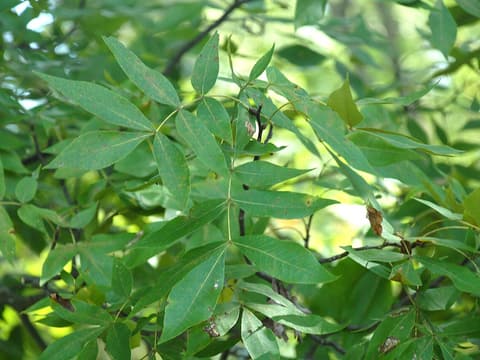
A squirrel's preferred mast, with citrus-scented leaves, fat furry winter buds and clear gold fall color, on a hickory the trade seldom sells.
Be first when mockernut hickory is priced
Saplings ship bare-root or in a pot, usually 12 to 18 inches tall, in the dormant season, and their height and age are stated here with the price, once available.
We grow it as saplings and nuts. One email when it is listed with prices, and nothing else. Or ask, and we reply with what is ready now. Live plants ship February to May and October to November.
Limited timeSign up now and get 10% off when it is ready.
Share: copy link
Mockernut Hickory at a glance
- Type
- Large tree
- Mature height
- 60–80 ft
- USDA zones
- 4–9
- Growth rate
- Slow
- Flowers
- April to May
- Fruit
- Nuts, September to October
- First crop
- About 25 years
- Mature spread
- 60 ft
- Sun
- Full, Part
- Soil moisture
- Dry, Average
- Grows wild in
- Dry uplands, rich moist slopes, rocky ground and sandy barrens
- Native range
- 30 states and the District of Columbia, north to Michigan, south to Florida and west to Texas See what is native in your state
List all 31
Alabama, Arkansas, Connecticut, Delaware, Florida, Georgia, Illinois, Indiana, Iowa, Kansas, Kentucky, Louisiana, Maryland, Massachusetts, Michigan, Mississippi, Missouri, New Hampshire, New Jersey, New York, North Carolina, Ohio, Oklahoma, Pennsylvania, Rhode Island, South Carolina, Tennessee, Texas, Virginia, West Virginia and the District of Columbia
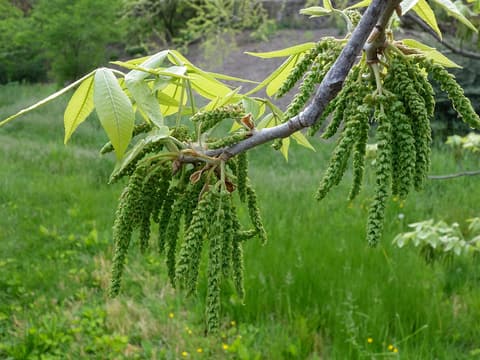
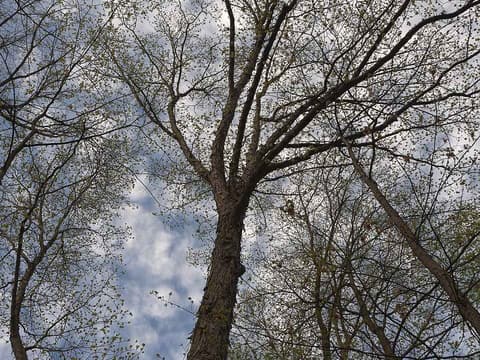
Crush a mockernut leaf and it smells of orange peel. Fat cream-colored winter buds tip the twigs, and the bark is a tight gray lattice that never shags. The nut is the joke in the name: a thick husk around a very thick shell around a small sweet kernel. Squirrels do not mind. Its wood is probably the hardest of any hickory. Ideal for a dry upland lawn, a woodlot edge or a wildlife planting beside oaks.
Size, growth and what to expect
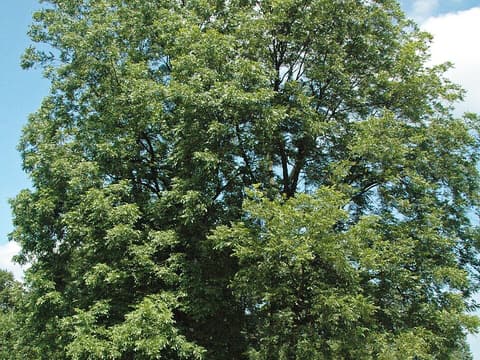
The first mockernut crop takes around 25 years, and most of the nuts come from trees between 40 and 125 years old. Growth is slow, about a foot a year on an average site, the figure our growth estimator uses for a slow tree. It reaches 60 to 80 feet with a trunk 18 to 24 inches through, and the crown spreads 40 to 60 feet. It is long-lived, and trees can still bear nuts at 200 years old. It can live up to 300 years, and one has been ring-counted to 202. Only a tiny share of trees is ever dated this way, so older ones may exist.
Some seed comes every year, with heavy crops in mast years. The fruits run 1 to 3½ inches across, with a husk that splits in four and a thick shell that is hard to crack. The wood is mostly white except for a small heartwood, which is why it is also called white hickory. Lateral roots stay small until the second year and spread to twice the crown's width by the fifth, so the top looks idle while the root builds.
It grows wild from New England south to the Florida Panhandle and west to eastern Oklahoma and Texas, mostly on ridgetops and slopes in poor soils that dry out for long spells.
How to grow Mockernut Hickory
Mockernut hickory grows in full sun or light shade in any well-drained soil, from a dry sandy ridge to a rich slope. It does best on deep fertile ground, tolerates drought once its root is down and dislikes a wet spot. It grows tall and wide, so plant it 30 feet from the house and off the drive. Set trees 40 to 60 feet apart.
Saplings ship bare-root or potted. Plant a dormant sapling from leaf fall until bud swell, in a hole deep enough for the taproot to hang straight and wide enough for the rest. Set the flare at grade, put the native soil back in, and keep mulch off the trunk. Stake it only if it leans. Sow nuts in fall an inch deep under hardware cloth, or squirrels dig them up. For spring, soak them two to four days, then hold them damp in the refrigerator for 90 to 150 days. They come up in late spring and put the first year into the root.
Water every week or two the first summer when rain is short. Deer browse hickory seedlings hard enough to kill them and rabbits gnaw the bark, so tube or cage the tree for three years. Keep the mulch thin at the stem so voles do not nest there. Prune only to keep one leader, in the dormant season; a hickory cut hard throws water sprouts.
Growth is slow. The first nuts come at about 25 years and then a good crop every two or three years; a tree still bears at 200. Male and female flowers share a tree but often open at different times, so plant two or set it near other hickories. Drought invites the hickory bark beetle, and a tree that turns red in midsummer has it; twig girdlers can kill the tops of young trees and nut weevils take a share of the crop.
Heights and zones are typical ranges for the species in cultivation; local conditions and seed source shift them.
Sources (12)
- USDA Forest Service, Silvics of North America, Mockernut Hickory
- NC State Extension Gardener Plant Toolbox, Carya tomentosa
- USDA NRCS PLANTS Database: Carya tomentosa
- USDA Forest Service, Woody Plant Seed Manual (2008), Carya chapter, Bonner
- The Morton Arboretum: mockernut hickory
- Flora of North America, vol. 3: Carya tomentosa
- Lady Bird Johnson Wildflower Center: Carya tomentosa
- USDA Forest Service, Fire Effects Information System: Carya tomentosa
- Virginia Tech Dendrology: mockernut hickory, Carya tomentosa
- Go Botany, Native Plant Trust: Carya tomentosa
- Eastern Native Tree Society, ENTS Maximum Ages for Eastern Trees, Edward Frank
- BIEN, the Botanical Information and Ecology Network: trait data for Carya tomentosa, from Loehle 1988
Plan the planting
Check your site for it What to plant with it How big, how fast How much to water How to sow it How many for a crop When it flowers and fruits When to plant it where you live How far from the house and wires How old is yours Moving one you already have
Read before planting
- Ten planting mistakes that quietly kill trees
- Transplanting young trees: timing, water and protection
- Protecting young trees from voles, rabbits, deer and squirrels
- The deepest-rooted native trees: how deep oak, hickory, walnut and pine roots really go
- Native trees and shrubs for dry, sandy soil: the plants of barrens and dunes, and how to grow them
- Six trees not to plant near a house, and what to plant instead
We grow 12 other hickories (Carya): see them all.
Grows in the same conditions
Plants that share its sun and soil
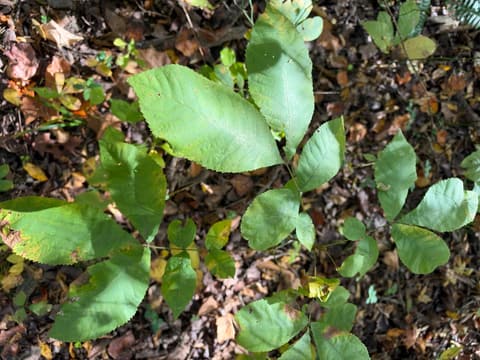
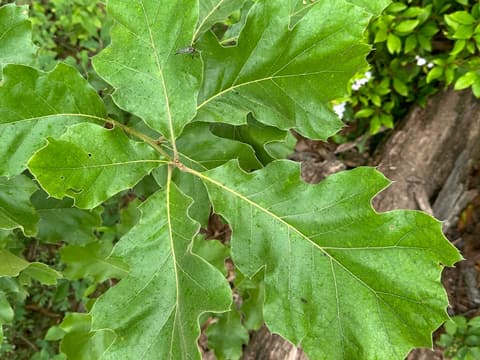
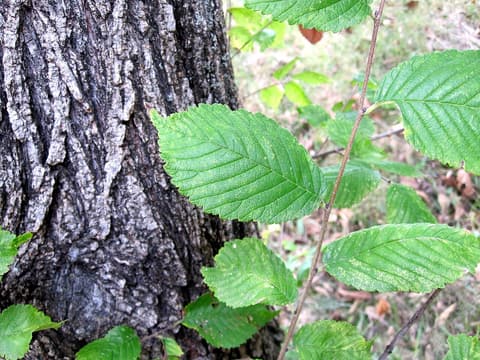
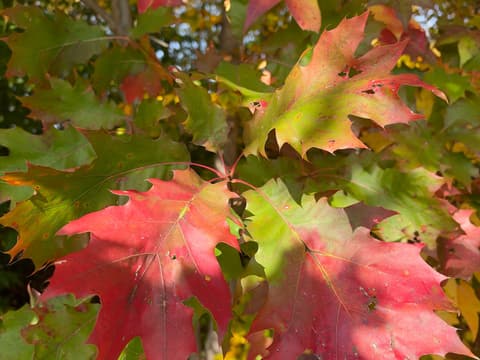
Under its canopy: Mapleleaf Viburnum, Deerberry and Black Huckleberry.
More like this