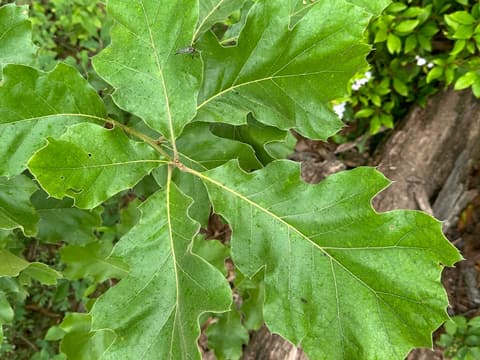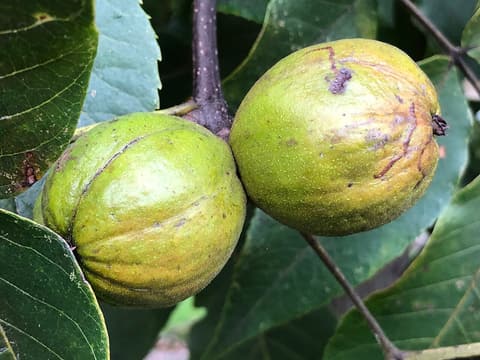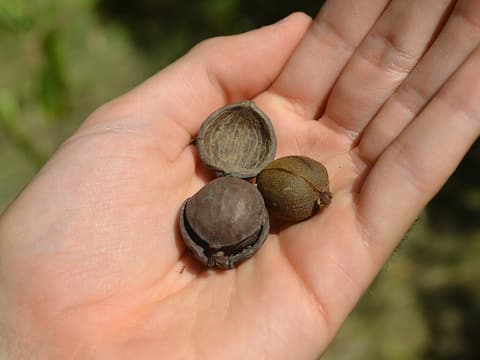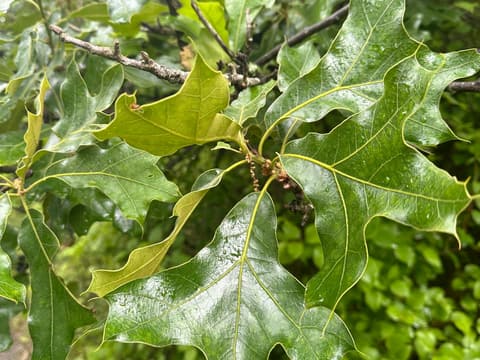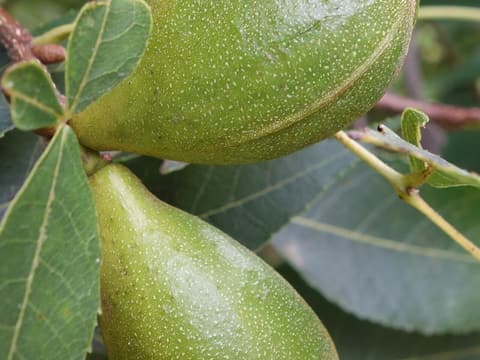
Pignut Hickory
Carya glabra Large tree Zones 4–9 50–80 ft
Shares dry uplands and sandy barrens in the wild.

A native we do not grow
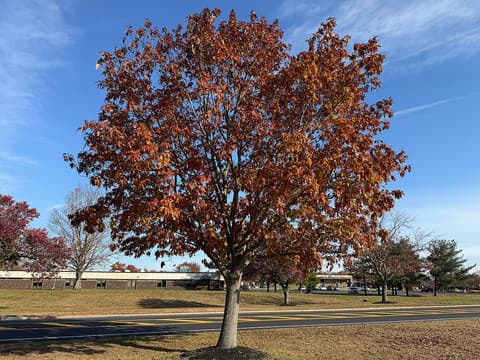
Quercus coccinea. Large tree, 40 to 80 feet, zones 4 to 9; full sun or part shade; dry or average ground.
We do not grow scarlet oak, and it is not in our shop. This page gathers what our tools say about it and the natives we grow for the same ground.
| Form | Large tree |
|---|---|
| Height, feet | 40 to 80 |
| Spread, feet | Up to 75 |
| Zones | 4 to 9 |
| Sun | Full sun or part shade |
| Soil moisture | Dry or average ground |
| Growth | Fast |
| Leaves | Deciduous |
| Traits | Fall color, wildlife value |
| Flowers | April to May |
| Fruit | Acorns, September to November |
| First crop | 20 years (most after 50; good crops every 3 to 5 years) |
| Pollination | Needs a second, unrelated tree. The flowers are wind pollinated, and an acorn crop wants another oak nearby, since oaks seldom set acorns with their own pollen. |
| Lifespan | Lives up to 250 years, and the oldest dated one reached 193. Only a tiny share of trees has ever been ring-counted or cross-dated. |
| Transplanting | The Morton Arboretum's page on scarlet oak says: "Difficult to transplant due to a deep taproot." |
| Black walnut | Tolerant, on the Morton Arboretum's list |
| Toxicity | The leaves and acorns are poisonous to people and horses. |
| Ground | Dry uplands, sandy barrens and the Appalachians |
| Native in | 28 states and the District of Columbia |
Scarlet oak is native in 28 states and the District of Columbia: Alabama, Arkansas, Connecticut, Delaware, Georgia, Illinois, Indiana, Kentucky, Louisiana, Maine, Maryland, Massachusetts, Michigan, Mississippi, Missouri, New Hampshire, New Jersey, New York, North Carolina, Ohio, Pennsylvania, Rhode Island, South Carolina, Tennessee, Vermont, Virginia, West Virginia, Wisconsin and the District of Columbia. The states are the USDA PLANTS Database's records, with the native range read from Silvics of North America and NatureServe Explorer.
These trees we grow share the most of scarlet oak's natural communities in the wild, by the companion species tool's rules.
Shares dry uplands and sandy barrens in the wild.
Shares dry uplands and sandy barrens in the wild.
Shares dry uplands and sandy barrens in the wild.
Shares dry uplands and the Appalachians in the wild.
Shares dry uplands and the Appalachians in the wild.
Shares dry uplands and sandy barrens in the wild.
Its figures come from Silvics of North America, NC State Extension, the Missouri Botanical Garden, the Morton Arboretum, the Wildflower Center, the Forest Service's Fire Effects Information System, the Woody Plant Seed Manual, the USDA PLANTS Database, the US Forest Service and Virginia Tech's dendrology site.