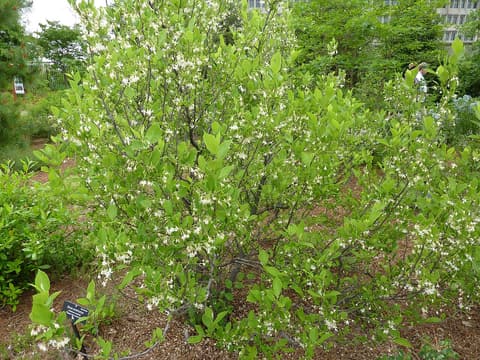
American Snowbell
Styrax americanusShrubZones 6–106–15 ft
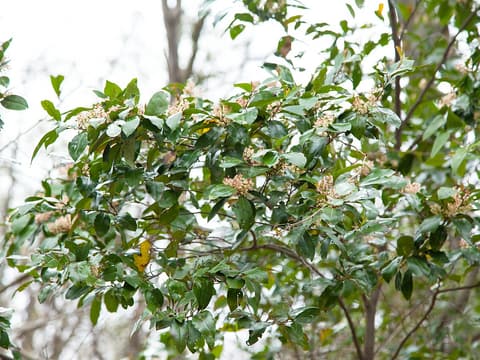
Fragrant white bells with swept-back petals cover a slender native shrub in spring, for wet woods, pond edges and shady, acidic ground.
Find the right native tree or shrub for your site by filtering on USDA hardiness zone, mature size, sun, soil moisture and what you want from each species. The list narrows as you set each filter. Every result is a tree or shrub we grow from seed, so anything it shows can be requested now and ordered once it is priced.
Best fits first: those that list your sun outright, then those that only tolerate it.
Still a long list. or set a height limit.
Want one of these? Email me when it is ready to order. Notify me
Fragrant white bells with swept-back petals cover a slender native shrub in spring, for wet woods, pond edges and shady, acidic ground.
A fast native evergreen for screens and hedges, with glossy leaves, fragrant late-winter flowers and black fruit for birds.
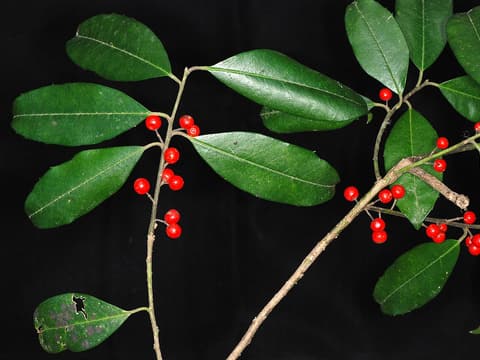
An evergreen holly of southern swamps with glossy, nearly spineless leaves and, on female trees, bright red berries through fall and winter.
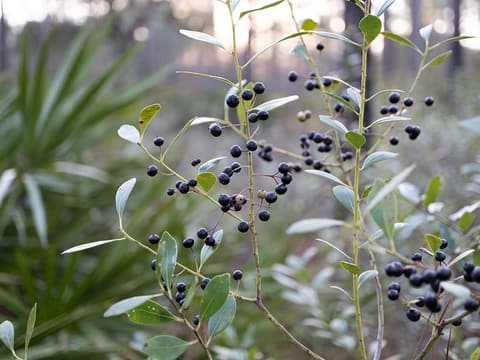
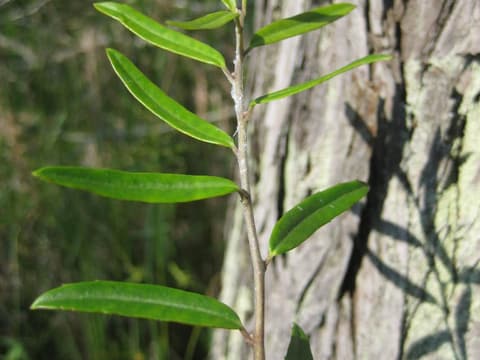
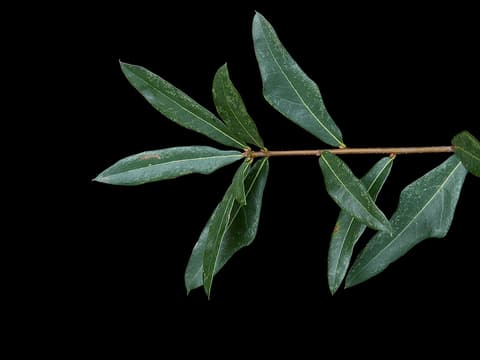
A native evergreen of the olive family for screens in sun or shade, with fragrant spring flowers and, on female trees, dark blue fruit for birds.
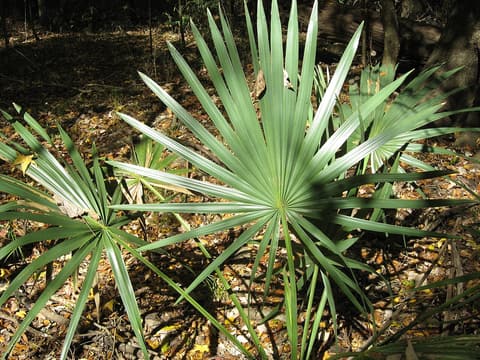
A hardy palm for wet shade whose trunk stays underground, sending up evergreen fans up to 5 feet across and tall stalks of fragrant flowers.
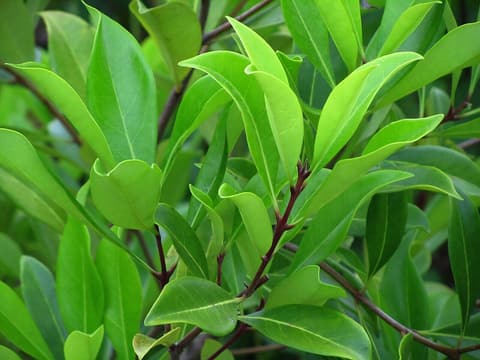
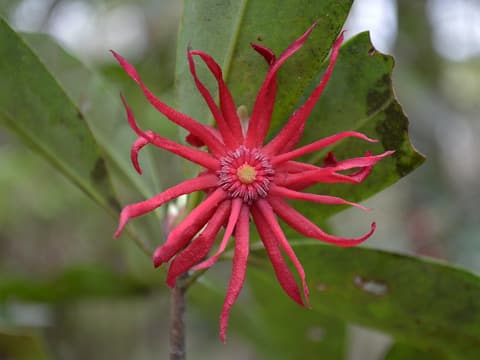
A fast-growing evergreen for shade and wet ground, with leaves that smell of anise when crushed and nodding, dark red spring flowers.
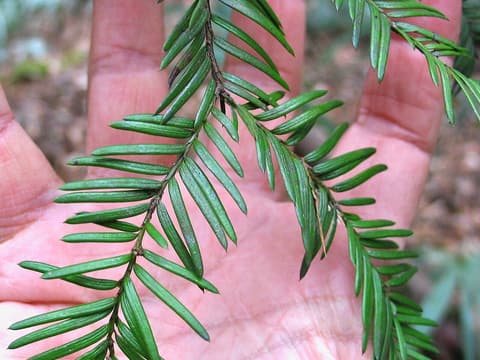
A rare yew of the Apalachicola River ravines, a bushy evergreen small tree for shade in warm Southern gardens, with red fruit on female trees.
An evergreen holly with glossy, spineless leaves for hedges and screens on damp, acidic ground, and black berries all winter on female plants.
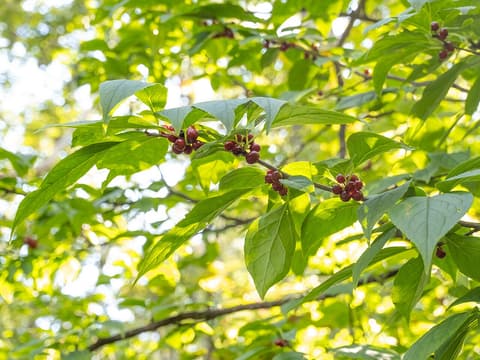
A deciduous holly of moist Appalachian slopes, with leaves up to 6 inches long and red fruit larger than most hollies bear, a favorite of birds.
A small-leaved evergreen holly of southern swamp edges, with thick, shiny leaves like a myrtle's and red berries that last into spring.
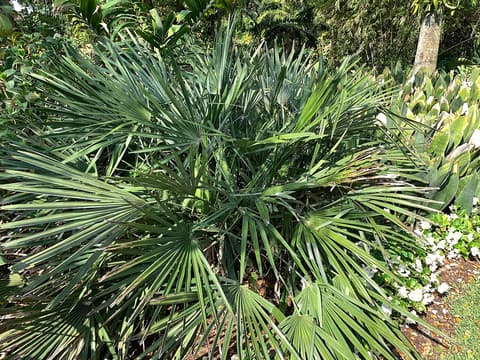
One of the hardiest palms, a trunkless clump of glossy fans up to 30 inches across, guarded at the base by long black needles.
A spicy-leaved evergreen of the southern coast, with dark blue fruit for birds, now dying across much of its range from laurel wilt.
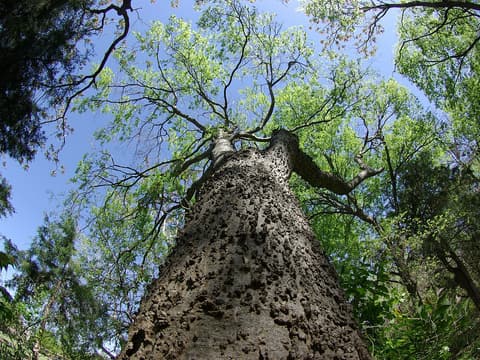
The hackberry of southern bottomlands, a fast shade tree for wet or dry ground, with warty gray bark and sweet fruit that birds eat into winter.
A fast red oak for wet southern ground, with glossy leaves that are often diamond-shaped and big acorn crops that turkeys and deer seek out.
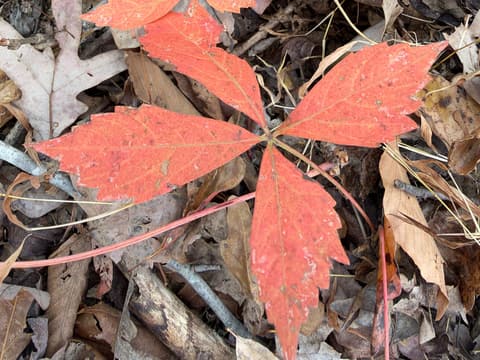
A fast native vine that climbs by sticky pads, turns crimson early in fall and feeds birds through the winter with blue-black berries.
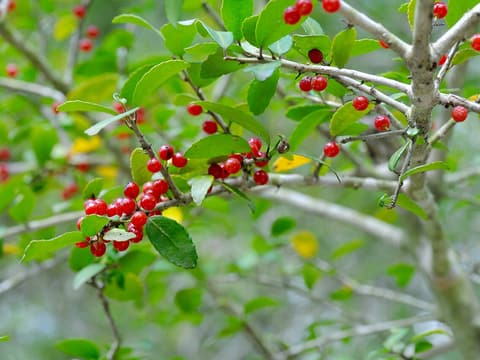
A native evergreen holly for hedges and screens, with glossy leaves and, on female trees, red berries that birds take in late winter.
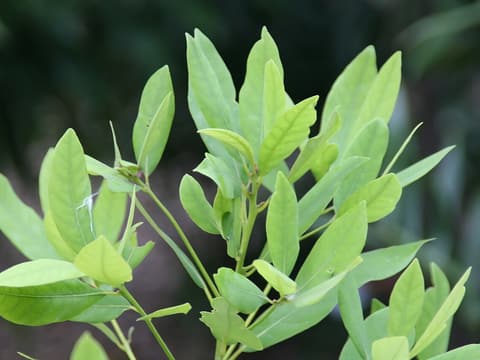
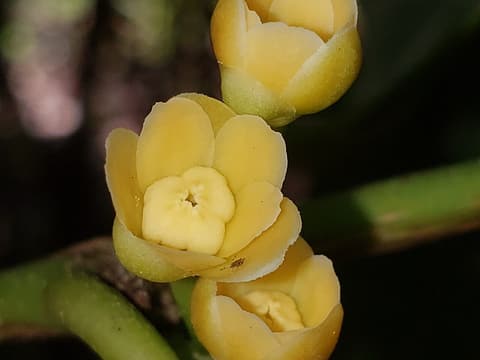
A rare Florida evergreen for shade and wet ground, with olive green leaves that smell of licorice when crushed and nodding pale yellow flowers.
Ask what is ready: put the first 12 on my request list.
The finder answers as you choose and has a height limit. The shop lists the same trees and shrubs, with a search box and a native state filter: see these in the shop.
The address follows your filters, so the link saves this list.
Narrow the list to 12 or fewer and we can email you when any of them is ready to order.
Be first
One email per plant you tick, when it is priced, and nothing else. Each carries a code for 10% off the plants in that order, not shipping or tax. Or ask, and we reply with what is ready now.
While you wait, ask what is ready now.
In the finder's list the best fit comes first: trees and shrubs whose pages list your sun and soil outright, then those that only tolerate them. Within each group, those with your zone in the middle of their range come before those at its edge.
No: the finder lists native trees and shrubs to plant, matched to your zone, size, sun and soil. To name a tree you found, use the tree identification tool, which names it from a photo of a leaf, the bark, a twig, fruit or a flower.
Set the finder's height limit to the room you have: it matches the top of each species' typical mature height. Our article on small trees for a small yard says how far each one goes from a house.
Within 15 feet of the wires, the International Society of Arboriculture says a tree should mature at 20 feet or lower. Virginia Cooperative Extension allows trees to 25 feet within 20 feet of the wires, and suggests large shrubs under 15 feet directly under them.
Divide the hedge's length by the spacing, round down and add one, since a straight row has one at each end: a 40-foot hedge at 4 feet apart takes 11. On its Hedge or screen list, the finder gives each species the spacing its own page sets.
The address carries every choice, so a copied link opens the same list. The page draws that list before any script runs, so a shared link and the page's Markdown copy show the trees and shrubs themselves. These are its keys:
Each tree's facts come from its own page: its zones, mature height, sun, soil, labels and hedge spacing. The 20 and 40 ft height steps are the International Society of Arboriculture's zones by overhead wires (Avoiding Tree & Utility Conflicts (PDF), 2021). Within 15 feet of distribution wires, the species chosen "should have a mature height of 20 feet (6 meters) or lower". From 15 to 50 feet out, it should have "a potential mature height of 40 feet (12 meters) or lower". The planting-site check follows the same zones. The 30 ft step is the small-tree ceiling the growth estimator uses for its generic small tree. Virginia Cooperative Extension draws the low zone wider, to 20 feet from the line, where "trees in the low zone should not exceed 25 feet at maturity" (Selecting and Managing Trees to Avoid Conflicts with Overhead Utility Lines, 2024). Under the line itself it suggests large shrubs with "a mature height of less than 15 feet", the limit's first step. A ZIP code's zone is the 2023 USDA Plant Hardiness Zone Map's ZIP code listing, prepared by the PRISM Climate Group at Oregon State University.
When nothing fits, the site is usually the problem rather than the catalog: tell us the zone, soil, sun and what the tree needs to do, and we will suggest something.
The address carries the tree finder's inputs, so a link opens it filled in, and Copy link on a result writes one: zone (a whole number from 2 to 10), size (shrub, small-tree, medium-tree or large-tree), height (a mature height to stay under: 15, 20, 30, 40 or 60 feet, or 60-plus), sun (full, part or shade), moisture (dry, average or wet), want (one or more of flowers, fall-color, winter-interest, wildlife, honey, edible, evergreen, rare, early-bearing, screening, nitrogen-fixing, salt, street-tree, erosion-control, shade, wet-tolerant or drought, joined by commas), hedge (a hedge or screen length in feet, for a plant count), sort (featured, name, price-asc, price-desc, height, hardy or fast), compare (the slugs of the plants to compare, joined by commas). For example, /tools/tree-finder/?zone=6&size=small-tree&sun=part&moisture=average&want=fall-color.