Photo: Laura Clark, CC BY 4.0, cropped · Wikimedia Commons
Western Mayhaw
Scientific name: Crataegus opaca · Family: Rosaceae (rose family)
Also called riverflat hawthorn, apple haw.
The mayhaw of the Gulf states, a thorny hawthorn of wet river bottoms that blooms white in February and ripens red fruit for jelly in May.
Be first when western mayhaw is priced
Saplings ship bare-root or in a pot, usually 12 to 18 inches tall, in the dormant season, and their height and age are stated here with the price, once available.
We grow it as saplings and seed. One email when it is listed with prices, and nothing else. Or ask, and we reply with what is ready now. Live plants ship February to May and October to November.
Limited timeSign up now and get 10% off when it is ready.
Share: copy link
Western Mayhaw at a glance
- Type
- Small tree
- Mature height
- 20–30 ft
- USDA zones
- 6–9
- Growth rate
- Medium
- Flowers
- February to March
- Fruit
- Haws, May to June
- First crop
- 5 to 8 years
- Mature spread
- 30 ft
- Sun
- Full, Part
- Soil moisture
- Average, Wet
- Grows wild in
- Floodplain forests, stream banks, swamps and wet flats
- Native range
- Alabama, Arkansas, Florida, Louisiana, Mississippi and Texas See what is native in your state
Western mayhaw grows on the western Gulf Coastal Plain, and its new shoots and leaf undersides are rusty-hairy. Seven of the nine named mayhaws that Payne and Krewer listed in 1990 are this species, picked from wild trees in Mississippi, Louisiana and Texas. Those selections tend to bloom a few days ahead of the eastern mayhaw, Crataegus aestivalis, a separate species farther east. Give it a sunny low spot where water stands after winter rains, and pick the fruit for jelly in May.
Size, growth and what to expect
No source rates the growth of western mayhaw, so our growth estimator treats it as a medium grower, about a foot and a half a year. It makes a small tree of 20 to 30 feet with a narrow, rounded crown. Orchard trees live long and can spread 30 feet across in 17 to 20 years. Hawthorns grown from seed take 5 to 8 years to bear fruit. Trees moved from a 36-year-old seedling orchard were still bearing five years later, at 41 or more.
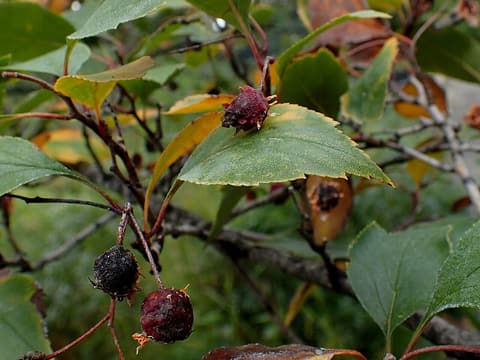
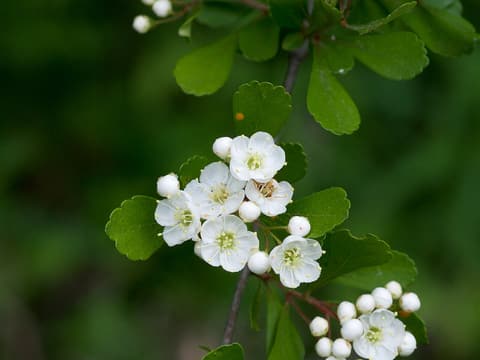
White flowers open in February and March, before or with the new leaves, in small clusters. The fruit ripens in May and June, red or sometimes yellow, about half an inch across, fragrant and juicy. A 15-year-old tree of the selection Super Spur yielded 60 kilograms, about 130 pounds, in Louisiana. Wildlife eats the fruit and shelters in the thorny crown.
It grows wild from east Texas and southern Arkansas to Alabama and west Florida, and it is most common in Louisiana. Its home is seasonally flooded hollows, ditches, sinkholes and streamsides, and the Wildflower Center lists it as an obligate wetland plant.
How to grow Western Mayhaw
Western mayhaw takes full sun or part shade, and in the wild it grows under bottomland hardwoods. It tolerates wet, very acidic soil and seasonal flooding. It grows better, though, on a moist, well-drained, slightly acidic soil of pH 6.0 to 6.5. Set trees 15 feet apart, and keep each one 15 feet from a wall and 15 feet from overhead wires.
Saplings ship bare-root or potted. Plant them dormant, from leaf fall until bud swell, in a hole wider than the roots and no deeper. Set the root flare at the soil line, put the native soil back in, and keep the mulch clear of the trunk. Sow the cleaned seed outdoors in early fall, a quarter inch deep. Seedlings come up the next spring. For a spring sowing, keep the seed damp in the refrigerator for six to eight weeks first. Fresh, undried fruit fermented for four to eight days before cleaning gave 93 percent germination in one test. Seed quality varies a great deal from tree to tree.
Water it every day for the first two weeks after planting, then every two to three days until week 12. After that, water weekly through the first summer, and in dry spells for the next two. Deer and rabbits can wipe out young mayhaws quickly, so guard each sapling with wire for its first three years. Train it to one trunk, with the first branches 18 inches or more off the ground. Thin the crown a little each year, since most selections need the light to fruit well.
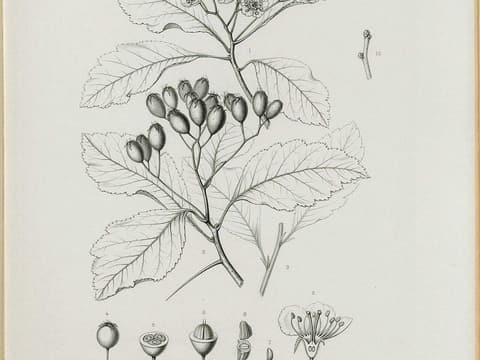
Each flower carries both male and female parts, and native bees visit the early bloom. Western mayhaw carries two sets of chromosomes, and across the genus such hawthorns reject their own pollen, so plant two or more from different seed. Many seedlings bear fruit like the mother tree, since much of the seed is a clone of it. Plum curculio can badly damage the fruit, and aphids and borers also feed on the tree. Quince rust is the most common disease, and it was severe in East Texas in 1990. Brown rot and fire blight also occur, though fire blight is seldom serious.
Heights and zones are typical ranges for the species in cultivation; local conditions and seed source shift them.
Sources (11)
- Flora of North America, vol. 9: Crataegus opaca, Phipps
- Payne, J.A. and G.W. Krewer. 1990. Mayhaw: a new fruit crop for the South. In: Janick and Simon (eds.), Advances in new crops, Timber Press, p. 317-321
- USDA NRCS Plant Fact Sheet: Mayhaw, Crataegus opaca, Moore, edited 2000 and 2006 (PDF)
- Lady Bird Johnson Wildflower Center: Crataegus opaca
- USDA Forest Service, Woody Plant Seed Manual (2008), Crataegus chapter (PDF)
- Texas A&M AgriLife, Aggie Horticulture: Mayhaw, Baker and McEachern, January 27, 1997
- NatureServe Explorer: Crataegus opaca
- Talent and Dickinson 2005, Canadian Journal of Botany 83: 1268-1304
- Dickinson and Phipps 1986, American Journal of Botany 73: 116-130
- Vaskova and Kolarcik 2019, Forests 10: 1059
- HortScience: Trappey, Johnson and Whitley 2005, HortScience 40(3): 882C (the abstract, by Crossref)
Plan the planting
Check your site for it What to plant with it How big, how fast How much to water How to sow it How many for a crop When it flowers and fruits When to plant it where you live How far from the house and wires How old is yours Moving one you already have
Read before planting
- Ten planting mistakes that quietly kill trees
- Transplanting young trees: timing, water and protection
- Protecting young trees from voles, rabbits, deer, squirrels and beavers
- Multistem or single stem? Sometimes the trunk is hiding the answer
More about western mayhaw
We grow 12 other hawthorns (Crataegus): see them all.
Grows in the same conditions
Plants that share its sun and soil
Trees to plant it under: Swamp Laurel Oak, Swamp Tupelo and Willow Oak.
More like this