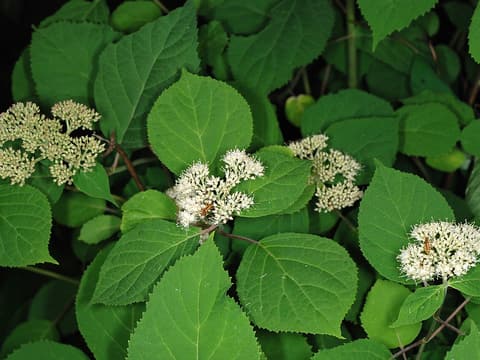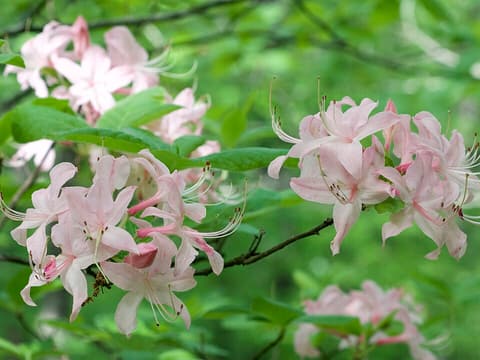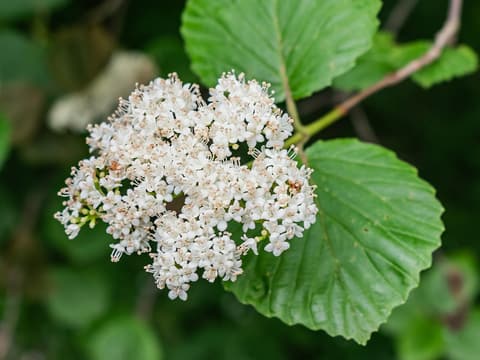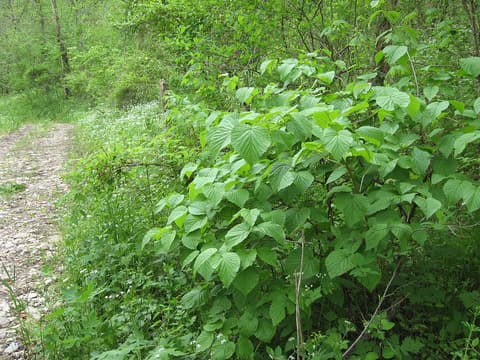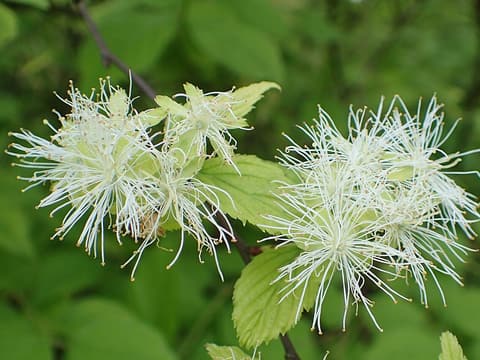
Alabama Snow-wreath
Neviusia alabamensis Shrub Zones 4–8 3–10 ft
Shares rich moist slopes, stream banks, rocky ground and the forest understory in the wild.

A native we do not grow
Hydrangea quercifolia. Shrub, 3 to 12 feet, zones 5 to 9; full sun, part shade or shade; dry or average ground.
We do not grow oakleaf hydrangea, and it is not in our shop. This page gathers what our tools say about it and the natives we grow for the same ground.
| Other names | Oak-leaved hydrangea |
|---|---|
| Form | Shrub |
| Height, feet | 3 to 12 |
| Spread, feet | Up to 10 |
| Zones | 5 to 9 |
| Sun | Full sun, part shade or shade |
| Soil moisture | Dry or average ground |
| Growth | Slow |
| Leaves | Deciduous |
| Traits | Showy flowers, fall color, wildlife value, hedge or screen, winter interest |
| Flowers | May to July |
| Fruit | Capsules, September to November |
| Pollination | Needs a second, unrelated plant. A lone oakleaf hydrangea sets almost no seed: its flowers are self-incompatible by a HortScience study of 2004, and 3,000 selfed flowers gave five seedlings in an earlier trial. Plant two unrelated plants for seed. |
| Black walnut | Not named on the Morton Arboretum's lists |
| Toxicity | The bark, flowers and leaves are poisonous to people, dogs, cats and horses. |
| Ground | Rich moist slopes, stream banks, rocky ground and the forest understory |
| Native in | 7 states |
Oakleaf hydrangea is native in 7 states: Alabama, Florida, Georgia, Louisiana, Mississippi, South Carolina and Tennessee. The states are the USDA PLANTS Database's records, with the native range read from Silvics of North America and NatureServe Explorer. The USDA PLANTS Database also records it growing wild beyond that range in North Carolina and the District of Columbia, where it is naturalized, not native.
These shrubs we grow share the most of oakleaf hydrangea's natural communities in the wild, by the companion species tool's rules.
Shares rich moist slopes, stream banks, rocky ground and the forest understory in the wild.
Shares rich moist slopes, stream banks, rocky ground and the forest understory in the wild.
Shares rich moist slopes, stream banks, rocky ground and the forest understory in the wild.
Shares rich moist slopes, stream banks, rocky ground and the forest understory in the wild.
Shares rich moist slopes, stream banks, rocky ground and the forest understory in the wild.
Shares rich moist slopes, stream banks and the forest understory in the wild.
Its figures come from Silvics of North America, NC State Extension, the Missouri Botanical Garden, the Morton Arboretum, the Wildflower Center, UF/IFAS Extension, the University of Connecticut's plant database, Trees and Shrubs Online and the USDA PLANTS Database.