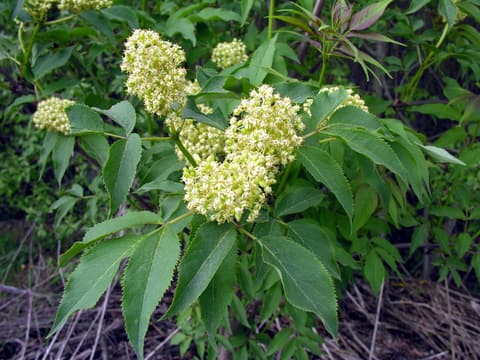
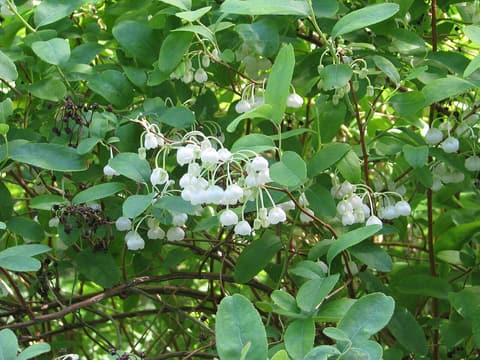
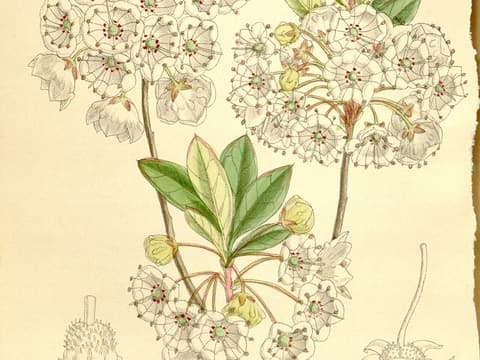
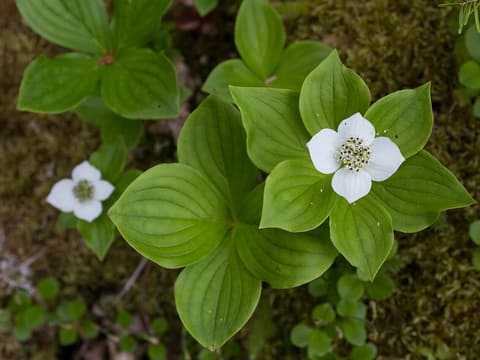
Photo: Krzysztof Ziarnek, CC BY-SA 4.0, cropped · Wikimedia Commons
Alabama Snow-wreath
Scientific name: Neviusia alabamensis · Family: Rosaceae (rose family)
Also called snow wreath.
A rare southern shrub whose arching stems carry puffs of white flowers with no petals in spring, for a shady border or woodland edge.
Be first when Alabama snow-wreath is priced
Saplings ship bare-root or in a pot, usually 12 to 18 inches tall, in the dormant season, and their height and age are stated here with the price, once available.
We grow it as saplings. One email when it is listed with prices, and nothing else. Or ask, and we reply with what is ready now. Live plants ship February to May and October to November.
Limited timeSign up now and get 10% off when it is ready.
Share: copy link
Alabama Snow-wreath at a glance
- Type
- Shrub
- Mature height
- 3–10 ft
- USDA zones
- 4–8
- Growth rate
- Medium
- Flowers
- March to May
- Fruit
- Dry fruit, May to October
- First crop
- About 3 years (first flowers)
- Mature spread
- 6 ft
- Sun
- Full, Part, Shade
- Soil moisture
- Dry, Average
- Grows wild in
- Rocky ground, rich moist slopes, stream banks and the forest understory
- Native range
- Alabama, Arkansas, Georgia, Mississippi, Missouri and Tennessee See what is native in your state
Alabama snow-wreath is a rare shrub of the rose family, one of only two species in its genus, the other a California shrub. In spring its arching stems carry puffs of white stamens with no petals, like a wreath of snow. It grows wild in a few scattered colonies in Alabama, Arkansas, Georgia, Mississippi and Tennessee, and each colony is mostly or wholly one clone. NatureServe ranks it vulnerable, and Georgia and Tennessee list it as threatened. Grow it in a shady border or at a woodland edge, where its white flowers light up the spring shade.
Size, growth and what to expect
It grows at a medium pace, about a foot and a half a year in our growth estimator. It forms a rounded clump 3 to 6 feet tall and wide, sometimes 10 feet tall, of slender stems that arch with age. Root suckers thicken it into a thicket. A plant grown from a cutting the Arnold Arboretum received in 1917 still grows there.
Clusters of 2 to 10 flowers open at the branch tips from late March into May. Each is about an inch across, a puff of 100 or more white stamens with no petals. Small, dry fruits form from late spring into fall, but their seeds rarely if ever ripen, and no seedling has ever been found in the wild. The leaves turn yellow in fall.
It grows on steep, rocky slopes over limestone, sandstone or shale and along streams in hardwood forest, in light to heavy shade. It was last seen in Missouri in 1918. Gardens have grown it since soon after its discovery in 1857, as far north as Boston and Chicago.
How to grow Alabama Snow-wreath
Alabama snow-wreath grows in part shade, full sun or shade, in average, well-drained soil that is close to neutral. It takes dry spells once it is rooted. Its roots send up suckers, so pull the ones you do not want to keep a single clump. Set plants 5 feet apart, and keep each one 3 feet from a wall. It is small enough to grow within 15 feet of overhead wires.
Saplings ship bare-root or potted. Plant them dormant, from leaf fall until bud swell, in a hole wider than the roots and no deeper. Set the crown at the soil line, put the native soil back in, and keep the mulch clear of the stems.
Water it every day for the first two weeks after planting, then every two to three days until week 12. After that, water weekly through the first two summers, and give it a deep soak once a week in later dry spells. It blooms on last year's wood, so prune right after flowering, cutting tired or dead stems out at the base. An old or overgrown clump can be cut to the ground to renew it.
Each flower carries both male and female parts, so there are no male and female plants to pair. Seeds rarely ripen in the wild. Some growers list seed among the ways to raise it. It roots easily from softwood cuttings, and a clump can be divided. It is a short-lived shrub, but no serious pests or diseases trouble it.
Heights and zones are typical ranges for the species in cultivation; local conditions and seed source shift them.
Sources (9)
- Flora of North America, vol. 9: Neviusia alabamensis
- Flora of North America, vol. 9: Neviusia, genus
- NatureServe Explorer: Neviusia alabamensis
- Georgia Department of Natural Resources, Georgia Biodiversity Portal: Neviusia alabamensis species account
- NC State Extension, North Carolina Extension Gardener Plant Toolbox: Neviusia alabamensis
- Missouri Botanical Garden, Plant Finder: Neviusia alabamensis
- Trees and Shrubs Online: Neviusia alabamensis, Cameron 2025
- Lady Bird Johnson Wildflower Center, Native Plant Database: Neviusia alabamensis
- Arnold Arboretum of Harvard University: plant records, accession 18097-1*A, Neviusia alabamensis
Plan the planting
Check your site for it What to plant with it How big, how fast How much to water How many for a crop When it flowers and fruits When to plant it where you live How far from the house and wires How old is yours
Read before planting
- Ten planting mistakes that quietly kill trees
- Transplanting young trees: timing, water and protection
- Protecting young trees from voles, rabbits, deer, squirrels and beavers
- The habitat around a tree is part of the tree
- Invasive vines and shrubs are what is killing your woods
- Native trees and shrubs for bees: pollen, nectar, nesting and a bloom calendar from willow to witch hazel
Grows in the same conditions
Plants that share its sun and soil
Trees to plant it under: Florida Maple, September Elm and Rock Elm.
More like this