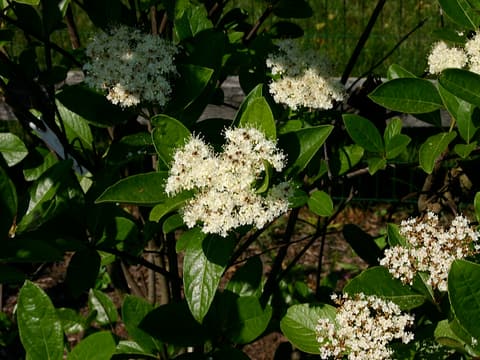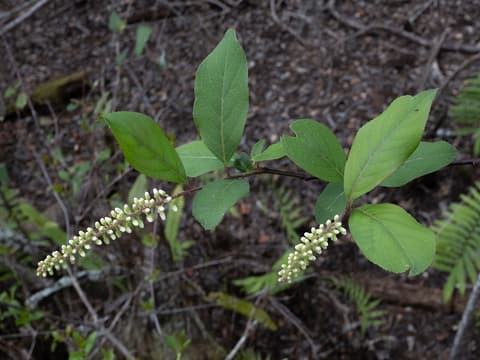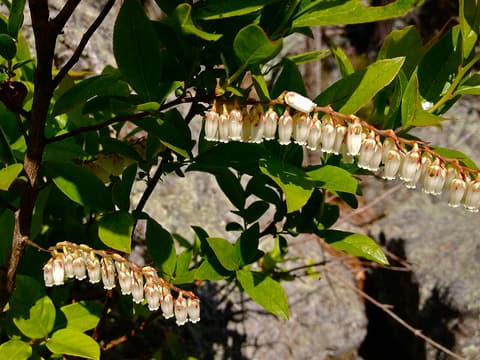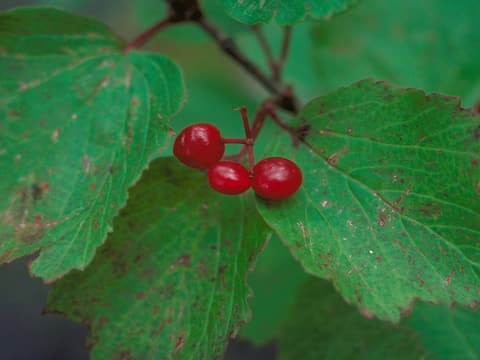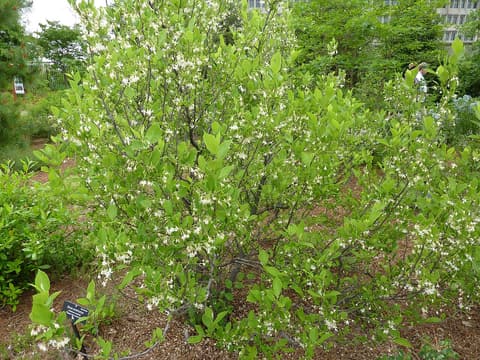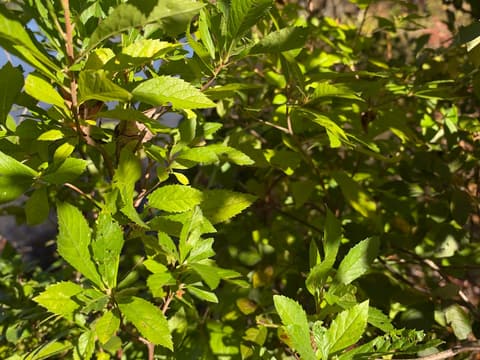
Sweet Pepperbush (Summersweet)
Clethra alnifolia Shrub Zones 4–9 4–8 ft
Shares stream banks, swamps and wet flats in the wild.

A native we do not grow
Rosa palustris. Shrub, 1 to 10 feet, zones 4 to 9; full sun, part shade or shade; average or wet ground.
We do not grow swamp rose, and it is not in our shop. This page gathers what our tools say about it and the natives we grow for the same ground.
| Form | Shrub |
|---|---|
| Height, feet | 1 to 10 |
| Spread, feet | Up to 6 |
| Zones | 4 to 9 |
| Sun | Full sun, part shade or shade |
| Soil moisture | Average or wet ground |
| Growth | Medium |
| Leaves | Deciduous |
| Traits | Showy flowers, fall color, wildlife value, hedge or screen |
| Flowers | May to August |
| Fruit | Hips, September to February |
| Pollination | Not known whether one bears alone |
| Planting season | Spring. Its one source speaks of seedlings: those taller than about 10 inches go out in summer, the rest in late spring after a winter in a cold frame. |
| Black walnut | Tolerant, on the Morton Arboretum's list as “wild rose” |
| Ground | Stream banks, swamps and wet flats |
| Native in | 28 states and the District of Columbia |
Swamp rose is native in 28 states and the District of Columbia: Alabama, Arkansas, Connecticut, Delaware, Florida, Georgia, Illinois, Indiana, Kentucky, Maine, Maryland, Massachusetts, Michigan, Mississippi, Missouri, New Hampshire, New Jersey, New York, North Carolina, Ohio, Pennsylvania, Rhode Island, South Carolina, Tennessee, Vermont, Virginia, West Virginia, Wisconsin and the District of Columbia. The states are the USDA PLANTS Database's records, with the native range read from Silvics of North America and NatureServe Explorer. The USDA PLANTS Database also records it growing wild beyond that range in Iowa and Louisiana, where it is naturalized, not native.
These shrubs we grow share the most of swamp rose's natural communities in the wild, by the companion species tool's rules.
Shares stream banks, swamps and wet flats in the wild.
Shares stream banks, swamps and wet flats in the wild.
Shares stream banks, swamps and wet flats in the wild.
Shares stream banks, swamps and wet flats in the wild.
Shares stream banks, swamps and wet flats in the wild.
Shares stream banks, swamps and wet flats in the wild.
Its figures come from Silvics of North America, NC State Extension, the Missouri Botanical Garden, the Morton Arboretum, the Wildflower Center, the Woody Plant Seed Manual and the USDA PLANTS Database.