Photo: Fritzflohrreynolds, CC BY-SA 3.0, cropped · Wikimedia Commons
Swamp Doghobble
Scientific name: Eubotrys racemosa
Also called fetterbush, swamp sweetbells, Leucothoe racemosa.
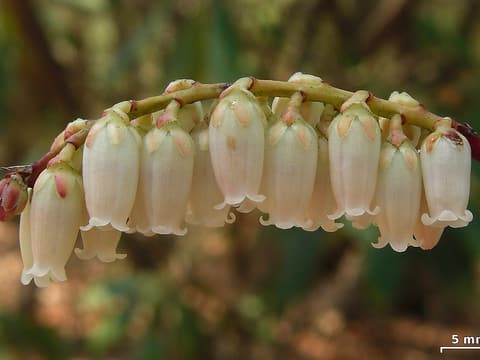
Arching sprays of white bell flowers in May on a deciduous heath shrub for wet, acid ground in sun or part shade.
Be first when swamp doghobble is priced
Saplings ship in a pot, usually 12 to 18 inches tall, in the dormant season, and their height and age are stated here with the price, once available.
We grow it as saplings and seed. One email when it is listed with prices, and nothing else. Or ask, and we reply with what is ready now. Live plants ship February to May and October to November.
Limited timeSign up now and get 10% off when it is ready.
Share: copy link
Swamp Doghobble at a glance
- Type
- Shrub
- Mature height
- 4–10 ft
- USDA zones
- 5–9
- Growth rate
- Medium
- Flowers
- April to June
- Fruit
- Capsules, September to October
- First crop
- 3 to 5 years after planting (first flowers, in full sun)
- Mature spread
- 6 ft
- Sun
- Full, Part, Shade
- Soil moisture
- Average, Wet
- Grows wild in
- Stream banks, the coast, swamps and wet flats
- Native range
- 18 states and the District of Columbia, north to New York, south to Florida and west to Texas See what is native in your state
List all 19
Alabama, Connecticut, Delaware, Florida, Georgia, Louisiana, Maryland, Massachusetts, Mississippi, New Jersey, New York, North Carolina, Pennsylvania, Rhode Island, South Carolina, Tennessee, Texas, Virginia and the District of Columbia
Swamp doghobble, also called fetterbush, is a coastal-plain shrub of wet woods and bog edges from Massachusetts to Louisiana. It grows best in sun or part shade on wet ground, and sources disagree on whether it takes deep shade. It turns red in fall. A good choice for the wet corner where rhododendrons rot. On a slope or a bank, the shrub helps keep the soil from washing away. At home in a bog garden, or massed under sweetbay and bald cypress on wet sand.
Size, growth and what to expect
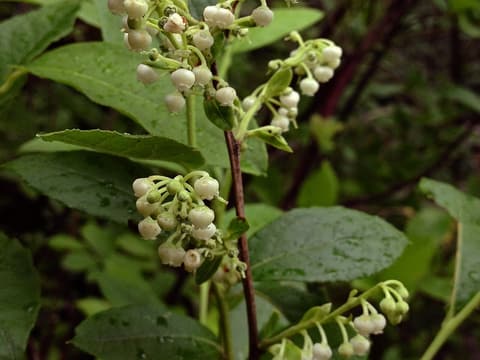
A shrub of the coastal plain from Massachusetts to Florida and west to Louisiana, swamp doghobble grows wild in swamps and along the shores of rivers, ponds and streams. Expect a medium pace, roughly a foot and a half of new height a year on an average site, the rate our growth estimator assumes for it. It stands 4 to 10 feet tall in a clump 2 to 6 feet wide, and it sends out suckers to form a colony. Fragrant white bells about a third of an inch long hang in sprays up to 4 inches long from April into June, and bees and butterflies work them.
The flowers give way to five-parted light brown capsules that ripen in September and October. In fall the leaves turn red, orange and yellow. It is poisonous to dogs, cats and horses, and deer leave it alone. Swamp sweetbells, its other name, describes the fragrant bell-shaped flowers. It does not stand drought or wind.
How to grow Swamp Doghobble
Swamp doghobble takes wet, acid ground where most shrubs rot: a seep, a pond edge, low woods that stand in water after rain. It grows best in sun or part shade, and in full sun only where the soil never dries. The stems arch and the plant spreads by runners, so space it 4 feet apart with room to make a colony.
Saplings ship potted. Plant while the shrub is dormant. Heath shrubs have fine, shallow roots, so keep the root ball intact; set it in a hole three times as wide and no deeper, ball level with the ground, native soil back in. Sweet or limey soil is a reason to choose another plant, not to amend. Mulch with pine straw, thin near the stems. Seed is as fine as dust. Sow it on the surface of a moist, acid peat mix, uncovered, and keep it damp under a clear lid in good light. Seedlings are tiny and slow their first season, so leave them in the pot until they are big enough to handle.
Never let it dry out the first summer; water twice a week in heat unless the site is naturally wet. Deer and rabbits mostly skip the toxic foliage, so a guard is rarely needed. If a clump gets leggy, cut the oldest stems to the ground after bloom, since flowers come on last year's wood.
Each flower carries both male and female parts, so there are no male and female plants to pair. If the leaves go pale between green veins, the soil needs to be more acid. The whole plant is poisonous, like its rhododendron cousins, so keep it from grazing animals.
Heights and zones are typical ranges for the species in cultivation; local conditions and seed source shift them.
Sources (8)
- NC State Extension Gardener Plant Toolbox: Eubotrys racemosa
- Missouri Botanical Garden Plant Finder: Eubotrys racemosa
- Go Botany, Native Plant Trust: Eubotrys racemosa
- Lady Bird Johnson Wildflower Center: Eubotrys racemosa
- NatureServe Explorer: Leucothoe racemosa (Eubotrys racemosa), Fetterbush
- USDA NRCS PLANTS Database: Eubotrys racemosa
- Flora of North America, vol. 8: Eubotrys racemosa
- Virginia Tech Dendrology: swamp doghobble, Eubotrys racemosus
Plan the planting
Check your site for it What to plant with it How big, how fast How much to water How to sow it How many for a crop When it flowers and fruits When to plant it where you live How far from the house and wires How old is yours
Read before planting
- Ten planting mistakes that quietly kill trees
- Transplanting young trees: timing, water and protection
- Protecting young trees from voles, rabbits, deer and squirrels
- How floodplain trees survive high water
- Native shrubs and trees deer usually leave alone, and why the lists disagree
- The habitat around a tree is part of the tree
Other sweetbells (Eubotrys) we grow: Mountain Sweetbells.
Grows in the same conditions
Plants that share its sun and soil
Trees to plant it under: Redbay, Atlantic White Cedar and Pond Cypress.
More like this