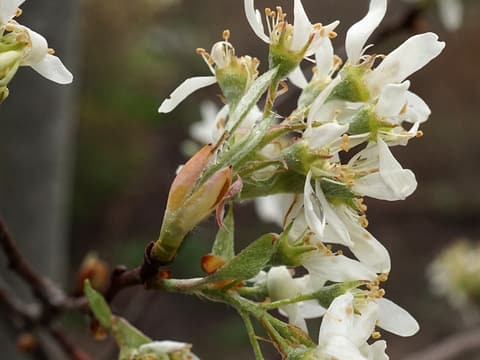
Photo: David J. Stang, CC BY-SA 4.0, cropped · Wikimedia Commons
Beach Plum
Scientific name: Prunus maritima
The dune plum of the Atlantic coast: salt-proof, drought-proof and covered in white bloom each May.
Be first when beach plum is priced
Saplings ship bare-root, usually 12 to 18 inches tall, in the dormant season, and their height and age are stated here with the price, once available.
We grow it as saplings and seed. One email when it is listed with prices, and nothing else. Or ask, and we reply with what is ready now. Live plants ship February to May and October to November.
Limited timeSign up now and get 10% off when it is ready.
Share: copy link
Beach Plum at a glance
Showy flowers, Edible, Wildlife value, Drought tolerant, Salt tolerant, Bears young, Erosion control
- Type
- Shrub
- Mature height
- 4–8 ft
- USDA zones
- 3–8
- Growth rate
- Medium
- Flowers
- April to May
- Fruit
- Plums, August to October
- First crop
- 3 to 4 years
- Mature spread
- 6 ft
- Sun
- Full
- Soil moisture
- Dry
- Grows wild in
- The coast and sandy barrens
- Native range
- 11 states, north to Maine and south and west to Virginia See what is native in your state
List all 11
Connecticut, Delaware, Maine, Maryland, Massachusetts, New Hampshire, New Jersey, New York, Pennsylvania, Rhode Island and Virginia
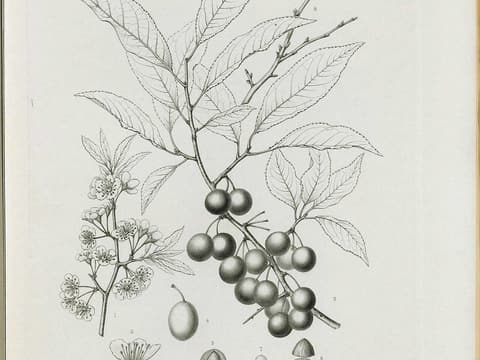
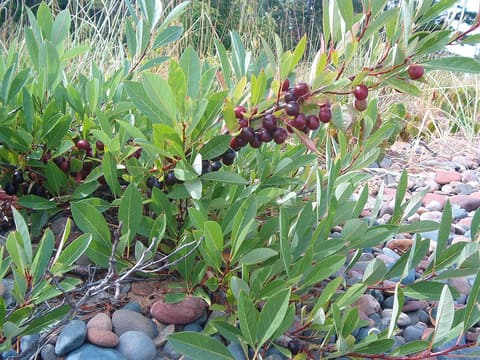
Beach plum grows in pure sand on the coast from Maine to Maryland, and it thrives far from the sea. The purple fruit ripens in September and makes the famous Cape Cod jelly. Low, spreading and tough, it is ideal for seaside gardens, road edges and dry banks. Branches buried by shifting sand put out new roots, and it is planted in dune restoration to hold the sand. It needs a second, unrelated seedling nearby to set fruit, so plant two or more. Plant it as a low fruiting hedge, or as a jelly patch of three or four bushes.
Size, growth and what to expect
On the dunes beach plum forms low, spreading thickets 4 to 8 feet tall, and the USDA plant guide notes that a well-tended inland shrub can reach 18 feet. Thickets spread up to 20 feet across. It grows at a medium pace, roughly a foot and a half a year in its youth on an average site, which is the rate our growth estimator uses for it.
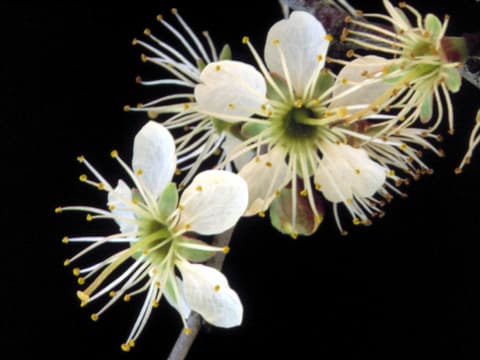
Planted stock can bear from its third year, by the Rutgers account, with harvest from late August into October. A heavy crop is often followed by a light one. White flowers half an inch across open in April or May before the leaves. The fruit is a cherry-shaped plum half an inch to an inch across, usually dark purple, and its flavor runs from sweet to tart or bitter from bush to bush. Birds and small mammals take the fruit and shelter in the thickets.
It grows wild on the older dunes of the Atlantic coast from the Canadian Maritimes south to northern Virginia.
How to grow Beach Plum
Beach plum wants full sun and sandy, fast-draining soil, and it grows well inland. It stands up to salt spray, wind and drought, and it rots in heavy, wet ground. It fits a dune, a dry bank or a roadside, spaced 6 feet apart.
Plant bare-root saplings while dormant, early spring or after leaf drop. Dig a hole twice the width of the roots and no deeper, set the root flare at grade, and backfill with the sand or soil you removed. Mulch lightly, two inches, kept off the stems. Sow pits in fall two inches deep under hardware cloth against mice.
Water once a week through the first summer, then rarely. Rabbits and voles chew the bark and deer browse the shoots, so use a wire guard for the first two or three years. Prune in late winter only to remove dead or crowded wood.
Beach plum needs a second, unrelated seedling nearby to set fruit. Fruit ripens in late August or September. Plum curculio and brown rot can take the crop in humid years. Seedlings bear within about four years.
Heights and zones are typical ranges for the species in cultivation; local conditions and seed source shift them.
Sources (10)
- USDA NRCS Plant Guide: beach plum, Prunus maritima
- Rutgers NJAES fact sheet FS1297, Ultra-Niche Crops Series: Beach Plum
- Lady Bird Johnson Wildflower Center: Prunus maritima
- USDA Forest Service, Woody Plant Seed Manual: Prunus chapter
- Virginia Tech Dendrology: beach plum, Prunus maritima
- NatureServe Explorer: Prunus maritima
- Flora of North America, vol. 9: Prunus maritima
- Trees and Shrubs Online: Prunus maritima
- USDA NRCS PLANTS Database: Prunus maritima
- Native Plant Trust, Garden Plant Finder: Prunus maritima
Plan the planting
Check your site for it What to plant with it How big, how fast How much to water How to sow it How many for a crop When it flowers and fruits When to plant it where you live How far from the house and wires How old is yours
Read before planting
- Ten planting mistakes that quietly kill trees
- Transplanting young trees: timing, water and protection
- Protecting young trees from voles, rabbits, deer and squirrels
- Native trees and shrubs for dry, sandy soil: the plants of barrens and dunes, and how to grow them
- Why a tree flowers but bears no fruit: it may be a male, lack a partner nearby, or be too young
- The habitat around a tree is part of the tree
We grow 14 other plums and cherries (Prunus): see them all.
Grows in the same conditions
Plants that share its sun and soil
More like this