For a dry, sandy bank in full sun
Dry Sandy Site Pack
Pine-barrens and prairie toughness for sand, gravel and drought: two shrub oaks, two fruit plants, prairie leadplant and the best fall color on a dry bank.
6 kinds, 12 saplings Zones 4–7 Priced on request
The plants in this bundle
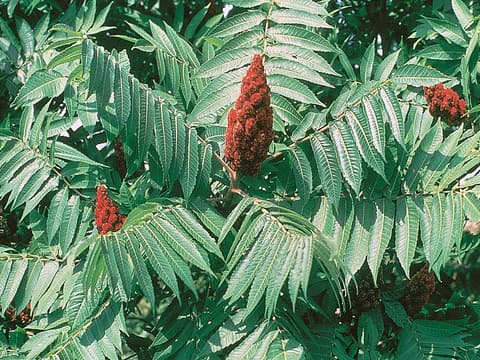
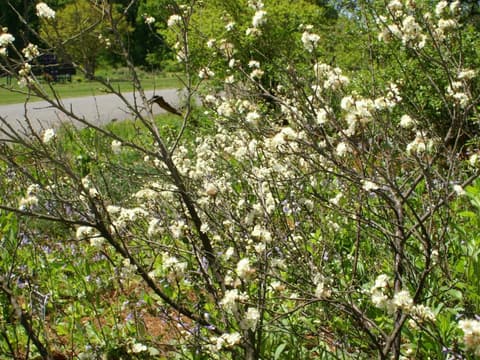
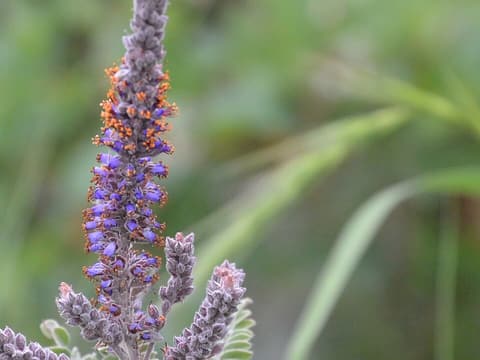
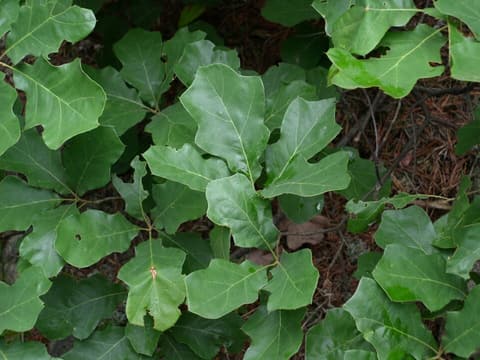
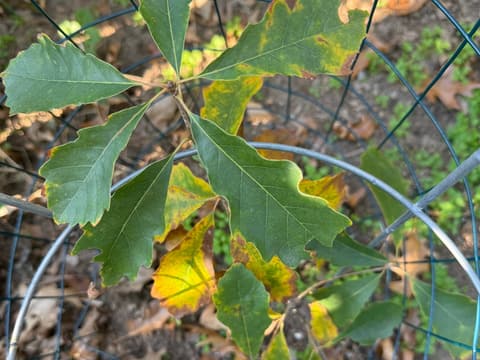
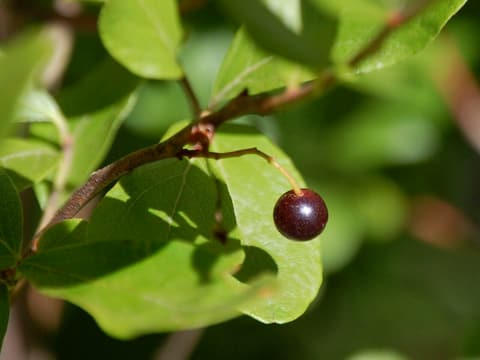
Planted for a crop: 2 of each kind, 12 saplings in all. Why two: see Planting the pack.
None of these is priced online yet. Ask us to put the whole set together at the sizes on hand, or leave your email to hear when any of them is priced.
Why these six go together
These are the plants of pine barrens, dunes and prairie, and they treat a dry sandy bank as home rather than hardship. Bear oak and dwarf chinquapin oak are true shrub oaks: bear oak is one of the great caterpillar hosts of the East, and dwarf chinquapin drops sweet, low-tannin acorns within a few years of planting. Beach plum is salt-proof and drought-proof and covers itself in white bloom each May. Staghorn sumac gives the best fall color on a dry bank and red fruit cones that birds work through the winter. Leadplant roots deep, fixes nitrogen and carries purple spikes in summer. Black huckleberry fills the ground layer with sweet black berries and crimson fall leaves.
Nothing in the set needs fertilizer or irrigation once it is established, and all six feed the insects, birds and mammals of dry country.
Where it fits
Full sun and sharp drainage: sand, gravel, a south-facing bank, the strip along a driveway. All six take drought. Dwarf chinquapin oak, sumac and huckleberry also accept average soil. Together they are hardy in zones 4 through 7. Huckleberry is the one that stops at 7, and the rest go to 8. Leadplant and beach plum are hardy far to the north.
Heights: leadplant and huckleberry 1 to 3 feet, beach plum 4 to 8, the two oaks 6 to 20, staghorn sumac 15 to 25. Sumac spreads by root suckers into a colony, so give it the far end where it can run. Spacing, from the plant pages: leadplant 2 feet apart, huckleberry 2 to 3, beach plum 6, sumac 6 to 12, and the two oaks 8 to 12, with sumac 15 feet from the house.
See the set's year in the bloom and fruit calendar, how many of each give a crop in the pollination planner, and how far its tallest plant goes from the house in the planting-distance tool.
Planting the pack
Plant small and dormant. The oaks and leadplant put their first years into a deep root and resent moving later. Water weekly through the first summer only. Cage the oaks and plum against deer for two or three years, and keep mulch thin: these plants want their crowns dry.
Plant two of each, twelve in all. Bear oak, beach plum and leadplant set acorns, fruit or seed only with pollen from a second plant, and huckleberry appears to need one too. A lone dwarf chinquapin oak sets a light crop. Two staghorn sumacs are plenty, since each spreads by root suckers into a colony. A sumac is male or female, though, and only a female carries the red fruit cones: two give an even chance of both, and five a 94% chance.
The shrub oaks and huckleberry are slow. Beach plum and sumac are quick, and sumac can be cut to the ground in late winter wherever the colony has gone too far.
Ask
Want this set for your ground?
Tell us the spot, the zone and how many of each plant you have in mind; we reply with what is ready now and what the next season brings.
Ask about this bundleShare: copy link
Be first
Email me when any of these is ready to order
Limited timeSign up now and get 10% off when it is ready.
For Staghorn Sumac, Beach Plum, Leadplant, Bear Oak (Scrub Oak), Dwarf Chinquapin Oak, Black Huckleberry: one email per plant when it is priced or back in stock, and nothing else. Each carries a code for 10% off the plants in that order, not shipping or tax.
Saplings ship bare-root or in a pot, usually 12 to 18 inches tall, in the dormant season, and their height and age are stated with the price, once available. Black huckleberry ships February to May. The other live plants ship February to May and October to November.
While you wait, ask what is ready now.