Photo: Krzysztof Ziarnek, CC BY-SA 4.0, cropped · Wikimedia Commons
Northern Snowberry
Symphoricarpos occidentalis
Also called western snowberry, wolfberry, western wolfberry.
A tough native shrub of the northern prairies that spreads into low thickets, with pink summer flowers and greenish-white berries that hang on into winter.
Be first when northern snowberry is priced
Saplings ship bare-root or in a pot, usually 12 to 18 inches tall, in the dormant season, and their height and age are stated here with the price, once available.
We grow it as saplings and seed. One email when it is listed with prices, and nothing else. Or ask, and we reply with what is ready now. Live plants ship February to May and October to November.
Limited timeSign up now and get 10% off when it is ready.
Share: copy link
Northern Snowberry at a glance
- Type
- Shrub
- Mature height
- 1–5 ft
- USDA zones
- 3–7
- Growth rate
- Medium
- Flowers
- June to August
- Fruit
- Berries, August to December
- First crop
- 2 years after planting
- Mature spread
- 8 ft
- Sun
- Full, Part
- Soil moisture
- Dry, Average
- Grows wild in
- Dry uplands, stream banks, old fields and edges
- Native range
- 24 states, north to North Dakota, south to Texas and west to Oregon Also recorded, not native, in Indiana, New York and Pennsylvania. See what is native in your state
List all 24
Colorado, Idaho, Illinois, Iowa, Kansas, Kentucky, Maryland, Massachusetts, Michigan, Minnesota, Missouri, Montana, Nebraska, New Mexico, North Dakota, Ohio, Oklahoma, Oregon, South Dakota, Texas, Utah, Washington, Wisconsin and Wyoming
Northern snowberry is a low, thicket-forming native shrub of the Great Plains and the northern prairies, better known as western snowberry or wolfberry. Its dense patches shelter the nests of sharp-tailed grouse, wild turkeys and waterfowl. Deer, elk and pronghorn browse it heavily in fall and winter. Its long underground stems bind the soil, so it holds a slope or a stream bank against erosion. Plant it on a dry prairie slope or a stream bank where it has room to spread, away from lawns and beds.
Size, growth and what to expect
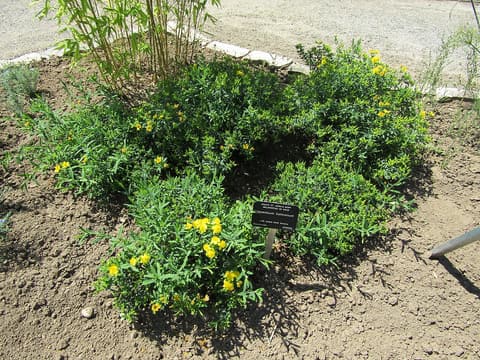
Northern snowberry grows at a medium pace for its size, 6 inches to a foot a year in our growth estimator. It makes a stiff, upright shrub 1 to 5 feet tall that forms dense, low thickets. New shoots from its underground stems can reach full height in their first year and sometimes fruit. Older bark turns gray and shreddy.
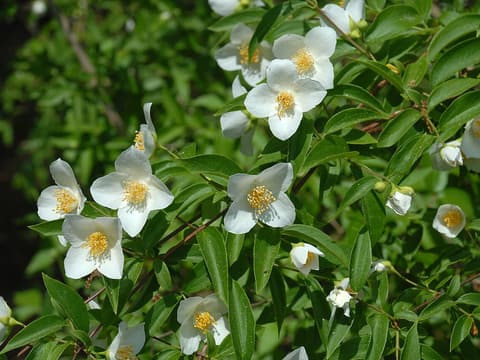
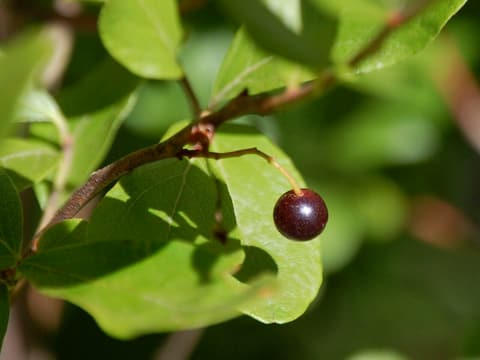
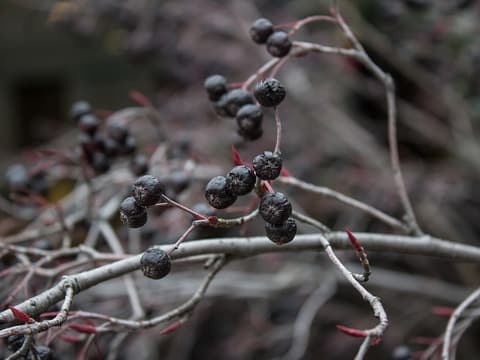
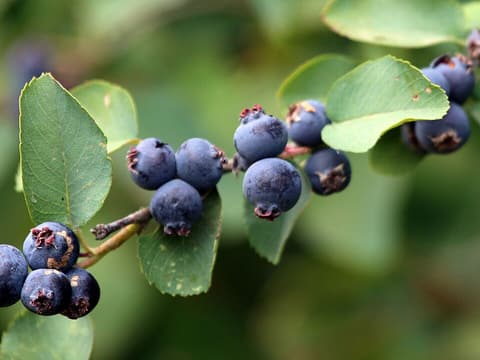
Dense clusters of small pink to nearly white, bell-shaped flowers open from June into August, and native bees visit them. Dull greenish-white berries a quarter to a third of an inch across ripen from August into October. Many hang on into winter, turning brown and crusty, and sharp-tailed grouse feed on them in fall and early winter.
It grows wild from the Northwest Territories and the Canadian prairies south through the Great Plains to Texas and New Mexico, and east to Michigan, Illinois and Missouri. Its home is prairies, open woods and thickets, dry rocky hillsides, ravines and river valleys. Planted shrubs have also gone wild farther east, in Indiana, New York and Pennsylvania.
How to grow Northern Snowberry
Northern snowberry grows best in full sun and takes part shade at a woodland edge. It takes almost any soil but loose sand, from dry, rocky gravel to heavy clay, and once rooted it rides out drought. It stands a short flood but not standing water for long. It spreads into a dense patch and can creep into a meadow, so leave a mowed strip around it. Set plants 3 feet apart and keep them 3 feet from a wall. At its size it can go within 15 feet of overhead wires.
Saplings ship bare-root or potted. Plant them dormant, from leaf fall until bud swell, in a hole wider than the roots and no deeper. Set the crown at the soil line, put the native soil back in, and keep the mulch clear of the stems. Seed needs 3 to 4 months of warm, damp conditions and then 4 to 6 months of cold. Give it the warm spell at room temperature in summer and sow it outdoors in fall, a quarter inch deep, so winter supplies the cold. Some seed waits a second year to come up. Rooted suckers dug in early spring move easily too.
Water weekly through the first summer if rain is short, and keep grass and weeds back while it settles in. Browsing deer and elk can set young plants back, so cage them where they are many.
Each flower carries both male and female parts, so there are no male and female plants to pair. Bees and other insects carry its pollen. In the wild it spreads mostly by its underground stems, and seedlings are rare. The berries are mildly poisonous, and eating them can cause vomiting and diarrhea.
Heights and zones are typical ranges for the species in cultivation; local conditions and seed source shift them.
Sources (9)
- USDA Forest Service, Fire Effects Information System: Symphoricarpos occidentalis
- Lady Bird Johnson Wildflower Center: Symphoricarpos occidentalis
- Minnesota Wildflowers: Symphoricarpos occidentalis, wolfberry
- USDA Forest Service, Woody Plant Seed Manual (2008), Symphoricarpos chapter (Walker)
- USDA NRCS PLANTS Database: Symphoricarpos occidentalis
- NatureServe Explorer: Symphoricarpos occidentalis, Northern Snowberry
- Missouri Department of Conservation: Missouri Species and Communities of Conservation Concern Checklist, 2024
- Oklahoma Natural Heritage Inventory: tracking list
- Native Plant Network: Symphoricarpos albus, common snowberry, Majerus, USDA NRCS Bridger Plant Materials Center
Plan the planting
Check your site for it What to plant with it How big, how fast How much to water How to sow it How many for a crop When it flowers and fruits When to plant it where you live How far from the house and wires How old is yours
Read before planting
- Ten planting mistakes that quietly kill trees
- Transplanting young trees: timing, water and protection
- Protecting young trees from voles, rabbits, deer and squirrels
- How fast every tree and shrub we grow gets tall: growth rate, A to Z
- The habitat around a tree is part of the tree
- Invasive vines and shrubs are what is killing your woods
Grows in the same conditions
Plants that share its sun and soil
Trees to plant it under: Common Hackberry, Slippery Elm and Western Soapberry.
More like this