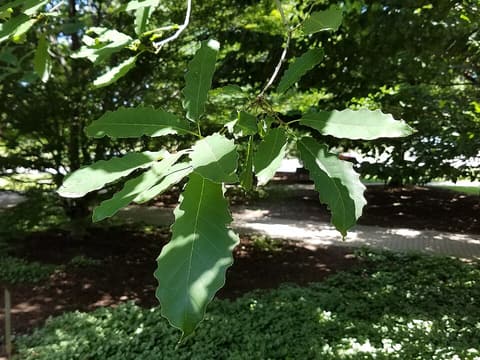
Photo: Zhangzhugang, CC BY-SA 4.0, cropped · Wikimedia Commons
Chinese Chestnut
Scientific name: Castanea mollissima
Blight-resistant chestnuts for the home orchard: large sweet nuts on a spreading, drought-tolerant tree.
Be first when Chinese chestnut is priced
Saplings ship bare-root or in a pot, usually 12 to 18 inches tall, in the dormant season, and their height and age are stated here with the price, once available.
We grow it as saplings and nuts. One email when it is listed with prices, and nothing else. Or ask, and we reply with what is ready now. Live plants ship February to May and October to November.
Limited timeSign up now and get 10% off when it is ready.
Share: copy link
Chinese Chestnut at a glance
- Type
- Medium tree
- Mature height
- 40–60 ft
- USDA zones
- 4–9
- Growth rate
- Medium
- Flowers
- June to July
- Fruit
- Nuts, September to October
- First crop
- 4 to 7 years
- Mature spread
- 60 ft
- Sun
- Full
- Soil moisture
- Dry, Average
- Grows wild in
- Rich moist slopes and dry uplands in China and Korea; it is not native here
Until blight-resistant American chestnuts are widely available, Chinese chestnut is the reliable way to grow chestnuts in the East. Seedlings bear in four to seven years, need a second tree for pollination, and want full sun and well-drained soil. Not native, so we offer it for food, not restoration. Plant it in pairs, as a backyard nut orchard or a wildlife food plot.
Size, growth and what to expect
Chinese chestnut seedlings commonly bear in four to seven years, and grafted trees often within two. Missouri's chestnut growers look for 18 to 24 inches of new shoot a year on a young tree, and 12 to 15 once it bears. That is close to the foot and a half a year our growth estimator assumes for a medium tree. It makes a spreading tree 40 to 60 feet tall and as wide, with a crown that settles at 35 to 40 feet in an orchard.
The burs open from mid or late September through October, usually with 2 or 3 nuts apiece. Each nut is about an inch across, 30 to 50 to the pound. Nearly every chestnut rejects its own pollen, so plant a second seedling within 200 feet. It flowers in June, and into early July as far north as Boston.
It is native to China and Korea, not to this continent, and it is the most blight-resistant of the north temperate chestnuts.
How to grow Chinese Chestnut
Chinese chestnut needs full sun and soil that drains, average to dry, ideally sandy loam on the acid side. Trees grow as wide as they are tall, so set them 35 feet apart and as far from the house.
Plant while dormant. Saplings arrive bare-root or potted. Dig a wide hole no deeper than the root mass, set the flare at grade, refill with the soil you dug, and mulch a ring that stops short of the trunk. Nuts must never dry out, so keep them cool and damp until you sow, plant them an inch deep, and pin hardware cloth over the row against mice and squirrels.
Water through the first two summers, but never leave the ground soggy. Voles and rabbits chew the bark, so guard the lower trunk each winter until the bark thickens, and cage against deer. Take off low branches in late winter as the crown rises.
A chestnut will not pollinate itself, and a lone tree drops empty burs. Plant each tree where water never stands, because heavy, poorly drained soil or ground that stays saturated in wet seasons promotes Phytophthora root rot, a devastating disease of chestnuts. Blight resistance is good but not absolute, so cut out sunken cankers when you find them.
Heights and zones are typical ranges for the species in cultivation; local conditions and seed source shift them.
Sources (9)
- University of Missouri Extension, AF1007 Growing Chinese Chestnuts in Missouri
- Arnold Arboretum of Harvard University: Castanea mollissima, a Chinese chestnut for the Northeast
- NC State Extension Gardener Plant Toolbox: Castanea mollissima
- USDA NRCS PLANTS Database: Castanea mollissima
- USDA Forest Service, Woody Plant Seed Manual (2008), Castanea chapter
- Virginia Tech Dendrology: Chinese chestnut, Castanea mollissima
- The Morton Arboretum: Chinese chestnut
- Trees and Shrubs Online, International Dendrology Society: Castanea mollissima
- Flora of China, vol. 4: Castanea mollissima
Plan the planting
Check your site for it What to plant with it How big, how fast How much to water How to sow it How many for a crop When it flowers and fruits When to plant it where you live How far from the house and wires How old is yours Moving one you already have
Read before planting
- Ten planting mistakes that quietly kill trees
- Transplanting young trees: timing, water and protection
- Protecting young trees from voles, rabbits, deer and squirrels
- Chinese chestnut: size, growth rate, bark, and how it differs from the American chestnut
- Chinquapin or chestnut: telling the four we grow apart
- Will it come true from seed? Store-bought nuts, grafted fruit, cultivars, and the seedlings they make
Other chestnuts and chinquapins (Castanea) we grow: Allegheny Chinquapin, American Chestnut and Ozark Chinquapin.
Grows in the same conditions
Plants that share its sun and soil
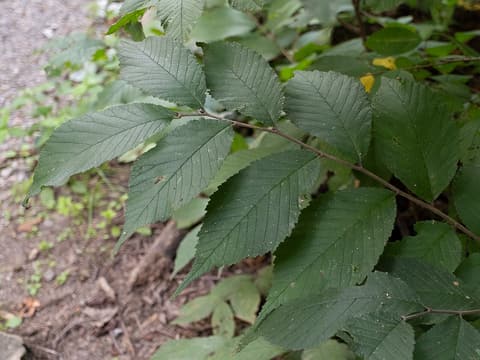
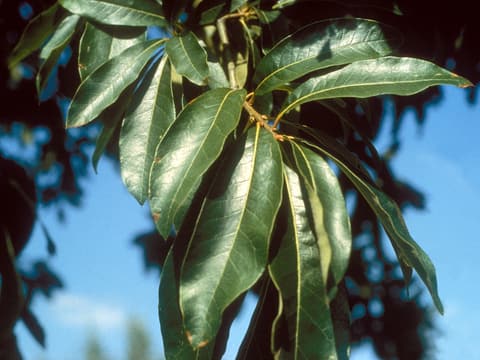
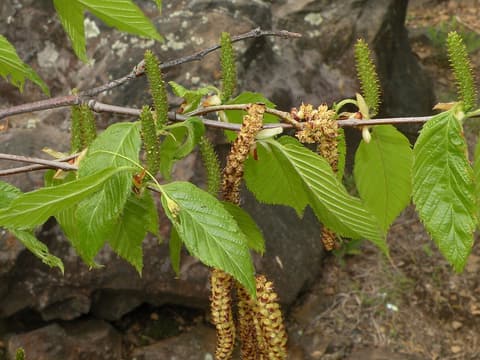
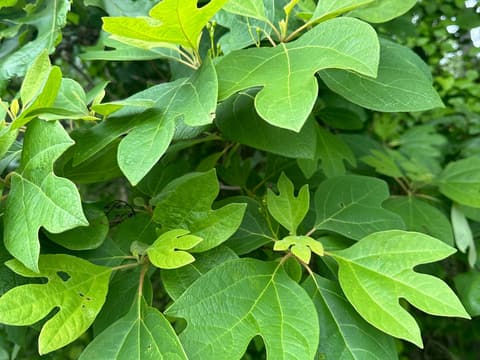
Under its canopy: Mapleleaf Viburnum, Alabama Azalea and Flame Azalea.
More like this