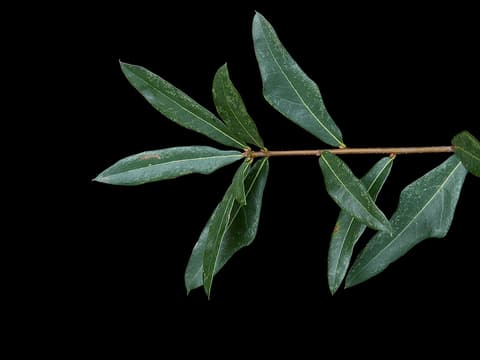
Photo: Bruce Kirchoff, CC BY 2.0, cropped · Wikimedia Commons
Delta Post Oak
Scientific name: Quercus similis
Also called bottomland post oak.
A post oak that tolerates wet feet, from the bottomlands of the lower Mississippi valley.
Be first when delta post oak is priced
Saplings ship bare-root or in a pot, usually 12 to 18 inches tall, in the dormant season, and their height and age are stated here with the price, once available.
We grow it as saplings and acorns. One email when it is listed with prices, and nothing else. Or ask, and we reply with what is ready now. Live plants ship February to May and October to November.
Limited timeSign up now and get 10% off when it is ready.
Share: copy link
Delta Post Oak at a glance
- Type
- Large tree
- Mature height
- 60–80 ft
- USDA zones
- 7–9
- Growth rate
- Medium
- Flowers
- March to May
- Fruit
- Acorns, September to November
- First crop
- About 25 years
- Mature spread
- 80 ft
- Sun
- Full, Part
- Soil moisture
- Average, Wet
- Grows wild in
- Floodplain forests
- Native range
- 7 states, north to Arkansas, south to Louisiana and west to Texas See what is native in your state
List all 7
Alabama, Arkansas, Georgia, Louisiana, Mississippi, South Carolina and Texas
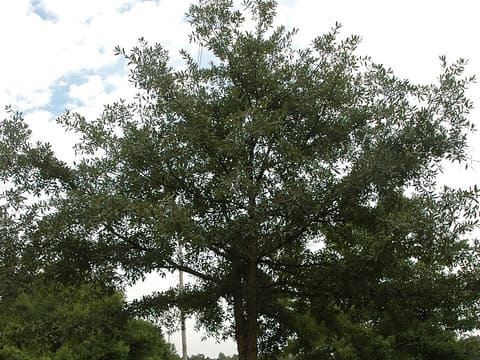
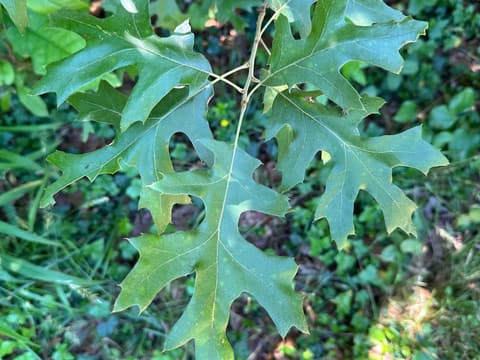
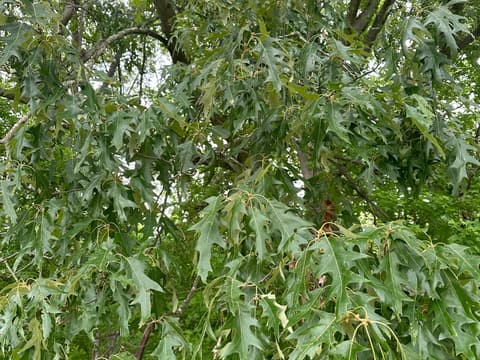
Delta post oak is a little-known bottomland species of Louisiana, Arkansas, Texas and Mississippi, growing on clay flats that flood in winter and bake in summer. It looks like post oak but grows taller and straighter, and it handles seasonal standing water that ordinary post oak cannot. A rare find for flood-prone ground in warm climates. Belongs in an oak collection, or as the shade tree on a heavy clay lot.
Size, growth and what to expect
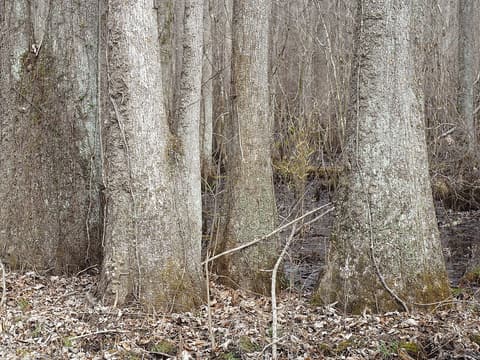
Delta post oak is a tree of wet stream bottoms, flatwoods and river valleys from South Carolina and Georgia through Alabama, Mississippi, Louisiana and Arkansas to east Texas. It is a little-studied oak. The growth figure to plan on is our growth estimator's, roughly a foot and a half a year in youth for a medium tree, slowing as it nears full size. It grows to about 80 feet on a single straight trunk under brown, scaly bark, and in a yard expect 60 to 80 feet.
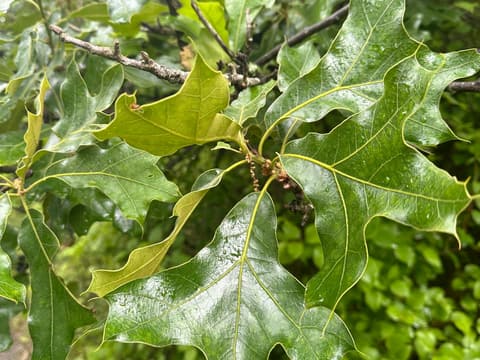
Some botanists count it a variety of post oak, which begins to bear at about 25 years with a good crop every 2 to 3 years. The delta form should follow the same rhythm. The acorns are small, half to five eighths of an inch long, and come one to three together. It flowers in spring, from March to May. The acorns ripen from September to November and drop soon after.
In the wild it keeps to fine sandy loam on the highest ridges of the first bottoms, ground that stays wet from slow drainage.
How to grow Delta Post Oak
Delta post oak is a warm-country tree, and it belongs on average to wet ground: a clay flat, a swale, a field that stands in water after winter rain. It takes full sun or part shade. It is broad in the crown at full size, so it wants 40 feet from the house and other big trees.
Plant while dormant. Saplings arrive bare-root or in deep pots. Open a wide, shallow hole, set the root flare at grade, and backfill with the soil you dug rather than a bought mix, which makes a bathtub in clay. Sow acorns as soon as they drop, an inch deep under pinned hardware cloth, because white oak acorns root before winter and will not keep in a dry shed.
Water through the first summer or two while the root goes down, though a wet site may do it for you. Sleeve the stem against rabbits and voles, cage against deer until the top is out of reach, and prune in winter only to pick a leader.
The female flowers of delta post oak open about a week after its male catkins shed pollen, and only pollen from another tree sets acorns. Plant two or more seedlings. The taproot is long and brittle, so plant a small tree and plant it once. Seasonal flooding suits it; year-round standing water does not.
Heights and zones are typical ranges for the species in cultivation; local conditions and seed source shift them.
Sources (8)
- Flora of North America, vol. 3: Quercus similis
- Lady Bird Johnson Wildflower Center: Quercus similis
- USDA Forest Service, Silvics of North America: post oak, delta post oak passages
- USDA NRCS PLANTS Database: Quercus similis, QUSI2
- USDA Forest Service, Woody Plant Seed Manual (2008), Quercus chapter
- NatureServe Explorer: Quercus similis
- The Morton Arboretum, Conservation Gap Analysis of Native U.S. Oaks: species profile, Quercus similis, Beckman and others 2019
- LSU AgCenter, School of Renewable Natural Resources, Louisiana Plant ID: Quercus similis, delta post oak
Plan the planting
Check your site for it What to plant with it How big, how fast How much to water How to sow it How many for a crop When it flowers and fruits When to plant it where you live How far from the house and wires How old is yours Moving one you already have
Read before planting
- Ten planting mistakes that quietly kill trees
- Transplanting young trees: timing, water and protection
- Protecting young trees from voles, rabbits, deer and squirrels
- Red oaks and white oaks, and where each belongs
- Native trees and shrubs for heavy clay: which take it wet, which take it dry, and how to plant them
- Planting acorns, nuts and seed: collecting, storing and the first year
We grow 42 other oaks (Quercus): see them all.
Grows in the same conditions
Plants that share its sun and soil
Under its canopy: Two-wing Silverbell, Dwarf Palmetto and Florida Anise.
More like this