Photo: Blue Whale Trees
Cherrybark Oak, Wye Island line
Scientific name: Quercus pagoda
Also called swamp red oak, bottomland red oak, Quercus falcata var. pagodifolia.
Acorns and seedlings from a single outstanding cherrybark oak on Wye Island, Maryland: tall, straight and fast growing.
Be first when cherrybark oak is priced
Saplings ship bare-root or in a pot, usually 12 to 18 inches tall, in the dormant season, and their height and age are stated here with the price, once available.
We grow it as saplings and acorns. One email when it is listed with prices, and nothing else. Or ask, and we reply with what is ready now. Live plants ship February to May and October to November.
Limited timeSign up now and get 10% off when it is ready.
Share: copy link
Cherrybark Oak at a glance
- Type
- Large tree
- Mature height
- 80–120 ft
- USDA zones
- 6–9
- Growth rate
- Fast
- Flowers
- February to May
- Fruit
- Acorns, September to November
- First crop
- About 25 years
- Mature spread
- 70 ft
- Sun
- Full
- Soil moisture
- Average, Wet
- Grows wild in
- Floodplain forests
- Native range
- 18 states, north to New Jersey, south to Florida and west to Texas See what is native in your state
List all 18
Alabama, Arkansas, Florida, Georgia, Illinois, Indiana, Kentucky, Louisiana, Maryland, Mississippi, Missouri, New Jersey, North Carolina, Oklahoma, South Carolina, Tennessee, Texas and Virginia
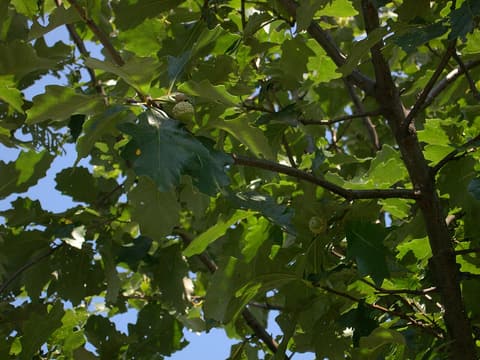
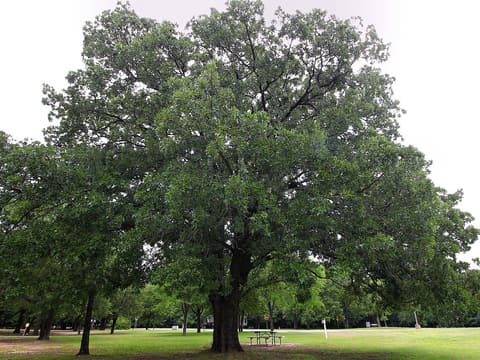
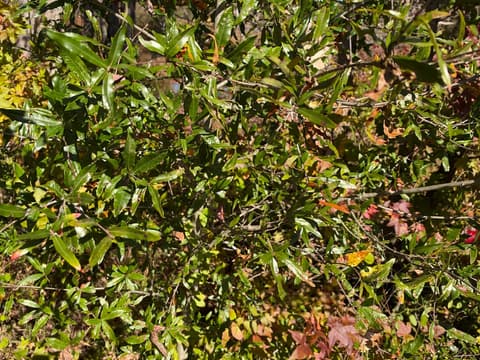
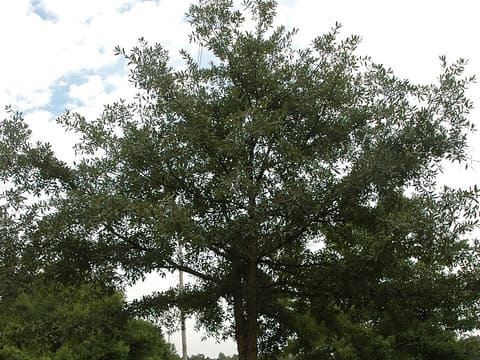
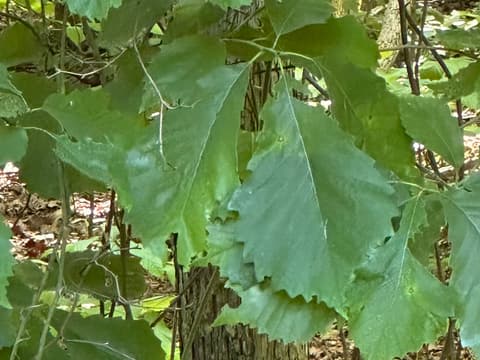
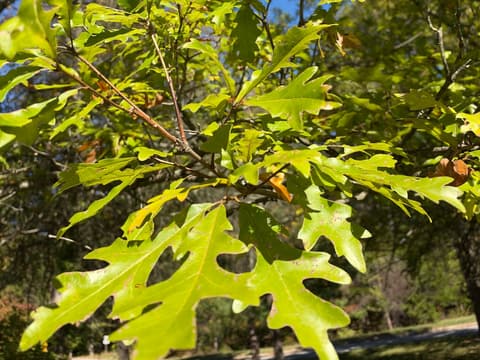
Cherrybark oak is the tallest and fastest of the southern red oaks, a bottomland giant with pagoda-shaped leaves and dark, cherry-like bark. Our line comes from one exceptional parent tree on Wye Island on Maryland's Eastern Shore, chosen for its form, vigor and hardiness at the northern edge of the species. Expect strong central leaders and rapid height growth on moist, fertile ground. Though a bottomland tree, it adapts to drier sites and can line a street. Best used as a fast timber oak or a legacy shade tree on a moist, open field.
Size, growth and what to expect
Cherrybark oak plantings have reached 14 feet in 5 years and 16 feet in 9. Our growth estimator models it at nearly three feet a year in its youth, its rate for a fast tree. On good ground mature trees reach 100 to 120 feet, and some reach 130, with trunks 3 to 5 feet through. Trees begin to decline at 90 to 200 years, and very few live past 300.
The first acorns come at about 25 years, the heaviest crops between 50 and 75, and a good crop comes every year or two. Each acorn is about half an inch long under a thin cap that covers up to a third of it. Gray squirrels, wild turkeys and blue jays take them first, then wood ducks, woodpeckers, raccoons and deer. The name comes from the mature bark, which looks like a black cherry's. It flowers from February to May, depending on latitude, and the acorns ripen from September to November of their second year.
It grows wild from southeastern Virginia to northwest Florida, west to east Texas, and up the Mississippi valley to southeastern Missouri, southern Illinois and Indiana.
How to grow Cherrybark Oak
Cherrybark oak wants full sun and average to wet ground, and it grows fastest on deep bottomland soil that floods in winter and drains by summer. This is a tall tree with a wide crown, so allow 50 feet from the house, the drive and any power line. Set trees 30 feet apart.
Plant while dormant. Saplings ship bare-root or in deep pots. Dig wide and shallow, hold the root flare at grade, backfill with the soil you dug, and skip amendments, which only invite circling roots. Sow acorns in fall an inch deep under hardware cloth weighted with stones, since squirrels and jays hunt them. Red oak acorns need a winter before they come up in spring.
Water through the first two summers, because a fast grower drinks more than you expect. Guard the stem against voles and rabbits, cage against deer, and pull the guards once the bark roughens. Leave the lower limbs on a few years to build caliper.
Like other oaks, cherrybark oak is wind pollinated and needs pollen from another tree to set acorns, so plant two or more seedlings. Prune only in the dormant season. Fresh cuts from spring into midsummer draw the beetles that spread oak wilt among red oaks. Move trees young, because the taproot resents digging.
Heights and zones are typical ranges for the species in cultivation; local conditions and seed source shift them.
Sources (13)
- USDA Forest Service, Silvics of North America: cherrybark oak
- NC State Extension Gardener Plant Toolbox: Quercus pagoda
- USDA NRCS PLANTS Database: Quercus pagoda, QUPA5
- USDA NRCS Plant Guide: cherrybark oak
- USDA Forest Service, Woody Plant Seed Manual (2008), Quercus chapter
- USDA Fire Effects Information System: Quercus falcata, Q. pagoda, southern red oak, cherrybark oak
- Missouri Department of Conservation field guide: Cherrybark Oak
- Missouri Department of Conservation: Oak Wilt
- Virginia Tech Dendrology: cherrybark oak, Quercus pagoda
- Lady Bird Johnson Wildflower Center: Quercus pagoda
- Flora of North America, vol. 3: Quercus pagoda
- NatureServe Explorer: Quercus pagoda
- University of Illinois Extension, Technical Forestry Bulletin NRES-502: Maximum Tree Age & Longevity, J. C. Hayek, updated May 2019
Plan the planting
Check your site for it What to plant with it How big, how fast How much to water How to sow it How many for a crop When it flowers and fruits When to plant it where you live How far from the house and wires How old is yours Moving one you already have
Read before planting
- Ten planting mistakes that quietly kill trees
- Transplanting young trees: timing, water and protection
- Protecting young trees from voles, rabbits, deer and squirrels
- Which oak to plant: the fastest, the first to bear, the biggest acorns, and oaks for small yards, wet ground and deer
- Native trees and shrubs for deer and wild turkey: acorns, fruit, cover and a planting plan
- Red oaks and white oaks, and where each belongs
We grow 42 other oaks (Quercus): see them all.
Grows in the same conditions
Plants that share its sun and soil
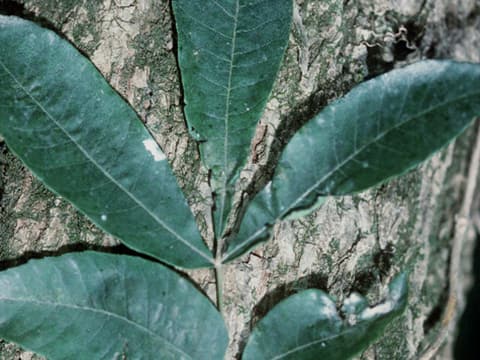
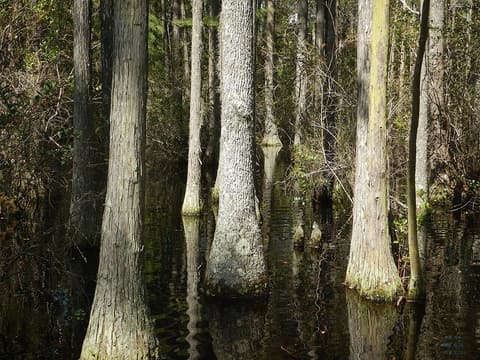
Under its canopy: Virginia Sweetspire, Pawpaw and Spicebush.
More like this