Photo: Doug McGrady, CC BY 2.0, cropped · Wikimedia Commons
Jack Pine
Pinus banksiana
Also called gray pine, Banksian pine, Hudson Bay pine.
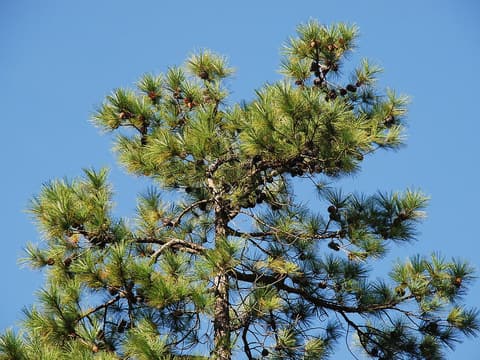
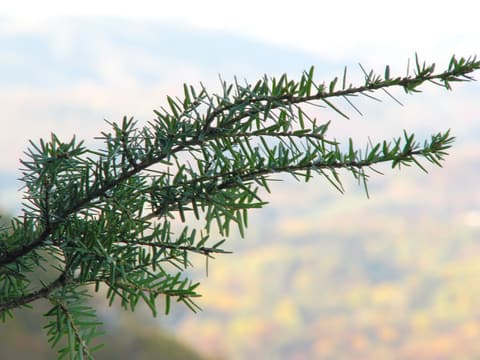
The hardy pine of the far North, with short, twisted needles and curved cones sealed shut for years, for the poorest, driest sand.
Be first when jack pine is priced
Saplings ship bare-root or in a pot, usually 12 to 18 inches tall, in the dormant season, and their height and age are stated here with the price, once available.
We grow it as saplings and seed. One email when it is listed with prices, and nothing else. Or ask, and we reply with what is ready now. Live plants ship February to May and October to November.
Limited timeSign up now and get 10% off when it is ready.
Share: copy link
Jack Pine at a glance
- Type
- Medium tree
- Mature height
- 35–65 ft
- USDA zones
- 2–7
- Growth rate
- Fast
- Flowers
- May to June
- Fruit
- Cones, September
- First crop
- 5 to 10 years (open-grown trees; later in closed stands)
- Mature spread
- 30 ft
- Sun
- Full
- Soil moisture
- Dry, Average
- Grows wild in
- Sandy barrens, dry uplands and rocky ground
- Native range
- 9 states, north and west to Minnesota and south to Indiana Also recorded, not native, in 7 other states (listed above). See what is native in your state
List all 9, and the 7 others
Illinois, Indiana, Maine, Michigan, Minnesota, New Hampshire, New York, Vermont and Wisconsin
Also recorded, not native, in Massachusetts, Missouri, North Dakota, Ohio, Pennsylvania, Rhode Island and West Virginia.
Jack pine is the scrubby pine of the far North, at home on dry, burned-over sand plains where few other trees will grow. It is a pioneer after fire, one of the first trees to cover bare ground, and it grows farther north than any other American pine. Illinois lists it as endangered, and Indiana, New Hampshire and Vermont list it as threatened. Grow it as a windbreak or a fast evergreen cover on poor, dry sand where summers stay cool.
Size, growth and what to expect
Jack pine grows fast, about 2.75 feet a year in our growth estimator. In its first 20 years it outgrows every other conifer of its range but tamarack. It matures at 35 to 65 feet with a crown 20 to 30 feet wide. Stands break up after 60 to 80 years, though trees have reached 230, and the oldest dated by its rings reached 246.
Trees in the open begin to bear cones at 5 to 10 years. Pollen is shed in May and June, and the curved cones, 1.5 to 2 inches long, ripen in September of their second year. Over most of its range they stay sealed for years until fire or great heat opens them. The Kirtland's warbler nests only in large stands of young jack pine 5 to 20 feet tall, and red squirrels and snowshoe hares feed on it.
It grows wild across Canada from the Northwest Territories to Nova Scotia. In the United States it grows in Maine, New Hampshire, Vermont and northern New York, and from Michigan, northwestern Indiana and northeastern Illinois west through Wisconsin to Minnesota.
How to grow Jack Pine
Jack pine needs full sun and takes the poorest, driest sand or gravel. It grows best on a well-drained, acid, loamy sand and does poorly on wet ground. It takes drought and road salt but not heat, and it thrives where summers are cool. Plant it 15 feet from a wall, and set trees 20 feet apart. Keep it more than 50 feet from overhead wires.
Saplings ship bare-root or potted. Plant in early spring or fall, in a hole wider than the roots and no deeper, with the root collar at the soil line. Firm the soil around the roots and water it in. The seed needs no chilling. Sow it a quarter inch deep in spring, or outdoors in fall, and keep the bed moist. Spring-sown seedlings come up within two to eight weeks.
Water every week or two through the first summer, since drought kills many young seedlings on coarse soil. Keep grass and brush back for the first few years, because young jack pines need full sun. Deer and snowshoe hares browse young trees, and where deer are many they can kill trees up to 7 feet tall, so fence young plantings. It needs no pruning.
Each tree carries both male and female cones, and the wind carries the pollen between trees. Seedlings from a tree's own pollen seldom survive in the wild, so trees in a group bear better seed. The jack pine budworm and several sawflies strip the needles, and the sawflies can kill trees. Pine-oak gall rust can infect half of young seedlings and kills many of those with galls on the main stem. Ice storms break it badly.
Heights and zones are typical ranges for the species in cultivation; local conditions and seed source shift them.
Sources (17)
- USDA Forest Service, Silvics of North America: Jack Pine, Rudolph and Laidly 1990
- USDA Forest Service, Fire Effects Information System: Pinus banksiana, Carey 1993
- USDA Forest Service, Woody Plant Seed Manual: Pinus chapter, Krugman and Jenkinson
- Flora of North America, vol. 2: Pinus banksiana
- NC State Extension Gardener Plant Toolbox: Pinus banksiana
- The Morton Arboretum: Jack pine
- Missouri Botanical Garden Plant Finder: Pinus banksiana
- Lady Bird Johnson Wildflower Center: Pinus banksiana
- USDA NRCS Plant Guide: Jack pine
- Virginia Tech Dendrology: jack pine
- NatureServe Explorer: Pinus banksiana
- Illinois Endangered Species Protection Board: Checklist of Endangered and Threatened Animals and Plants of Illinois, revised 10/31/2025
- Indiana Department of Natural Resources: Endangered, Threatened, and Extirpated Plants of Indiana, 10/29/2025
- New Hampshire Natural Heritage Bureau: New Hampshire Official Rare Plants List, effective 01/01/2020
- Vermont Fish and Wildlife Department: Endangered and Threatened Plants of Vermont, 10 February 2022
- New York Natural Heritage Program: New York Rare Plant Status Lists, December 2024
- Virginia Tech, Eastern OLDLIST of maximum tree ages: Pinus banksiana
Plan the planting
Check your site for it What to plant with it How big, how fast How much to water How to sow it How many for a crop When it flowers and fruits When to plant it where you live How far from the house and wires How old is yours Moving one you already have
Read before planting
- Ten planting mistakes that quietly kill trees
- Transplanting young trees: timing, water and protection
- Protecting young trees from voles, rabbits, deer and squirrels
- How fast every tree and shrub we grow gets tall: growth rate, A to Z
- Multistem or single stem? Sometimes the trunk is hiding the answer
- Leaf litter, not wood chips, under the canopy
Other pines (Pinus) we grow: Longleaf Pine, Pond Pine, Red Pine, Sand Pine, Spruce Pine and Table Mountain Pine.
Grows in the same conditions
Plants that share its sun and soil
Under its canopy: Black Huckleberry, Deerberry and Mapleleaf Viburnum.
More like this