Photo: Steven G. Johnson, CC BY-SA 3.0, cropped · Wikimedia Commons
Black Huckleberry
Scientific name: Gaylussacia baccata
Also called huckleberry.
A low, colony-forming shrub of dry acid woods with sweet, seedy black berries and crimson fall leaves.
Be first when black huckleberry is priced
Saplings ship in a pot, usually 12 to 18 inches tall, in the dormant season, and their height and age are stated here with the price, once available.
We grow it as saplings and seed. One email when it is listed with prices, and nothing else. Or ask, and we reply with what is ready now. Live plants ship February to May.
Limited timeSign up now and get 10% off when it is ready.
Share: copy link
Black Huckleberry at a glance
- Type
- Shrub
- Mature height
- 1–3 ft
- USDA zones
- 3–7
- Growth rate
- Slow
- Flowers
- May to June
- Fruit
- Berries, July to August
- First crop
- A few years after planting
- Mature spread
- 4 ft
- Sun
- Full, Part
- Soil moisture
- Dry, Average
- Grows wild in
- Dry uplands, sandy barrens, rocky ground and the forest understory
- Native range
- 29 states and the District of Columbia, north and west to Minnesota and south to Georgia See what is native in your state
List all 30
Alabama, Arkansas, Connecticut, Delaware, Georgia, Illinois, Indiana, Iowa, Kentucky, Maine, Maryland, Massachusetts, Michigan, Minnesota, Mississippi, Missouri, New Hampshire, New Jersey, New York, North Carolina, Ohio, Pennsylvania, Rhode Island, South Carolina, Tennessee, Vermont, Virginia, West Virginia, Wisconsin and the District of Columbia
Huckleberry is what grows under the pines and oaks on the poorest, driest acid soil, and it fruits there reliably every July. The berries are richer than blueberries. It spreads by rhizomes into a low groundcover that flames red in October. A colony on a slope or rocky hillside holds the soil with its shallow, spreading roots. Ideal for the dry front of a blueberry bed, or under pines where grass fails.
Size, growth and what to expect
A colony of black huckleberry spreads slowly outward rather than up. It is a stiff, much-branched shrub, usually 1 to 3 feet tall, that spreads by rhizomes. Clonal patches widen by an average of 6.9 feet over 15 years. Our growth estimator models its height growth at a few inches a year in youth on an average site, the figure for a slow grower this small. Individual stems live about 6 years on average and up to 15, while the colony carries on.
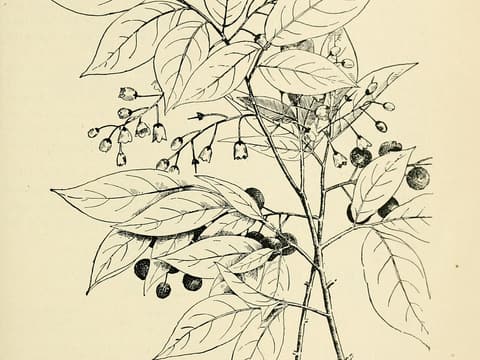
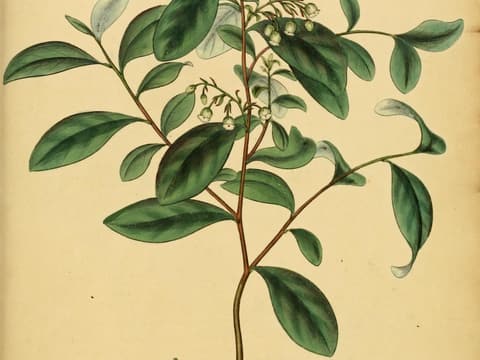
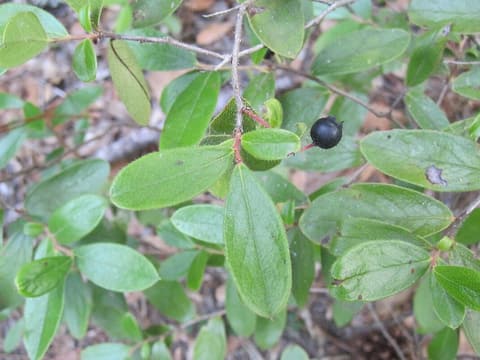
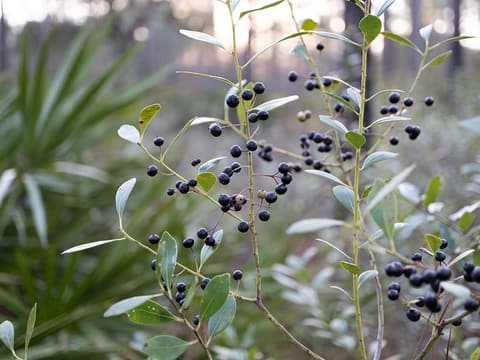
Urn-shaped red to pink flowers open in May and June. The blue-black fruit, about a quarter to a third of an inch across with ten tiny seeds, ripens in July and August. Ruffed grouse, bobwhite, wild turkeys, catbirds, towhees, gray squirrels, foxes and bears eat it. In Pennsylvania oak-hickory woods, plants in dense shade persisted without flowering or fruiting.
It grows wild from Newfoundland to Saskatchewan and south to Georgia and Mississippi, in dry woods, open thickets and on stable dunes.
How to grow Black Huckleberry
Black huckleberry needs acid soil and will not grow on lime or in wet ground. Give it the same spot you would give a blueberry: sandy or rocky, dry to average, in full sun or the light shade of pines and oaks. Set plants 2 to 3 feet apart and keep them clear of concrete and foundations, which raise pH.
Saplings ship potted. Plant while the shrub is dormant, in early spring. Dig a shallow hole twice the width of the roots, set the plant with the root flare at grade, and backfill with the soil you removed. Mulch with pine needles or oak leaves rather than bark, two inches deep, kept off the stems. Seed needs a month of warm, damp conditions and then two months cool, around 45 to 50 degrees, before it sprouts back in the warmth. Sow it on the surface of a damp peat and sand mix. Germination is slow and sparse.
Huckleberry settles in slowly. Water once a week through the first two summers and never let a young plant dry out completely. Rabbits browse the low stems in winter, so a wire cage helps for the first two years. Nothing needs pruning.
Black huckleberry appears to need pollen from another plant to set fruit, so plant two or more seedlings from different parents. Do not fertilize, and avoid lime, wood ash and hard well water. Fruit ripens in July, beginning a few years after planting. The leaves turn crimson in October.
Heights and zones are typical ranges for the species in cultivation; local conditions and seed source shift them.
Sources (10)
- USDA Fire Effects Information System: Gaylussacia baccata
- NC State Extension Gardener Plant Toolbox: Gaylussacia baccata
- Lady Bird Johnson Wildflower Center: Gaylussacia baccata
- USDA NRCS PLANTS Database: Gaylussacia baccata, GABA
- USDA Forest Service, Woody Plant Seed Manual (2008), Gaylussacia chapter
- Flora of North America, vol. 8: Gaylussacia baccata
- Native Plant Trust, Go Botany: Gaylussacia baccata
- Native Plant Network, propagation protocol of the USDA NRCS Norman A. Berg National Plant Materials Center: Gaylussacia baccata
- NatureServe Explorer: Gaylussacia baccata
- Native Plant Trust, Garden Plant Finder: Gaylussacia baccata, black huckleberry
Plan the planting
Check your site for it What to plant with it How big, how fast How much to water How to sow it How many for a crop When it flowers and fruits When to plant it where you live How far from the house and wires How old is yours
Read before planting
- Ten planting mistakes that quietly kill trees
- Transplanting young trees: timing, water and protection
- Protecting young trees from voles, rabbits, deer and squirrels
- Native trees and shrubs for dry, sandy soil: the plants of barrens and dunes, and how to grow them
- Native trees and shrubs for bees: pollen, nectar, nesting and a bloom calendar from willow to witch hazel
- The habitat around a tree is part of the tree
Other huckleberries (Gaylussacia) we grow: Bear Huckleberry, Box Huckleberry, Dangleberry and Woolly Huckleberry.
Grows in the same conditions
Plants that share its sun and soil
Trees to plant it under: Black Oak, Hop Hornbeam and Pignut Hickory.
More like this