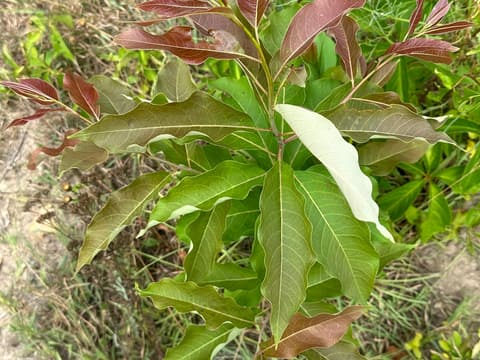
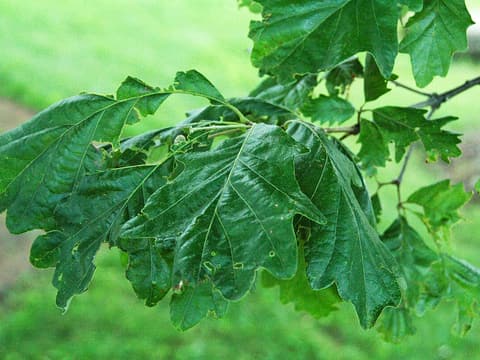
Photo: Douglas Goldman, CC BY-SA 4.0, cropped · Wikimedia Commons
Red Mulberry
Scientific name: Morus rubra
Also called common mulberry.
The native mulberry, with big sandpapery leaves and long, sweet, dark fruit that birds and people fight over.
Be first when red mulberry is priced
Saplings ship bare-root or in a pot, usually 12 to 18 inches tall, in the dormant season, and their height and age are stated here with the price, once available.
We grow it as saplings and seed. One email when it is listed with prices, and nothing else. Or ask, and we reply with what is ready now. Live plants ship February to May and October to November.
Limited timeSign up now and get 10% off when it is ready.
Share: copy link
Red Mulberry at a glance
- Type
- Medium tree
- Mature height
- 35–50 ft
- USDA zones
- 4–9
- Growth rate
- Fast
- Flowers
- April to May
- Fruit
- Berries, June to August
- First crop
- About 10 years (planted trees in an open field have fruited at 4)
- Mature spread
- 40 ft
- Sun
- Full, Part, Shade
- Soil moisture
- Average
- Grows wild in
- Floodplain forests, rich moist slopes and the forest understory
- Native range
- 33 states and the District of Columbia, north to Minnesota, south to Florida and west to Nebraska Also recorded, not native, in South Dakota. See what is native in your state
List all 34
Alabama, Arkansas, Connecticut, Delaware, Florida, Georgia, Illinois, Indiana, Iowa, Kansas, Kentucky, Louisiana, Maryland, Massachusetts, Michigan, Minnesota, Mississippi, Missouri, Nebraska, New Jersey, New York, North Carolina, Ohio, Oklahoma, Pennsylvania, Rhode Island, South Carolina, Tennessee, Texas, Vermont, Virginia, West Virginia, Wisconsin and the District of Columbia
True red mulberry is now uncommon because invasive white mulberry hybridizes with it and crowds it out, so seed source matters. It is a fast, shade-tolerant tree of rich woods, with fruit in June that stains sidewalks; give it a spot at the edge of the yard where the birds can have the mess. Ideal as a decoy tree that pulls birds off the blueberries, or over a chicken run.
Size, growth and what to expect
Red mulberry is a rapid-growing tree, and our growth estimator models it at nearly three feet a year on an average site. In a yard expect 35 to 50 feet with a spread of 35 to 40. Wild trees run 15 to 70 feet depending on the site, with trunks up to 30 inches through. It usually lives 125 years or less.
Trees usually begin to bear at about 10 years, though planted trees in an east Texas field fruited at 4, and good crops come every 2 to 3 years. Bearing peaks between 30 and 85 years and ends by about 125. The fruit is a blackberry-like cluster 1 to 1¼ inches long, reddish then dark purple, ripe from June into August, and most birds, opossums, raccoons and squirrels favor it. Most trees are male or female, though some carry both.
It grows wild from Massachusetts and southern Ontario west to Minnesota and Nebraska and south to central Texas and southern Florida, in valleys, floodplains and low moist hillsides, often as an understory tree.
How to grow Red Mulberry
Red mulberry takes full sun or light shade and any ordinary soil that drains. Its crown grows nearly as wide as tall, so give it 25 feet from the house. Keep it away from patios and driveways, because the fruit drops for weeks and stains. Set trees about 35 feet apart.
Plant a dormant sapling, bare-root or potted, between leaf fall and bud break, in a hole twice the root width and no deeper. Set the root flare at grade, put the native soil back in, and keep mulch off the bark. Seed wants two to three months of cold, damp storage before spring sowing. Press it into the surface, barely cover it, and screen it from birds and mice.
Water weekly the first summer. It grows fast, so a rabbit guard for two winters and a deer cage until the leader is above browse height, about three years, is all it needs. Train one leader early and prune in late fall or midsummer, since spring cuts bleed sap.
Most red mulberries are male or female, so plant three or more seedlings for a fair chance of fruit. Fruit usually starts at about ten years, though planted trees in an open field have fruited at four. Any white mulberry within pollen range will cross with yours, so never save its seed.
Heights and zones are typical ranges for the species in cultivation; local conditions and seed source shift them.
Sources (12)
- USDA Forest Service, Silvics of North America, Red Mulberry
- NC State Extension Gardener Plant Toolbox, Morus rubra
- Virginia Tech Dendrology: red mulberry, Morus rubra
- Lady Bird Johnson Wildflower Center: Morus rubra
- Illinois Wildflowers (John Hilty): Red Mulberry, Morus rubra
- USDA Fire Effects Information System: Morus rubra
- USDA Forest Service, Woody Plant Seed Manual (2008), Morus chapter
- USDA NRCS Plant Guide: Red Mulberry, Morus rubra
- Missouri Department of Conservation field guide: Red Mulberry
- The Morton Arboretum: Red mulberry, Morus rubra
- Flora of North America, vol. 3: Morus rubra
- NatureServe Explorer: Morus rubra, Red Mulberry
Plan the planting
Check your site for it What to plant with it How big, how fast How much to water How to sow it How many for a crop When it flowers and fruits When to plant it where you live How far from the house and wires How old is yours Moving one you already have
Read before planting
- Ten planting mistakes that quietly kill trees
- Transplanting young trees: timing, water and protection
- Protecting young trees from voles, rabbits, deer and squirrels
- Invasive or native? Telling tree of heaven, white mulberry, Norway maple, mimosa and Callery pear from the natives they resemble
- A native food forest: the layers and the species
- Multistem or single stem? Sometimes the trunk is hiding the answer
Grows in the same conditions
Plants that share its sun and soil
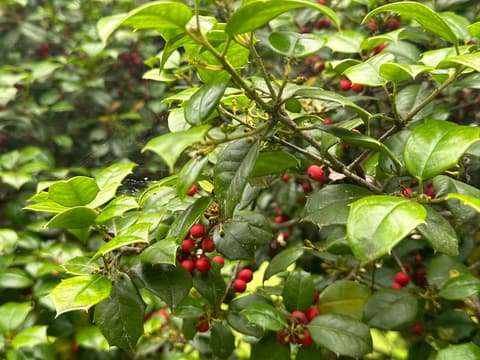
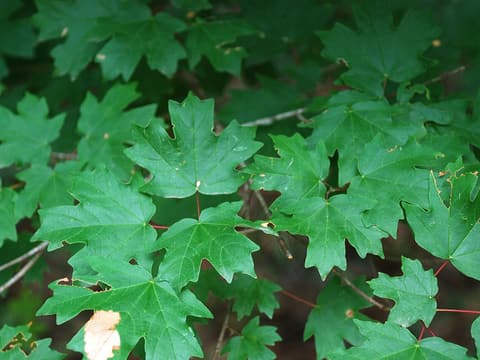
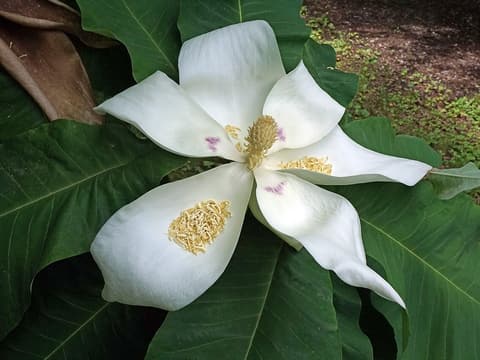
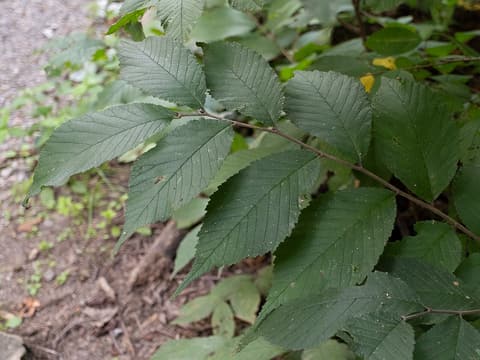
Under its canopy: Bottlebrush Buckeye, Florida Anise and Strawberry Bush.
More like this