Photo: Michael Rivera, CC BY-SA 4.0, cropped · Wikimedia Commons
Saw Palmetto
Serenoa repens
Also called Serenoa serrulata, Sabal serrulata.
A low, creeping palm with stiff fans on saw-toothed stalks, fragrant flowers for bees and fruit for bears, deer and birds.
Be first when saw palmetto is priced
Saplings ship bare-root or in a pot, usually 12 to 18 inches tall, in the dormant season, and their height and age are stated here with the price, once available.
We grow it as saplings and seed. One email when it is listed with prices, and nothing else. Or ask, and we reply with what is ready now. Live plants ship February to May and October to November.
Limited timeSign up now and get 10% off when it is ready.
Share: copy link
Saw Palmetto at a glance
Evergreen, Wildlife value, Honey tree, Drought tolerant, Salt tolerant, Showy flowers, Tolerates wet soil, Erosion control
- Type
- Shrub
- Mature height
- 3–8 ft
- USDA zones
- 8–10
- Growth rate
- Slow
- Flowers
- March to July
- Fruit
- Berries, September to October
- First crop
- 20 or more years
- Mature spread
- 10 ft
- Sun
- Full, Part
- Soil moisture
- Dry, Average, Wet
- Grows wild in
- Sandy barrens, the coast, dry uplands and the forest understory
- Native range
- Alabama, Florida, Georgia, Louisiana, Mississippi and South Carolina Also recorded, not native, in Texas. See what is native in your state
Saw palmetto is a low palm whose stems creep along or just under the ground, sending up stiff, evergreen fans on saw-toothed stalks. It reaches its greatest extent in the pine flatwoods of Florida and southern Georgia, where few plants are used more by wildlife. Its flowers are a significant source of honey, and its dried fruit is harvested for an herbal extract. It can be used to protect watersheds and control erosion. Mass it in a sunny, sandy spot or under pines, where it spreads into low, dense cover for birds and other animals.
Size, growth and what to expect
Saw palmetto grows slowly, about a foot a year in our growth estimator, and faster with more water and food. It makes a clump 3 to 8 feet tall and 4 to 6 feet wide, sometimes 10, and its creeping stems keep spreading. Each stiff fan runs about 3 feet across. Fire burns off the leaves, but new ones push out within days. Its stems can live past 100 years, and some wild clones may be thousands of years old.
Plumes of small, fragrant, creamy white flowers open from March to July. The berries turn from green through orange to bluish black in September and October, each about an inch long. Black bears, deer, raccoons and many birds eat them, and the palmetto skipper's caterpillars feed on the leaves.
It grows wild on the coastal plain from southern South Carolina through Georgia and Florida to Alabama, Mississippi and southeastern Louisiana. Its home is pine flatwoods, scrub, dunes and hammocks, often in vast stands. NatureServe ranks it critically imperiled in Louisiana, at the west end of its range.
How to grow Saw Palmetto
Saw palmetto is a low, creeping palm for full sun or part shade, and its leaves color best in sun. It takes any soil from dry sand to ground that floods now and then, and once rooted it rides out long droughts. It takes salty wind and some salt spray, but not salt water. Its leaves burn readily, so where wildfires run, keep it away from the house. Set plants 6 feet apart and keep them 5 feet from a wall and back from paths, since the leaf stalks carry sharp teeth. At its size it can go within 15 feet of overhead wires.
Saplings ship bare-root or potted. Plant them in a hole wider than the roots and no deeper. Set the base of the plant at the soil line, put the native soil back in, and keep the mulch clear of the stems. Clean the pulp off the seed, since seed left in the fruit seldom sprouts. Soak dried seed in warm water for five to seven days before sowing. Sow it half an inch to an inch deep once nights stay above 70 degrees, and seedlings come up over two to three months.
Water weekly through the first summer, then only in long droughts. Young plants take two to six years to settle in, and grass and weeds crowd them, so keep a mulched circle around each one. Leave room for it to spread, since its creeping stems keep branching.
Each flower carries both male and female parts, so there are no male and female plants to pair. More than 300 kinds of insects visit the flowers, most of them bees and flies. Flowering and fruiting vary from year to year, and some years bring little fruit. It is remarkably free of pests, though anthracnose, a fungus, can make young fruit drop.
Heights and zones are typical ranges for the species in cultivation; local conditions and seed source shift them.
Sources (11)
- NC State Extension Gardener Plant Toolbox: Serenoa repens
- Lady Bird Johnson Wildflower Center: Serenoa repens
- Florida Native Plant Society: Serenoa repens
- Flora of North America, vol. 22: Serenoa repens
- USDA Fire Effects Information System: Serenoa repens, Van Deelen 1991
- USDA Forest Service, Woody Plant Seed Manual (2008), Serenoa chapter, Barbour
- NatureServe Explorer: Serenoa repens
- Louisiana Department of Wildlife and Fisheries: rare plants tracking list, 2022
- Florida Administrative Code, Rule 5B-40.0055, Regulated Plant Index, effective January 8, 2020
- Abrahamson, W. G. and C. R. Abrahamson 2009, Life in the slow lane: palmetto seedlings exhibit remarkable survival but slow growth in Florida's nutrient-poor uplands, Castanea 74
- Butler, C. J. and M. Larson 2020, Climate change winners and losers: the effects of climate change on five palm species in the southeastern United States, Ecology and Evolution 10
Plan the planting
Check your site for it What to plant with it How big, how fast How much to water How to sow it How many for a crop When it flowers and fruits When to plant it where you live How far from the house and wires How old is yours
Read before planting
- Ten planting mistakes that quietly kill trees
- Transplanting young trees: timing, water and protection
- Protecting young trees from voles, rabbits, deer and squirrels
- How fast every tree and shrub we grow gets tall: growth rate, A to Z
- The habitat around a tree is part of the tree
- Invasive vines and shrubs are what is killing your woods
Grows in the same conditions
Plants that share its sun and soil
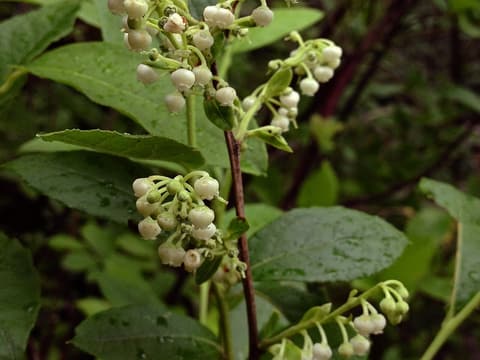
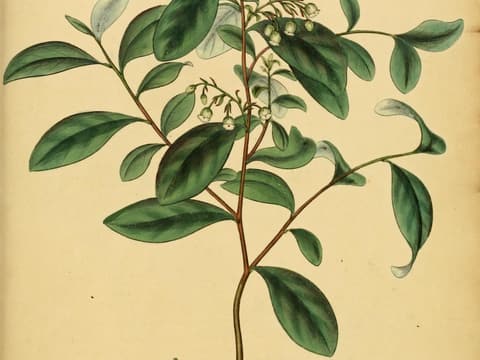
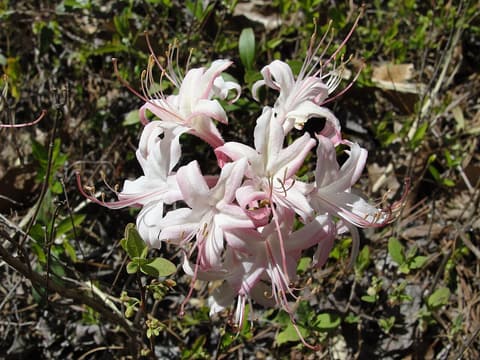
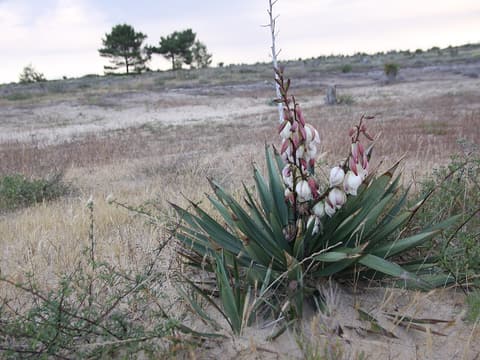
Trees to plant it under: Redbay, Live Oak and Laurel Oak.
More like this