Photo: NPS Photo, Public domain · Wikimedia Commons
Leadplant
Scientific name: Amorpha canescens
Also called lead plant, prairie shoestring.
A prairie sub-shrub with silver leaves and purple summer spikes, rooted deep against drought.
Be first when leadplant is priced
Saplings ship bare-root or in a pot, usually 12 to 18 inches tall, in the dormant season, and their height and age are stated here with the price, once available.
We grow it as saplings and seed. One email when it is listed with prices, and nothing else. Or ask, and we reply with what is ready now. Live plants ship February to May and October to November.
Limited timeSign up now and get 10% off when it is ready.
Share: copy link
Leadplant at a glance
Showy flowers, Wildlife value, Drought tolerant, Nitrogen fixing, Rare, Erosion control, Bears young
- Type
- Shrub
- Mature height
- 1–3 ft
- USDA zones
- 2–8
- Growth rate
- Slow
- Flowers
- June to July
- Fruit
- Pods, August to September
- First crop
- About 4 years
- Mature spread
- 3 ft
- Sun
- Full
- Soil moisture
- Dry
- Grows wild in
- Dry uplands and rocky ground
- Native range
- 19 states, north to North Dakota, south to Louisiana, east to Michigan and west to Montana See what is native in your state
List all 19
Arkansas, Colorado, Illinois, Indiana, Iowa, Kansas, Louisiana, Michigan, Minnesota, Missouri, Montana, Nebraska, New Mexico, North Dakota, Oklahoma, South Dakota, Texas, Wisconsin and Wyoming
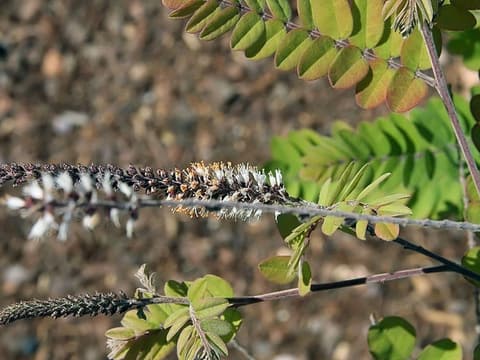
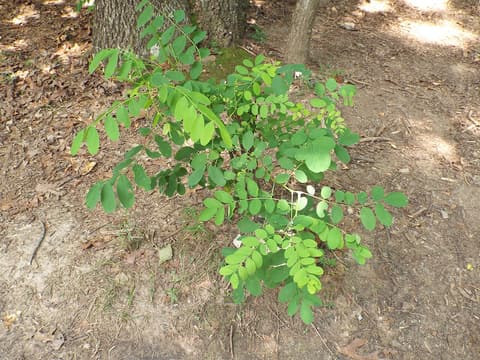
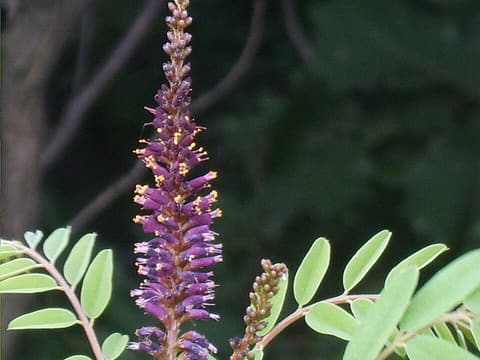
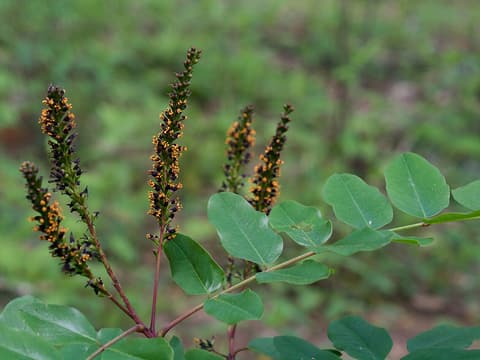
Leadplant is a defining plant of tallgrass prairie, slow to establish but nearly immortal once its taproot is down. Silvery gray foliage, purple flowers in July for bees and butterflies, and total drought tolerance make it ideal for dry sunny beds, rock gardens and prairie restorations. Its deep, branching, woody roots knit the soil against erosion. Made for a curb strip or the front row of a pollinator bed on gravel.
Size, growth and what to expect
Leadplant is slow above ground, and our growth estimator models it at a few inches a year on an average site, slowing as it nears full size. Restoration researchers report slow growth because the plant puts its effort into a root that reaches 7 to 20 feet down. Mature plants stand 1 to 3 feet tall and spread 2 to 2½ feet. The stems die back each year and sprout again from a woody crown. Seedlings take about 4 years to reach flowering.
A grown plant can carry up to 30 flowering stems and 3,000 flowers in late June and July. Solitary bees are its main pollinators, and the endangered Karner blue butterfly takes its nectar. Each small pod holds one seed. The name comes from the leaves, which look dusted with lead under their fine gray hairs. Cattle and browsing wildlife find it highly palatable, so it needs protection.
It grows wild across most of the Great Plains, from Manitoba south to Texas and from Indiana west to Wyoming and New Mexico, on well-drained prairies, rocky bluffs and open woods.
How to grow Leadplant
Leadplant is a full sun, dry soil plant and nothing else will do. It needs drainage above all. A bed that stays damp, or one watered with the lawn, rots the crown. It belongs at the front, 2 feet apart, among low neighbors.
Saplings ship bare-root or potted. Plant while dormant. Small plants take hold better than large ones, because the taproot goes down early and hates being cut. Dig a little wider than the roots, set the crown at grade, and refill with the soil you removed. Use a thin gritty mulch or a scatter of gravel, kept off the crown. Nothing this size needs a stake. Nick the hard coat and sow seed in fall in a screened bed, expecting slow, uneven germination.
Water the first summer, then stop. Deer and rabbits find leadplant delicious, so cage every new plant two years at least, longer where deer press hard. Cut old stems back to a few inches in late winter to keep it tight.
Leadplant sets seed only with pollen from another plant, so plant two or more seedlings from different parents. Almost nothing shows above ground for two or three years while the root drives down, and that is normal rather than failure. Rich soil and fertilizer only make it flop.
Heights and zones are typical ranges for the species in cultivation; local conditions and seed source shift them.
Sources (10)
- USDA Fire Effects Information System, Amorpha canescens
- Lady Bird Johnson Wildflower Center, Amorpha canescens
- NC State Extension Gardener Plant Toolbox, Amorpha canescens
- USDA NRCS PLANTS Database: Amorpha canescens
- USDA NRCS Plant Guide: leadplant, Amorpha canescens
- Slagle and Hendrix 2009, Reproduction of Amorpha canescens (Fabaceae) and diversity of its bee community in a fragmented landscape, Oecologia 161: 813-823
- The Morton Arboretum: leadplant
- NatureServe Explorer: Amorpha canescens
- Minnesota Wildflowers: Amorpha canescens, lead plant
- USDA Forest Service, Woody Plant Seed Manual (2008), Amorpha chapter, Zasada and Martineau
Plan the planting
Check your site for it What to plant with it How big, how fast How much to water How to sow it How many for a crop When it flowers and fruits When to plant it where you live How far from the house and wires How old is yours
Read before planting
- Ten planting mistakes that quietly kill trees
- Transplanting young trees: timing, water and protection
- Protecting young trees from voles, rabbits, deer and squirrels
- Native trees and shrubs for dry, sandy soil: the plants of barrens and dunes, and how to grow them
- Native trees and shrubs that fix nitrogen, and the legumes that do not
- The habitat around a tree is part of the tree
We grow 7 other indigobushes (Amorpha): see them all.
Grows in the same conditions
Plants that share its sun and soil
More like this