Photo: Derek Ramsey, Chanticleer Garden, CC BY-SA 3.0, cropped · Wikimedia Commons
Sweetbay Magnolia
Scientific name: Magnolia virginiana
Also called swamp magnolia, laurel magnolia.
Lemon-scented white flowers from May into summer, silver-backed leaves, and a love of wet ground.
Be first when sweetbay magnolia is priced
Saplings ship in a pot, usually 12 to 18 inches tall, in the dormant season, and their height and age are stated here with the price, once available.
We grow it as saplings and seed. One email when it is listed with prices, and nothing else. Or ask, and we reply with what is ready now. Live plants ship February to May.
Limited timeSign up now and get 10% off when it is ready.
Share: copy link
Sweetbay Magnolia at a glance
- Type
- Small tree
- Mature height
- 15–35 ft
- USDA zones
- 5–10
- Growth rate
- Medium
- Flowers
- April to July
- Fruit
- Cones, August to September
- First crop
- 6 to 10 years
- Mature spread
- 35 ft
- Sun
- Full, Part
- Soil moisture
- Average, Wet
- Grows wild in
- Stream banks, swamps and wet flats
- Native range
- 17 states and the District of Columbia, north to New York, south to Florida and west to Texas See what is native in your state
List all 18
Alabama, Arkansas, Delaware, Florida, Georgia, Louisiana, Maryland, Massachusetts, Mississippi, New Jersey, New York, North Carolina, Pennsylvania, South Carolina, Tennessee, Texas, Virginia and the District of Columbia
Sweetbay grows in swamps and streamsides from Massachusetts to Texas, so it thrives where downspouts drain and lawns puddle. Flowers open a few at a time for weeks, red seeds feed birds in fall, and the leaves flash silver in the wind. Deciduous in the north, evergreen in the south; a multi-stem clump is the most natural form. Tolerant of both flood and drought, it suits a street planting strip as narrow as four feet. Ideal as a summer screen along a damp property line, or as a specimen beside a deck.
Size, growth and what to expect
Sweetbay magnolia starts fast and settles down. A first-year seedling grows 12 to 24 inches, rapid for a few years on good ground and poor to medium after that. Our growth estimator models it as a medium tree, roughly a foot and a half a year in its youth. In a garden it makes 15 to 35 feet tall and as wide, while wild trees in the Deep South reach 50 to 100 feet. Seedlings in the open have fruited at 6 years, and trees usually bear from about 10.
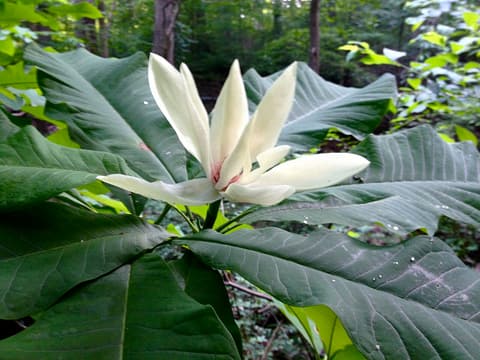
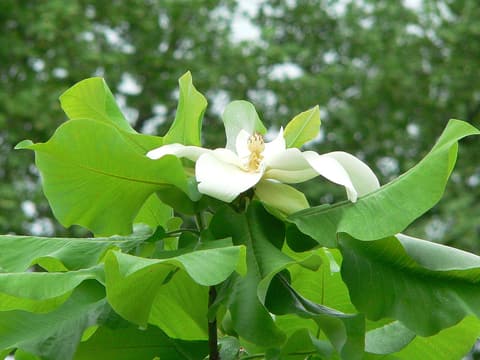
Creamy white flowers 2 to 3 inches across open from April into July. It usually sets some fruit every year, though yields are small. The fruit is a cone 1 to 2 inches long that splits in late summer to dangle scarlet seeds on threads for gray squirrels, turkeys, quail and songbirds. Swamp magnolia, its other name, reflects where it grows.
It grows wild along the Atlantic and Gulf coastal plains from Long Island south through New Jersey and southeastern Pennsylvania to south Florida and west to east Texas. Its wild sites are acid, poorly drained ground that floods in winter. Trees typically live about 80 to 130 years. The oldest in a Great Dismal Swamp study was 47 years old.
How to grow Sweetbay Magnolia
Sweetbay magnolia likes full sun or light shade and moist to wet soil, from garden ground to the boggy spot below a downspout. Soil should be acid to neutral; it yellows in limey ground. It makes a broad multi-stem clump, so plant it 10 feet from the house and 12 to 24 feet between trees.
Saplings ship potted. Magnolia roots are thick, fleshy and break easily, so plant in early spring as growth starts. Keep the root ball intact; set it in a hole twice its width, flare at grade, native soil, mulch off the stems, and stake only in a windy spot. Clean the oily red coat off seed and never let it dry; chill it damp for three months, sow in spring an inch deep, and cover with hardware cloth against mice.
Water weekly through the first two summers. Deer and rabbits can damage a young sweetbay, so cage or tube it for two or three years. Prune as little as possible; remove suckers for a single trunk or let them come for a clump.
A single sweetbay sets seed on its own, since pollen from one of its flowers can fertilize another flower on the same tree. Leaves may hang on through winter in the South and drop in the North; both are normal. Magnolia scale, a waxy bump on the twigs, is the main pest.
Heights and zones are typical ranges for the species in cultivation; local conditions and seed source shift them.
Sources (15)
- USDA Forest Service, Silvics of North America: sweetbay
- NC State Extension Gardener Plant Toolbox: Magnolia virginiana
- USDA NRCS PLANTS Database: Magnolia virginiana
- USDA Fire Effects Information System: Magnolia virginiana
- USDA Forest Service, Woody Plant Seed Manual (2008), Magnolia chapter, Barbour
- USDA NRCS Plant Guide: sweetbay, Magnolia virginiana
- Lady Bird Johnson Wildflower Center: Magnolia virginiana
- NatureServe Explorer: Magnolia virginiana, Sweetbay Magnolia
- Go Botany, Native Plant Trust: Magnolia virginiana
- Trees and Shrubs Online: Magnolia virginiana, Sutton (2022)
- The Morton Arboretum: sweetbay magnolia
- Flora of North America, vol. 3: Magnolia virginiana
- Heiser 1962, Some observations on pollination and compatibility in Magnolia, Proceedings of the Indiana Academy of Science 72
- USDA Forest Service, Climate Change Tree Atlas (retired March 2026): sweetbay, lhdr_653, the Internet Archive's copy of 2025-04-24
- BIEN, the Botanical Information and Ecology Network: trait data for Magnolia virginiana, from Train and Day 1982
Plan the planting
Check your site for it What to plant with it How big, how fast How much to water How to sow it How many for a crop When it flowers and fruits When to plant it where you live How far from the house and wires How old is yours Moving one you already have
Read before planting
- Ten planting mistakes that quietly kill trees
- Transplanting young trees: timing, water and protection
- Protecting young trees from voles, rabbits, deer and squirrels
- Small native trees and large shrubs for a small yard, and how to place them
- How floodplain trees survive high water
- Multistem or single stem? Sometimes the trunk is hiding the answer
We grow 7 other magnolias (Magnolia): see them all.
Grows in the same conditions
Plants that share its sun and soil
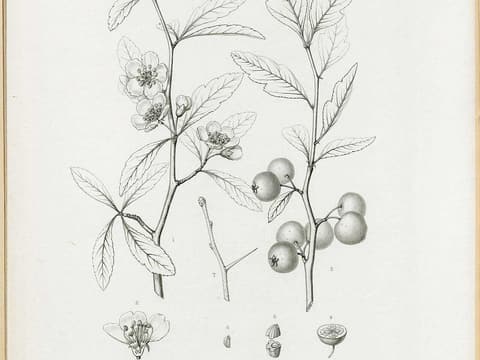
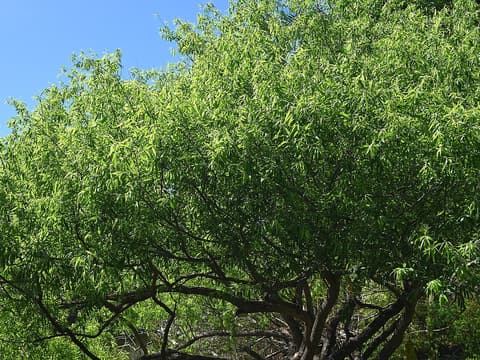
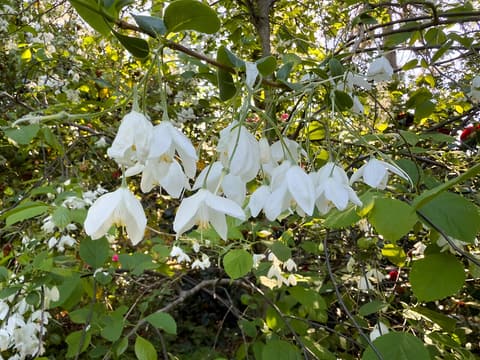
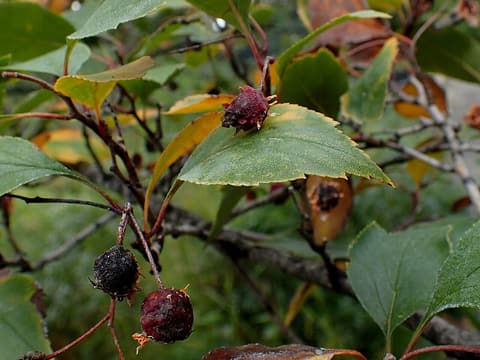
Trees to plant it under: Willow Oak, Swamp Laurel Oak and American Elm.
More like this