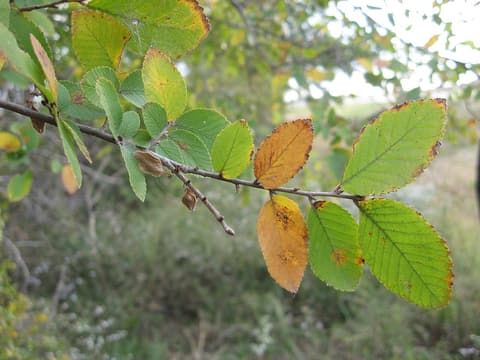
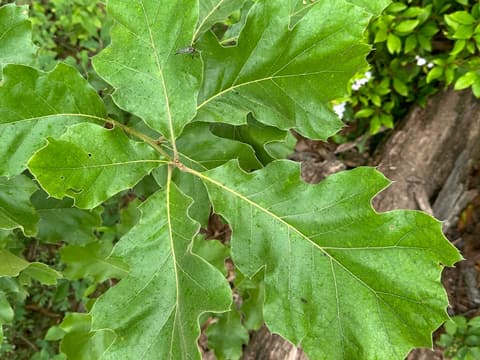
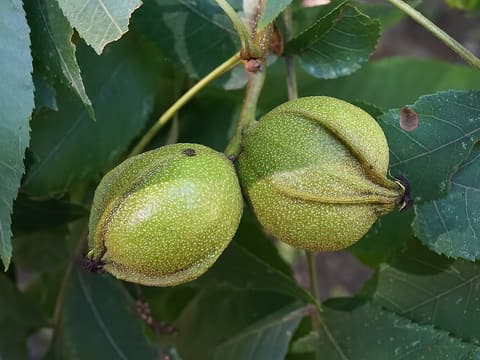
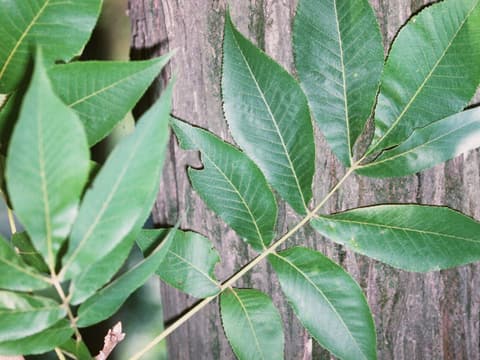
Photo: Cephas, CC BY-SA 4.0, cropped · Wikimedia Commons
American Elm
Ulmus americana
Also called white elm, soft elm.
The great vase-shaped elm of old American streets, a fast shade tree for wet or dry ground, now best planted alone among trees of other kinds.
Be first when American elm is priced
Saplings ship bare-root or in a pot, usually 12 to 18 inches tall, in the dormant season, and their height and age are stated here with the price, once available.
We grow it as saplings and seed. One email when it is listed with prices, and nothing else. Or ask, and we reply with what is ready now. Live plants ship February to May and October to November.
Limited timeSign up now and get 10% off when it is ready.
Share: copy link
American Elm at a glance
- Type
- Large tree
- Mature height
- 60–80 ft
- USDA zones
- 2–9
- Growth rate
- Fast
- Flowers
- February to May
- Fruit
- Winged seeds, March to June
- First crop
- 15 years (seldom abundant before 40)
- Mature spread
- 60 ft
- Sun
- Full, Part
- Soil moisture
- Dry, Average, Wet
- Grows wild in
- Floodplain forests, stream banks, old fields and edges, swamps and wet flats
- Native range
- 39 states and the District of Columbia, north to North Dakota, south to Florida and west to Montana Also recorded, not native, in Colorado. See what is native in your state
List all 40
Alabama, Arkansas, Connecticut, Delaware, Florida, Georgia, Illinois, Indiana, Iowa, Kansas, Kentucky, Louisiana, Maine, Maryland, Massachusetts, Michigan, Minnesota, Mississippi, Missouri, Montana, Nebraska, New Hampshire, New Jersey, New York, North Carolina, North Dakota, Ohio, Oklahoma, Pennsylvania, Rhode Island, South Carolina, South Dakota, Tennessee, Texas, Vermont, Virginia, West Virginia, Wisconsin, Wyoming and the District of Columbia
American elm was once the great street and shade tree of North America, prized for its fast growth and its high, arching, vase-shaped crown. Dutch elm disease, a fungus carried by elm bark beetles and through grafted roots, has killed most of the old trees since it reached the United States in 1930. Because of it the tree was long not recommended for planting, and resistant named elms took its place in streets and parks. Young elms still spring up along streams and in old fields, and many bear seed before the disease finds them. Give it open ground as a lone shade tree among trees of other kinds, never in a row of elms.
Size, growth and what to expect
American elm grows fast, about 2.75 feet a year in our growth estimator. Expect 60 to 80 feet with a vase-shaped crown 30 to 60 feet wide. It often lives 175 to 200 years, and some pass 300. The oldest tree dated by its rings reached 217. Only a tiny share of trees is ever dated this way, so older ones may exist.
It flowers from February in the South to May in the North, two to three weeks before the leaves. The flat, oval samaras ripen soon after and have fallen by mid-March in the South and mid-June in the North. Seed comes from about 15 years, but heavy crops seldom before 40. Squirrels, mice, ruffed grouse and bobwhite eat the seeds, and the leaves feed question mark, eastern comma and mourning cloak caterpillars.
It grows wild from Nova Scotia and southern Saskatchewan south to central Florida and central Texas, and west to eastern Montana and Wyoming. It is most common on floodplains and flats along streams. The great, arching old trees are now rare, though young elms are still common.
How to grow American Elm
American elm grows best in full sun or light shade on a rich, moist loam that drains well. It takes clay, sand, wet bottomland and dry sites, and soils from acid to mildly alkaline. It stands flooding while dormant but dies if water stands into the growing season. Plant it 30 feet from a wall and more than 50 feet from overhead wires, and set trees 30 feet apart.
Saplings ship bare-root or potted. Their fibrous roots move easily. Plant them dormant, from leaf fall until bud swell, in a hole wider than the roots and no deeper. Set the root flare at the soil line, put the native soil back in, and keep the mulch clear of the trunk. Sow the samaras as soon as they fall in spring, a quarter inch deep, and keep the bed moist. Most sprout within two weeks. Seed that waits a season needs two to three months damp in the refrigerator before a spring sowing.
Water weekly through the first summer and in long droughts after. Guard young trees with a tube or cage against deer and rabbits for the first few years. Prune in the dormant season to one strong trunk with well-spaced limbs, since open-grown trees fork low and ice can split them.
Each flower carries both male and female parts, but a tree sets almost no good seed with its own pollen. The wind carries pollen between trees, so plant two or more if you want seed. Dutch elm disease yellows and wilts the leaves, then kills the branches and the whole tree, and it has no cure. The resistant elms sold today, such as 'Princeton' and 'Valley Forge', are named clones, and a seed nursery does not sell them. Elm yellows, spread by a leafhopper, kills a tree within a year of the first signs. Elm leaf beetles, cankerworms and scale also feed on it.
Heights and zones are typical ranges for the species in cultivation; local conditions and seed source shift them.
Sources (11)
- USDA Forest Service, Silvics of North America: American Elm, Bey 1990
- USDA Forest Service, Woody Plant Seed Manual (2008), Ulmus chapter
- Flora of North America, vol. 3: Ulmus americana
- The Morton Arboretum: American elm
- Missouri Botanical Garden Plant Finder: Ulmus americana
- NC State Extension Gardener Plant Toolbox: Ulmus americana
- University of Minnesota, Urban Forestry: American elm
- USDA Forest Service, Fire Effects Information System: Ulmus americana
- Virginia Tech Dendrology, Eastern OLDLIST of maximum tree ages (Pederson): Ulmus americana
- USDA NRCS PLANTS Database: Ulmus americana
- NatureServe Explorer: Ulmus americana
Plan the planting
Check your site for it What to plant with it How big, how fast How much to water How to sow it How many for a crop When it flowers and fruits When to plant it where you live How far from the house and wires How old is yours Moving one you already have
Read before planting
- Ten planting mistakes that quietly kill trees
- Transplanting young trees: timing, water and protection
- Protecting young trees from voles, rabbits, deer and squirrels
- How fast every tree and shrub we grow gets tall: growth rate, A to Z
- Six trees not to plant near a house, and what to plant instead
- Pruning at the branch collar, and when to make the cut
Other elms (Ulmus) we grow: Cedar Elm, Rock Elm, September Elm, Slippery Elm and Winged Elm.
Grows in the same conditions
Plants that share its sun and soil
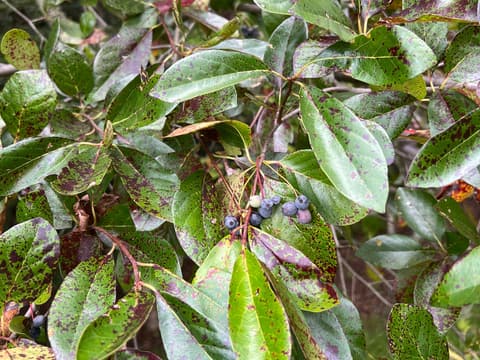
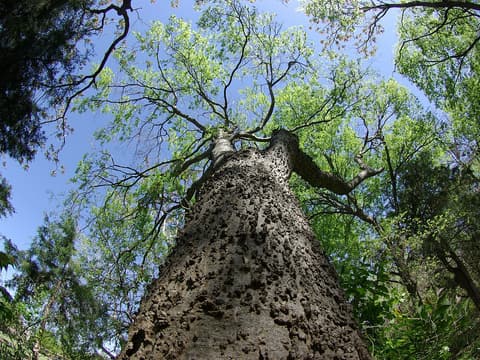
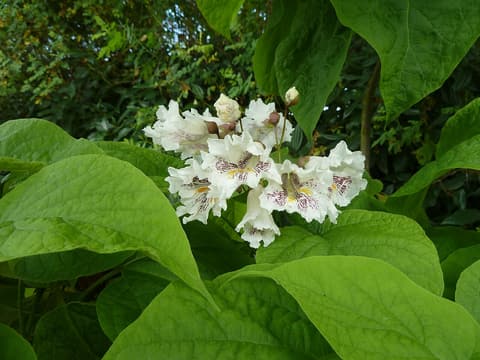
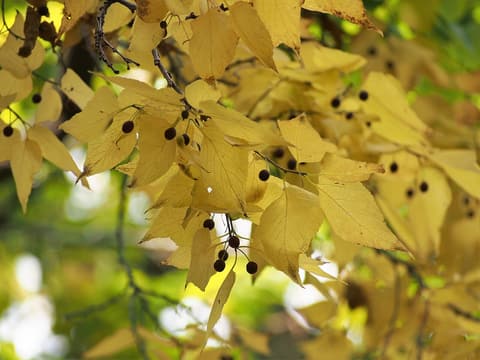
Under its canopy: Needle Palm, Dwarf Palmetto and Two-wing Silverbell.
More like this