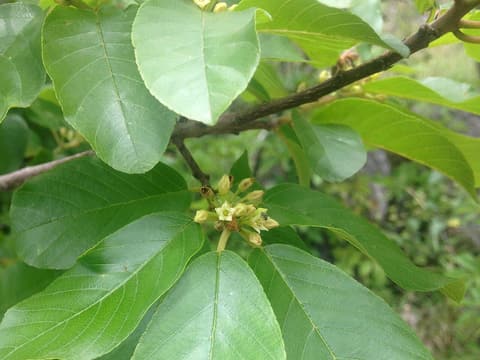
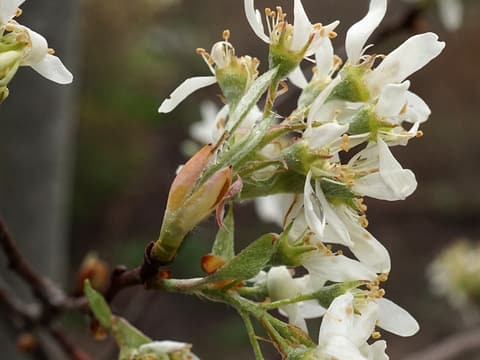
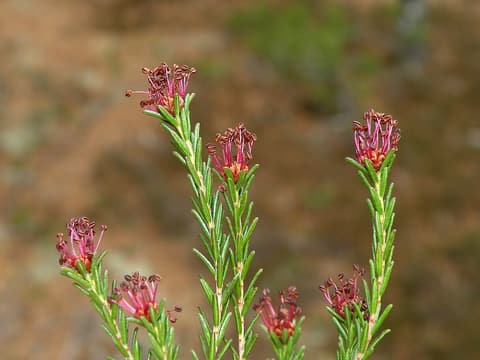
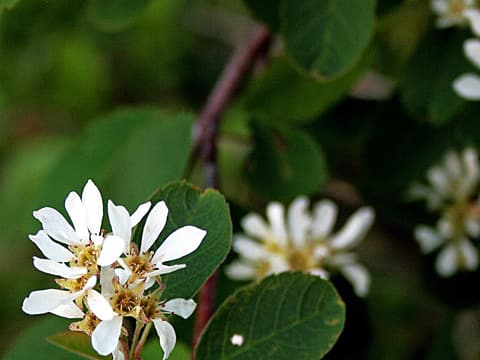
Photo: Gilles Ayotte, CC BY-SA 4.0, cropped · Wikimedia Commons
Three-toothed Cinquefoil
Scientific name: Sibbaldia tridentata · Family: Rosaceae (rose family)
Also called shrubby fivefingers, wineleaf potentilla, Sibbaldiopsis tridentata, Potentilla tridentata.
A low evergreen mat of mountaintops and rocky shores, with glossy three-part leaves that turn wine-red in fall and white flowers in summer.
Be first when three-toothed cinquefoil is priced
Saplings ship bare-root or in a pot, in the dormant season, and their height and age are stated here with the price, once available.
We grow it as saplings and seed. One email when it is listed with prices, and nothing else. Or ask, and we reply with what is ready now. Live plants ship February to May and October to November.
Limited timeSign up now and get 10% off when it is ready.
Share: copy link
Three-toothed Cinquefoil at a glance
- Type
- Shrub
- Mature height
- 1 ft
- USDA zones
- 3–9
- Growth rate
- Medium
- Flowers
- June to August
- Fruit
- Seeds, July to September
- First crop
- 2 years (first flowers)
- Mature spread
- 2 ft
- Sun
- Full
- Soil moisture
- Dry, Average
- Grows wild in
- Rocky ground, the Appalachians, the coast and sandy barrens
- Native range
- 21 states, north and west to North Dakota and south to Georgia See what is native in your state
List all 21
Connecticut, Georgia, Illinois, Iowa, Maine, Maryland, Massachusetts, Michigan, Minnesota, New Hampshire, New Jersey, New York, North Carolina, North Dakota, Pennsylvania, Rhode Island, Tennessee, Vermont, Virginia, West Virginia and Wisconsin
Three-toothed cinquefoil is a low evergreen of rocky summits, ledges and shores, a mat of glossy leaves on woody lower stems. Each leaf has three leaflets, each notched into three teeth at the tip. It is a plant of the far North that follows the high mountains south, and in a garden it wants the same thin, open ground. Iowa and New Jersey list it as endangered, and Connecticut and Tennessee list it as threatened. Grow it as a groundcover in a sunny rock garden or between the stones of a walk.
Size, growth and what to expect
Three-toothed cinquefoil grows at a medium pace for its size, a few inches a year in our growth estimator. It makes a mat 2 to 12 inches high and 1 to 2 feet wide, and its lower stems are woody, with shredding gray-brown bark. The glossy, dark green leaves last through winter, and in sun they turn deep red to burgundy in fall.
Clusters of up to 25 small white flowers open from June to August, the first at the tip of each stem. The seed heads turn from green to grayish brown three to four weeks after the flowers. Butterflies visit the flowers.
It grows wild from Greenland and Labrador west to the Northwest Territories, and south to Connecticut, the Great Lakes and northeastern Iowa. Farther south it follows exposed mountaintops to Georgia. Its home is rocky and gravelly shores, ledges, mountain balds and alpine tundra, often on acid soil.
How to grow Three-toothed Cinquefoil
Three-toothed cinquefoil wants full sun and a lean, acid soil of sand, gravel or rock, and good drainage is essential. It takes an average garden soil that drains well, and it stands drought once established. It will not hold its own against taller plants in rich soil, so give it open ground. Set plants 2 feet apart and keep them 2 feet from a wall. At its size it can go within 15 feet of overhead wires.
Saplings ship bare-root or potted. Plant them in a hole wider than the roots and no deeper. Set the crown at the soil line, put the native soil back in, and keep the mulch clear of the stems. Collect the seed heads as they turn grayish brown, three to four weeks after the flowers. Sow fresh seed outdoors at once, and it comes up the next spring. For a spring sowing, hold stored seed damp in the refrigerator for 6 weeks first.
Water it every day for the first two weeks after planting, then every two to three days until week 12. After that, water weekly through the first two summers. Before each watering, push a finger a few inches into the soil, and wait if it is still wet. Divide the mat every three or four years, or sooner if it looks crowded, best in fall.
Each flower carries both male and female parts, so there are no male and female plants to pair. It has no serious pests or diseases, and it resists verticillium wilt. Seedlings take two years to flower.
Heights and zones are typical ranges for the species in cultivation; local conditions and seed source shift them.
Sources (12)
- Lady Bird Johnson Wildflower Center: Sibbaldiopsis tridentata
- NC State Extension Gardener Plant Toolbox: Sibbaldiopsis tridentata
- Native Plant Trust, Go Botany: Sibbaldiopsis tridentata
- Minnesota Wildflowers: Sibbaldiopsis tridentata
- Flora of North America, vol. 9: Sibbaldiopsis tridentata
- NatureServe Explorer: Sibbaldiopsis tridentata
- Iowa Administrative Code 571, chapter 77, Endangered and threatened plant and animal species
- Connecticut Department of Energy and Environmental Protection: Endangered, Threatened and Special Concern Species, 2015
- Tennessee Division of Natural Areas: Tennessee Rare Plant List, 2025
- Virginia Department of Conservation and Recreation: Natural Heritage Resources of Virginia, Rare Plants
- West Virginia Natural Heritage Program: Rare, Threatened and Endangered Plants, 2020
- USDA NRCS PLANTS Database: Sibbaldiopsis tridentata
Plan the planting
Check your site for it What to plant with it How big, how fast How much to water How to sow it How many for a crop When it flowers and fruits When to plant it where you live How far from the house and wires How old is yours
Read before planting
- Ten planting mistakes that quietly kill trees
- Transplanting young trees: timing, water and protection
- Protecting young trees from voles, rabbits, deer and squirrels
- Low native shrubs and groundcovers for sun, shade, sand and bog
- The habitat around a tree is part of the tree
- What a young tree looks like: first-year seedlings of oak, walnut, hickory, chestnut, maple and redbud, and the weed trees to pull
Grows in the same conditions
Plants that share its sun and soil

More like this