Photo: Kristof Zyskowski & Yulia Bereshpolova, CC BY 2.0, cropped · Wikimedia Commons
Velvetleaf Blueberry
Vaccinium myrtilloides
Also called velvetleaf huckleberry, sourtop blueberry, Canadian blueberry, velvet-leaved blueberry, Vaccinium canadense.
A low wild blueberry of the North with softly hairy leaves that turn red in fall and sweet, tart blue berries from July into September.
Be first when velvetleaf blueberry is priced
Saplings ship bare-root or in a pot, usually 12 to 18 inches tall, in the dormant season, and their height and age are stated here with the price, once available.
We grow it as saplings and seed. One email when it is listed with prices, and nothing else. Or ask, and we reply with what is ready now. Live plants ship February to May and October to November.
Limited timeSign up now and get 10% off when it is ready.
Share: copy link
Velvetleaf Blueberry at a glance
- Type
- Shrub
- Mature height
- 1–4 ft
- USDA zones
- 2–6
- Growth rate
- Medium
- Flowers
- May to June
- Fruit
- Berries, July to September
- First crop
- 3 years
- Mature spread
- 3 ft
- Sun
- Full, Part, Shade
- Soil moisture
- Dry, Average, Wet
- Grows wild in
- Sandy barrens, rocky ground, the Appalachians, old fields and edges
- Native range
- 19 states, north and west to Washington and south to Virginia Also recorded, not native, in Kentucky and North Carolina. See what is native in your state
List all 19
Connecticut, Illinois, Indiana, Iowa, Maine, Maryland, Massachusetts, Michigan, Minnesota, Montana, New Hampshire, New York, Ohio, Pennsylvania, Vermont, Virginia, Washington, West Virginia and Wisconsin
Velvetleaf blueberry is a low wild blueberry of the North, named for the soft hairs on its leaves and twigs. It grows with lowbush blueberry in the wild blueberry fields of Maine and the Maritimes, and in New Brunswick about 30 percent of the crop was velvetleaf. Its berries go into pies, jam and ice cream as well as being eaten fresh. Indiana, Iowa and Ohio list it as endangered, and Connecticut lists it as a species of special concern. NatureServe ranks it critically imperiled in Virginia and Washington. Grow it as a low fruiting ground cover on sandy, acid soil in sun or light shade.
Size, growth and what to expect
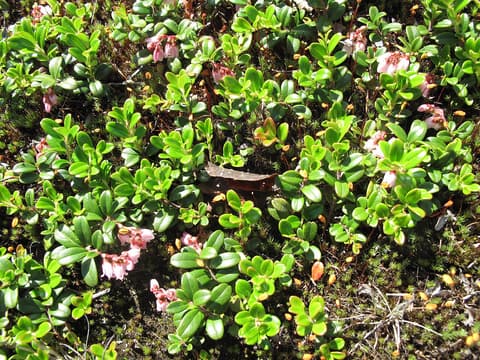
No source rates its growth, so our growth estimator treats it as a medium grower, like our hillside blueberry, 6 inches to a foot a year. It makes a low shrub 1 to 4 feet tall, most often under 3, spreading by underground stems into open colonies. On good sites one plant can spread 33 feet across.
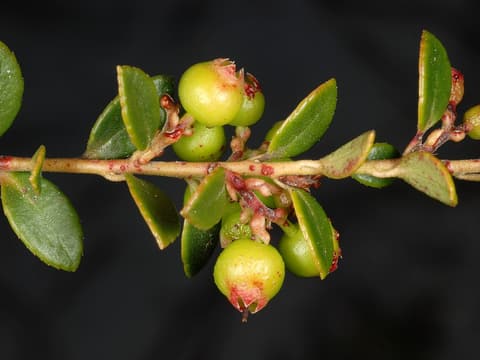
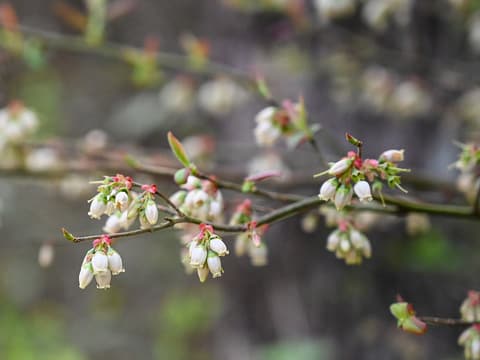
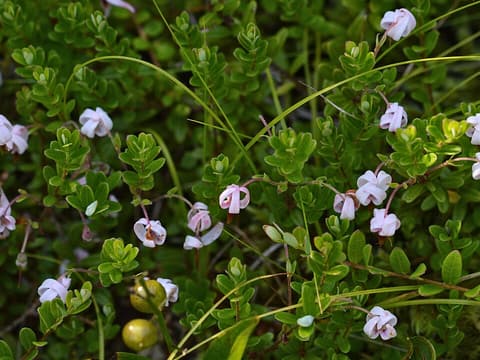
Its thin leaves, about an inch long, are softly hairy on both sides and turn red in early fall. Small bells, greenish white to pink, open in May and June. The berries ripen from July into September, bright blue under a frosty bloom, a quarter to a third of an inch across, sweet but tart. Many birds and mammals eat them, from robins to black bears.
It grows wild across Canada and south to Maine and Minnesota, then in the mountains to West Virginia and Virginia, with scattered stands from Iowa to Ohio and in Montana and Washington. Records from Kentucky and North Carolina lie outside that range. Its home is dry conifer woods, burns and clearcuts, barrens, rock ledges, bog edges and mountain meadows.
How to grow Velvetleaf Blueberry
Velvetleaf blueberry grows in full sun, part shade or shade, though it flowers and fruits best in sun. It needs an acid soil, about pH 3 to 6, sandy or loamy and well drained but not dry for long, and it does well in poor ground. Set plants 2 feet apart, and keep them 2 feet from a wall. At its size it can go within 15 feet of overhead wires.
Saplings ship bare-root or potted. Plant them in early spring or fall, in a hole wider than the roots and no deeper. Set the crown at the soil line, put the native soil back in, and mulch with pine needles or bark, clear of the stems. The seed is tiny and needs light to sprout. Keep the dry seed in the refrigerator for about 90 days. Then sow it on the surface of a moist mix of sand and peat, uncovered, in light. Seedlings come up unevenly over 3 to 12 weeks, and often only a quarter of the seed sprouts.
Water in dry spells for the first two summers, since the roots are shallow. Grass and weeds hold young plants back, so keep the ground around them clear. Every few years, cut the oldest stems to the ground in early spring to renew the colony and its crop.
A colony from one root is a single clone, and velvetleaf blueberry is self-sterile, so plant two or more seedlings from different parents for fruit. Bumble bees are its best pollinators. Plants first fruit in their third growing season, and a late spring frost can ruin a crop. Without a cover of snow, a hard winter can kill the stems to the ground.
Heights and zones are typical ranges for the species in cultivation; local conditions and seed source shift them.
Sources (6)
- USDA Forest Service, Fire Effects Information System: Vaccinium myrtilloides, Tirmenstein 1990
- Flora of North America, vol. 8: Vaccinium myrtilloides
- Lady Bird Johnson Wildflower Center: Vaccinium myrtilloides
- Native Plant Trust, Go Botany: Vaccinium myrtilloides
- USDA Forest Service, Woody Plant Seed Manual (2008), Vaccinium chapter
- NatureServe Explorer: Vaccinium myrtilloides
Plan the planting
Check your site for it What to plant with it How big, how fast How much to water How to sow it How many for a crop When it flowers and fruits When to plant it where you live How far from the house and wires How old is yours
Read before planting
- Ten planting mistakes that quietly kill trees
- Transplanting young trees: timing, water and protection
- Protecting young trees from voles, rabbits, deer and squirrels
- How fast every tree and shrub we grow gets tall: growth rate, A to Z
- The habitat around a tree is part of the tree
- Invasive vines and shrubs are what is killing your woods
We grow 10 other blueberries (Vaccinium): see them all.
Grows in the same conditions
Plants that share its sun and soil
Trees to plant it under: Common Hackberry, American Persimmon and Red Pine.
More like this