Photo: Cbaile19, CC0 · Wikimedia Commons
American Crabapple
Scientific name: Malus coronaria
Also called sweet crabapple, wild crab.
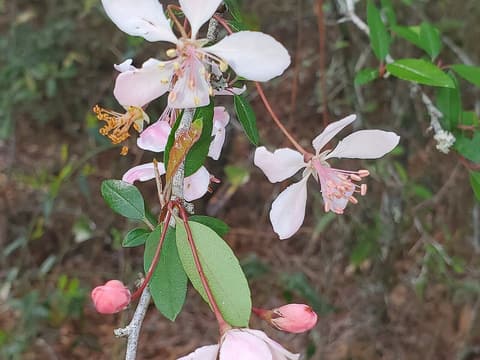
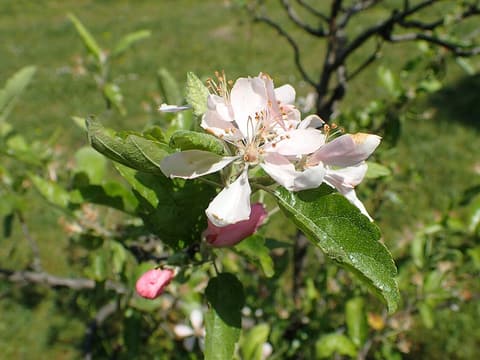
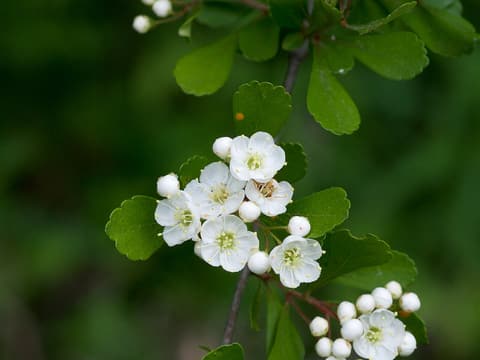
Fragrant pink-white blossoms in May and hard green fruit that makes exceptional jelly.
Be first when American crabapple is priced
Saplings ship bare-root, usually 12 to 18 inches tall, in the dormant season, and their height and age are stated here with the price, once available.
We grow it as saplings and seed. One email when it is listed with prices, and nothing else. Or ask, and we reply with what is ready now. Live plants ship February to May and October to November.
Limited timeSign up now and get 10% off when it is ready.
Share: copy link
American Crabapple at a glance
- Type
- Small tree
- Mature height
- 15–30 ft
- USDA zones
- 4–8
- Growth rate
- Slow
- Flowers
- May
- Fruit
- Crabapples, August to December
- First crop
- Several years
- Mature spread
- 30 ft
- Sun
- Full
- Soil moisture
- Average
- Grows wild in
- Rich moist slopes, old fields and edges
- Native range
- 21 states and the District of Columbia, north to Wisconsin, south to Georgia and west to Kansas Also recorded, not native, in Wyoming. See what is native in your state
List all 22
Alabama, Arkansas, Delaware, Georgia, Illinois, Indiana, Kansas, Kentucky, Maryland, Michigan, Missouri, New Jersey, New York, North Carolina, Ohio, Pennsylvania, South Carolina, Tennessee, Virginia, West Virginia, Wisconsin and the District of Columbia
Sweet crabapple is the native crab of the Northeast and Midwest, a small thorny tree of old fields and woodland edges. Its bloom is later and more fragrant than the Asian crabs, and the sour fruit hangs into winter for deer and grouse. Seed-grown trees are variable and full of character. Ideal for a hedgerow or a sunny meadow edge, with fruit enough for jelly.
Size, growth and what to expect
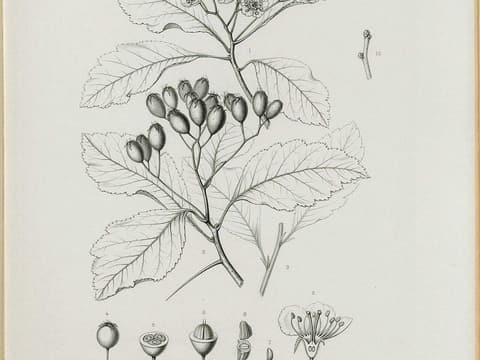
American crabapple grows slowly, about a foot a year in youth by our growth estimator's model. It makes a short-trunked tree 15 to 30 feet tall and about as wide, with a broad, spreading head and thorny branches. Fragrant white to pink blossoms an inch to an inch and three quarters across open in May.
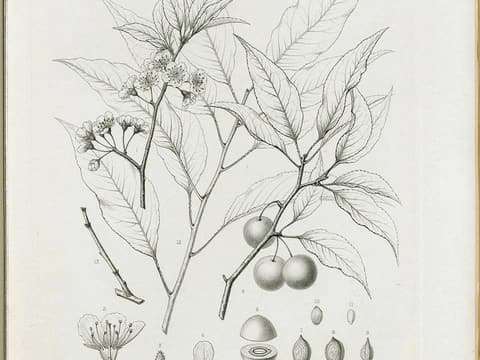
The hard, waxy, yellow-green fruit runs three quarters of an inch to an inch and a half across, ripens from August into October, and tastes sour. Apples as a group give a good crop every 2 to 4 years. Birds, raccoons, rabbits, opossums, squirrels and foxes eat the fruit, and crabapple thickets give nesting birds shelter. It is also known as sweet crab.
It grows wild from central New York and southern Wisconsin south to Delaware, the North Carolina uplands, Georgia, Tennessee and northeastern Arkansas, along stream banks and woodland edges.
How to grow American Crabapple
American crabapple needs full sun and an ordinary soil that drains. It grows a spreading, thorny crown, so give it 20 feet from other trees and keep it away from walkways.
Set out dormant bare-root saplings from late fall to early spring. Dig a hole twice the width of the roots, no deeper, so that the root flare sits right at grade. Backfill with the soil you removed, water it in, and mulch a ring three feet across, pulled back from the trunk. Sow crabapple seed in the fall half an inch deep in a screened bed, since it needs winter cold to sprout and mice clean out an open bed.
Water weekly through the first summer and in dry spells for two more years. Voles and rabbits strip apple bark, and deer rub and browse young trees, so use a hardware cloth cylinder from the start and leave it on for three or four years.
Sweet crabapple is very susceptible to cedar-apple rust, so plant it well away from eastern red cedar. Seedlings bloom and bear after several years, and fruit set improves with a second crabapple or apple nearby.
Heights and zones are typical ranges for the species in cultivation; local conditions and seed source shift them.
Sources (10)
- NC State Extension Gardener Plant Toolbox: Malus coronaria
- Lady Bird Johnson Wildflower Center: Malus coronaria
- USDA Forest Service, Woody Plant Seed Manual: Malus chapter
- Boone County Arboretum: Sweet Crabapple, Malus coronaria
- Clemson Cooperative Extension, Home and Garden Information Center: Crabapple
- Illinois Wildflowers: Wild Crab Apple, Malus coronaria
- Trees and Shrubs Online: Malus coronaria
- Flora of North America, vol. 9: Malus coronaria
- NatureServe Explorer: Malus coronaria
- USDA NRCS PLANTS Database: Malus coronaria, MACO5: profile
Plan the planting
Check your site for it What to plant with it How big, how fast How much to water How to sow it How many for a crop When it flowers and fruits When to plant it where you live How far from the house and wires How old is yours Moving one you already have
Read before planting
- Ten planting mistakes that quietly kill trees
- Transplanting young trees: timing, water and protection
- Protecting young trees from voles, rabbits, deer and squirrels
- Small native trees and large shrubs for a small yard, and how to place them
- Native trees and shrubs for birds: caterpillars, fruit, mast, nests and winter cover, month by month
- Multistem or single stem? Sometimes the trunk is hiding the answer
Other crabapples (Malus) we grow: Prairie Crabapple and Southern Crabapple.
Grows in the same conditions
Plants that share its sun and soil
More like this