Photo: Cephas, CC BY-SA 4.0, cropped · Wikimedia Commons
Balsam Poplar
Populus balsamifera
Also called balm of Gilead, tacamahac, bam tree, heartleaf balsam poplar, Populus tacamahacca.
The northernmost American hardwood, a fast poplar for wet ground whose sticky spring buds fill the air with the scent of balm of Gilead.
Be first when balsam poplar is priced
Saplings ship bare-root or in a pot, usually 12 to 18 inches tall, in the dormant season, and their height and age are stated here with the price, once available.
We grow it as saplings. One email when it is listed with prices, and nothing else. Or ask, and we reply with what is ready now. Live plants ship February to May and October to November.
Limited timeSign up now and get 10% off when it is ready.
Share: copy link
Balsam Poplar at a glance
- Type
- Large tree
- Mature height
- 30–100 ft
- USDA zones
- 2–5
- Growth rate
- Fast
- Flowers
- April to May
- Fruit
- Cottony seed, May to July
- First crop
- 8 to 10 years
- Mature spread
- 40 ft
- Sun
- Full
- Soil moisture
- Average, Wet
- Grows wild in
- Floodplain forests, stream banks, swamps and wet flats
- Native range
- Alaska and 26 other states, north to North Dakota, south to West Virginia and west to Oregon Also recorded, not native, in California, Nevada, New Jersey, Virginia, Washington and the District of Columbia. See what is native in your state
List all 27
Alaska, Colorado, Connecticut, Delaware, Idaho, Illinois, Indiana, Iowa, Maine, Maryland, Massachusetts, Michigan, Minnesota, Montana, New Hampshire, New York, North Dakota, Ohio, Oregon, Pennsylvania, Rhode Island, South Dakota, Utah, Vermont, West Virginia, Wisconsin and Wyoming
Balsam poplar is the northernmost American hardwood, a tall, fast-growing poplar of floodplains, stream banks and lake shores from Alaska to Newfoundland. Its inch-long winter buds are coated in a sticky, fragrant resin, the old balm of Gilead, once warmed in oil to make a salve for chest congestion. Bees gather the same resin to seal their hives. The balm of Gilead tree long sold in gardens is a hybrid clone that seldom sets seed. Illinois, Indiana, Ohio and Pennsylvania list balsam poplar as endangered at the south edge of its range. It holds river banks and river islands in place. Set it on a wet bank or a pond shore where its suckers and cotton will not matter.
Size, growth and what to expect
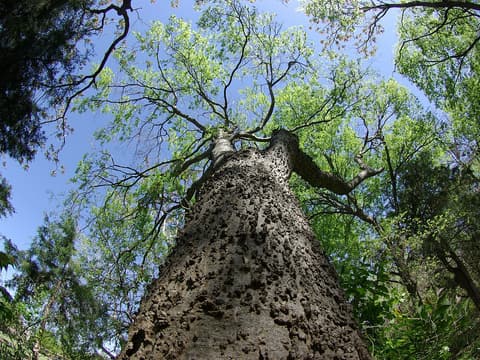
Balsam poplar grows fast, about 2.75 feet a year in our growth estimator. Expect 30 to 100 feet, with a narrow, open crown 25 to 40 feet wide. It is short-lived in the south of its range, though some trees reach 200 years. The oldest dated tree was 207 years old.
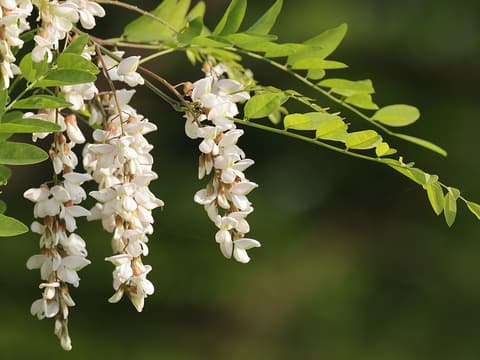
Catkins open in April and May, before the leaves, the males with 20 to 30 red stamens in each flower. Female trees shed tiny seeds on tufts of cotton from May into July. In spring the sticky buds, about an inch long, fill the air with a balsam scent as the leaves unfold. Ruffed grouse eat the male buds in winter, and moose, deer and beavers take the twigs and bark.
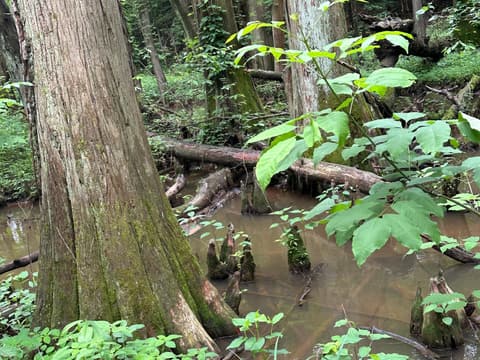
It grows wild across Canada and Alaska and south to Minnesota, Michigan, New York and Maine, with scattered stands as far south as Iowa, Pennsylvania and West Virginia. In the Rockies it grows sparingly south to Montana, Wyoming, Utah and Colorado. Look for it on floodplains, stream banks and lake shores and in moist woods.
How to grow Balsam Poplar
Balsam poplar needs full sun, since it will not stand shade, and deep, moist, fertile soil. It takes flooding on stream banks, lake shores and wet flats, but not stagnant, brackish water or acid peat. Its roots run shallow and far and send up suckers, and older trees drop brittle limbs, so keep it away from houses, drives and lawns. Plant it 30 feet from a wall and more than 50 feet from overhead wires, and set trees 25 feet apart.
Saplings ship bare-root or potted. Plant them dormant, from leaf fall until bud swell, in a hole wider than the roots and no deeper. Set the root flare at the soil line, put the native soil back in, and keep the mulch clear of the trunk. The cottony seed lives only a few weeks, too short a time to sell it as a packet. To raise your own, sow it the day the catkins open, on the surface of wet, bare soil. Keep the bed moist until the seedlings are up, which can be within a day.
Water weekly through the first summer unless the ground stays wet. Guard young trees from deer, hares and beavers, which browse the stems or girdle the bark. Prune in the dormant season to keep one leader, and pull suckers where you do not want a grove.
Trees are male or female, and only females shed the cottony seed, from about 8 to 10 years old. Female trees also drop heaps of spent catkins and cotton. Poplar borers can girdle or weaken the stems, and leaf rust, leaf blight, cankers and wood rot also attack it. Forest tent caterpillars and leaf beetles feed on the leaves, though the resin makes it a poor host.
Heights and zones are typical ranges for the species in cultivation; local conditions and seed source shift them.
Sources (18)
- USDA Forest Service, Silvics of North America: Balsam Poplar, Zasada and Phipps 1990
- USDA Forest Service, Fire Effects Information System: Populus balsamifera subsp. balsamifera
- USDA Forest Service, Woody Plant Seed Manual (2008), Populus chapter
- Flora of North America, vol. 7: Populus balsamifera
- University of Minnesota, Urban Forestry: Balsam poplar
- Iowa State University Extension and Outreach: Balsam Poplar
- Utah State University Extension, Tree Browser: Poplar, Balsam
- Lady Bird Johnson Wildflower Center: Populus balsamifera
- Trees and Shrubs Online, International Dendrology Society: Populus balsamifera
- Go Botany (Native Plant Trust): Populus balsamifera
- Virginia Tech Dendrology: balsam poplar, Populus balsamifera ssp. balsamifera
- Virginia Tech Dendrology, Eastern OLDLIST of maximum tree ages (Pederson): Populus balsamifera
- USDA NRCS PLANTS Database: Populus balsamifera
- NatureServe Explorer: Populus balsamifera
- Illinois Endangered Species Protection Board: Checklist of Endangered and Threatened Animals and Plants of Illinois, 2025
- Indiana Department of Natural Resources: Endangered, Threatened and Rare Vascular Plants
- Ohio Department of Natural Resources: Ohio Rare Native Plants Status List 2024-25
- Pennsylvania Natural Heritage Program: species of special concern
Plan the planting
Check your site for it What to plant with it How big, how fast How much to water How to sow it How many for a crop When it flowers and fruits When to plant it where you live How far from the house and wires How old is yours Moving one you already have
Read before planting
- Ten planting mistakes that quietly kill trees
- Transplanting young trees: timing, water and protection
- Protecting young trees from voles, rabbits, deer and squirrels
- How fast every tree and shrub we grow gets tall: growth rate, A to Z
- Six trees not to plant near a house, and what to plant instead
- Pruning at the branch collar, and when to make the cut
Other poplars (Populus) we grow: Swamp Cottonwood.
Grows in the same conditions
Plants that share its sun and soil
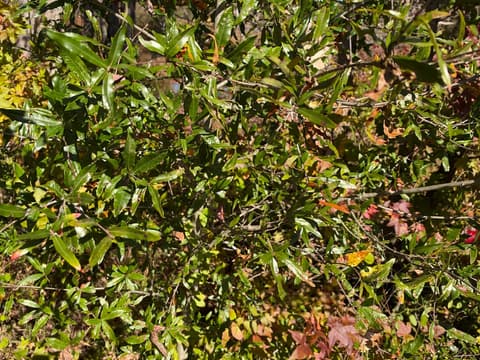
Under its canopy: Virginia Sweetspire, Wild Black Currant and Red Osier Dogwood.
More like this