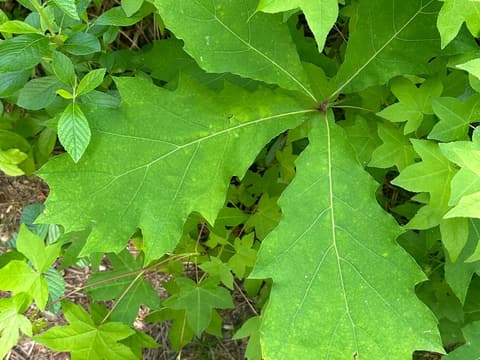
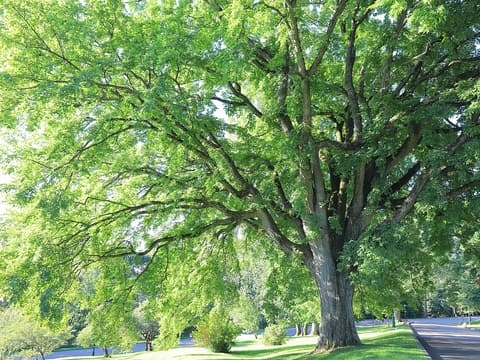
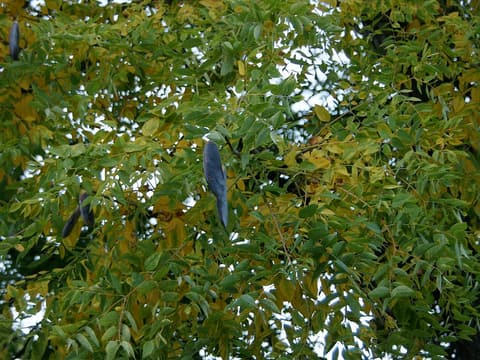
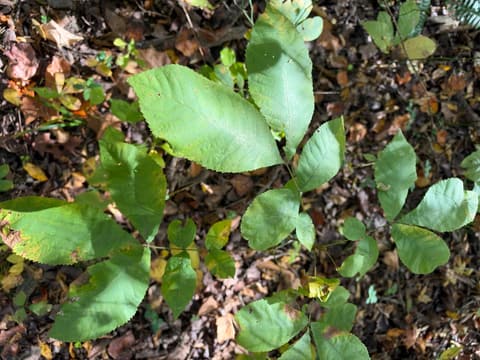
Photo: Cephas, CC BY-SA 4.0, cropped · Wikimedia Commons
Black Locust
Scientific name: Robinia pseudoacacia
Also called false acacia, yellow locust.
Fragrant white flower clusters in May, the source of the lightest and most prized honey in the East.
Be first when black locust is priced
Saplings ship bare-root or in a pot, usually 12 to 18 inches tall, in the dormant season, and their height and age are stated here with the price, once available.
We grow it as saplings and seed. One email when it is listed with prices, and nothing else. Or ask, and we reply with what is ready now. Live plants ship February to May and October to November.
Limited timeSign up now and get 10% off when it is ready.
Share: copy link
Black Locust at a glance
- Type
- Large tree
- Mature height
- 40–70 ft
- USDA zones
- 4–8
- Growth rate
- Fast
- Flowers
- May to June
- Fruit
- Pods, September to October
- First crop
- About 6 years
- Mature spread
- 35 ft
- Sun
- Full
- Soil moisture
- Dry, Average
- Grows wild in
- Dry uplands, old fields and edges
- Native range
- 16 states, north to Pennsylvania, south to Georgia and west to Oklahoma Also recorded, not native, in 33 other states (listed above). See what is native in your state
List all 16, and the 33 others
Alabama, Arkansas, Georgia, Illinois, Indiana, Kentucky, Maryland, Missouri, North Carolina, Ohio, Oklahoma, Pennsylvania, South Carolina, Tennessee, Virginia and West Virginia
Also recorded, not native, in Arizona, California, Colorado, Connecticut, Delaware, Florida, Idaho, Iowa, Kansas, Louisiana, Maine, Massachusetts, Michigan, Minnesota, Mississippi, Montana, Nebraska, Nevada, New Hampshire, New Jersey, New Mexico, New York, North Dakota, Oregon, Rhode Island, South Dakota, Texas, Utah, Vermont, Washington, Wisconsin, Wyoming and the District of Columbia.
Black locust fixes nitrogen, grows several feet a year on the poorest ground, and produces rot-resistant wood that outlasts treated lumber. Its blooms are a major honey flow for beekeepers. It suckers and spreads, so give it room or a mowed edge, and site it away from small gardens. A pioneer tree for reclaiming worn-out land. On mine spoil and road cuts it is planted to control erosion, since its spreading roots hold the soil. Best used as a fence-post woodlot or a pioneer for worn-out ground, on the back of the property.
Size, growth and what to expect
Black locust plantations in the Central States grew a foot and a half a year on poor sites and 4 feet or more on good ones. That brackets the nearly three feet a year our growth estimator models for a fast grower. Trees generally reach 40 to 70 feet, or 100 feet on the best ground, and live about 90 years. The oldest known has been ring-counted to 146.
Seed begins at about age 6, with a good crop every year or two and the heaviest between 15 and 40 years. Fragrant white pea flowers hang in clusters 5 to 8 inches long in May or June, and the flat pods, 2 to 4 inches long, ripen in September and October. The yellow wood is hard, strong and naturally rot resistant. The name false acacia records its likeness to the true acacias.
It grows wild in two blocks, the Appalachians from central Pennsylvania and southern Ohio south to northern Georgia and Alabama, and the Ozarks of Missouri, Arkansas and Oklahoma. It has since spread across the country. It will not stand compacted or poorly drained soil.
How to grow Black Locust
Black locust wants full sun and dry to average ground. Gravel, subsoil and worn-out pasture all suit it. Trees grow tall with brittle limbs, so keep one 35 feet from the house and clear of power lines. Set trees 20 feet apart.
Plant in the dormant season. Saplings ship bare-root or potted; open a hole twice as wide as the roots and no deeper, set the root flare level with the ground, and refill with the soil you dug. Seed has a stony coat, so pour just-boiled water over it, soak it overnight, and sow in spring. Mulch a ring that stops short of the bark, and stake only if wind rocks the stem.
Water it through the first dry summer. Rabbits gnaw the smooth young bark and deer browse the tips, so keep a tube or cage on for two winters. Train one leader early, because narrow forks split in storms.
Bees carry the pollen, and a lone black locust can set seed with its own, but more of those seeds abort. A second tree nearby improves the crop. Young shoots and suckers carry paired spines, so wear gloves. Roots that are cut or mowed sprout freely. Locust borer tunnels stressed trunks, and the leafminer browns the crown by August without lasting harm. Bark, leaves and seed are poisonous to livestock. Maine, Massachusetts, Minnesota and Wisconsin ban or restrict its sale, and New York allows it only under an invasive-species label, so we do not send it to those five states.
Heights and zones are typical ranges for the species in cultivation; local conditions and seed source shift them.
Sources (14)
- USDA Forest Service, Silvics of North America: black locust
- NC State Extension Gardener Plant Toolbox: Robinia pseudoacacia
- USDA NRCS PLANTS Database: Robinia pseudoacacia, ROPS
- USDA NRCS Plant Guide: black locust
- USDA Forest Service, Woody Plant Seed Manual (2008), Robinia chapter
- USDA Fire Effects Information System: Robinia pseudoacacia
- Missouri Department of Conservation field guide: Black Locust
- The Morton Arboretum: black locust
- Lady Bird Johnson Wildflower Center: Robinia pseudoacacia
- Virginia Tech Dendrology: black locust, Robinia pseudoacacia
- NatureServe Explorer: Robinia pseudoacacia
- Yuan and others 2014, BMC Evolutionary Biology 14: 53, Selection occurs within linear fruit and during the early stages of reproduction in Robinia pseudoacacia
- Missouri Botanical Garden Plant Finder: Robinia pseudoacacia
- Eastern Native Tree Society, Maximum Ages for Eastern Trees, the list's thread with Jess Riddle's ring counts of 2008-01-11
Plan the planting
Check your site for it What to plant with it How big, how fast How much to water How to sow it How many for a crop When it flowers and fruits When to plant it where you live How far from the house and wires How old is yours Moving one you already have
Read before planting
- Ten planting mistakes that quietly kill trees
- Transplanting young trees: timing, water and protection
- Protecting young trees from voles, rabbits, deer and squirrels
- Native trees and shrubs that fix nitrogen, and the legumes that do not
- What grows back when a field is left alone
- Six trees not to plant near a house, and what to plant instead
Other locusts (Robinia) we grow: Bristly Locust (Rose Locust) and Clammy Locust.
Grows in the same conditions
Plants that share its sun and soil
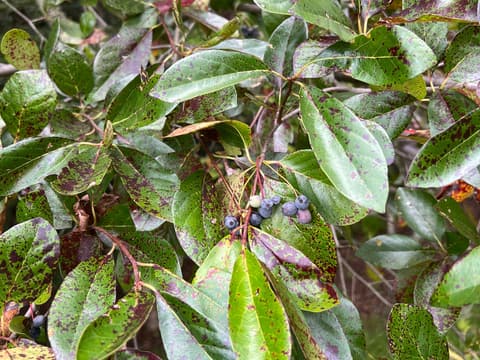
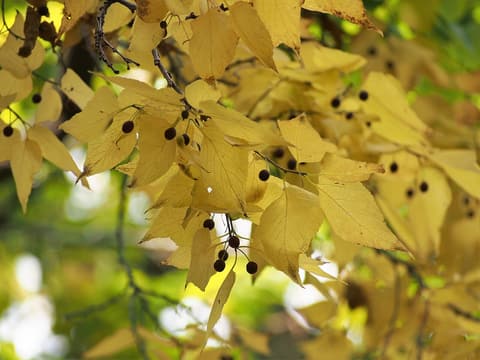
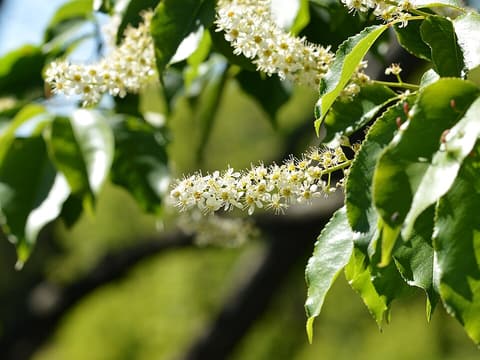
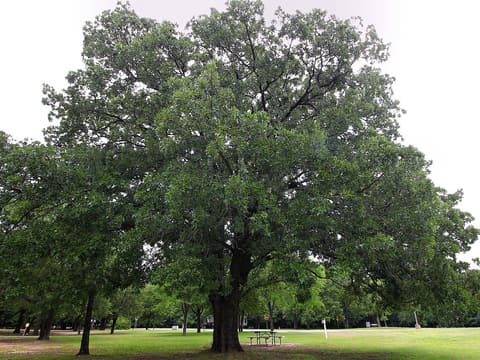
Under its canopy: Blackhaw Viburnum, Downy Arrowwood and Gray Dogwood.
More like this