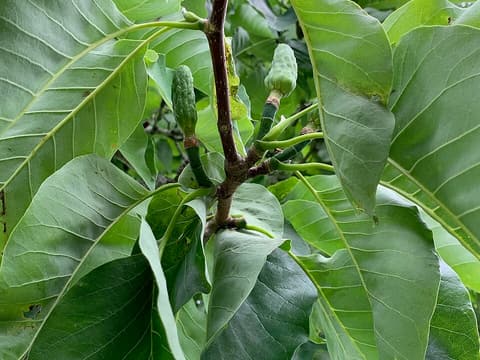
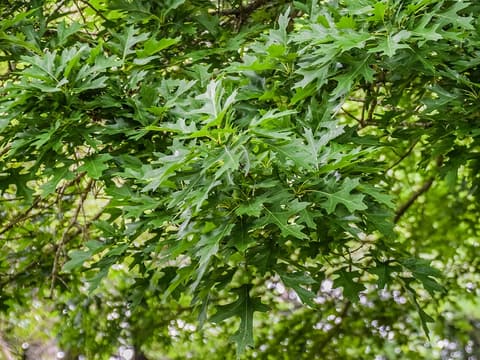
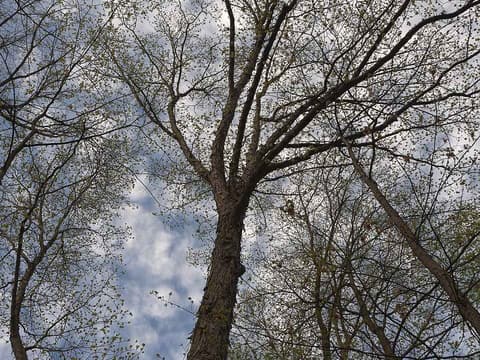
Photo: Blue Whale Trees
Bald Cypress
Scientific name: Taxodium distichum
Also called swamp cypress.
The swamp conifer that also thrives on dry lawns, with feathery foliage that turns rust-orange in fall.
Be first when bald cypress is priced
Saplings ship bare-root, usually 12 to 18 inches tall, in the dormant season, and their height and age are stated here with the price, once available.
We grow it as saplings and seed. One email when it is listed with prices, and nothing else. Or ask, and we reply with what is ready now. Live plants ship February to May and October to November.
Limited timeSign up now and get 10% off when it is ready.
Share: copy link
Bald Cypress at a glance
Tolerates wet soil, Fall color, Drought tolerant, Winter interest, Street tree, Erosion control, Wildlife value
- Type
- Large tree
- Mature height
- 50–80 ft
- USDA zones
- 4–10
- Growth rate
- Medium
- Flowers
- March to April
- Fruit
- Cones, October to December
- First crop
- 12 to 15 years
- Mature spread
- 30 ft
- Sun
- Full
- Soil moisture
- Dry, Average, Wet
- Grows wild in
- Stream banks, swamps and wet flats
- Native range
- 20 states, north to New Jersey, south to Florida and west to Texas Also recorded, not native, in New York, Ohio and Pennsylvania. See what is native in your state
List all 20
Alabama, Arkansas, Delaware, Florida, Georgia, Illinois, Indiana, Kentucky, Louisiana, Maryland, Mississippi, Missouri, New Jersey, North Carolina, Oklahoma, South Carolina, Tennessee, Texas, Virginia and West Virginia
Bald cypress is the longest-lived tree in eastern North America, with cross-dated trees over 2,600 years old in North Carolina. It grows in standing water but is equally at home on an ordinary well-drained lawn, where it rarely produces knees. Hardy far north of its native range and widely planted across the Midwest and Northeast. Deciduous, so it lets winter sun through. Cities such as Charlotte, Dallas and Tampa have planted it along their streets. Ideal for a pond edge or the low spot that floods every spring.
Size, growth and what to expect
Bald cypress grows about a foot and a half a year on good ground, judging by one plantation whose tallest trees averaged 69 feet at 41 years. That is the medium rate our growth estimator assumes for it in youth on an average site. In a landscape it reaches 50 to 80 feet with a crown 20 to 30 feet wide, and old trunks run 3 to 6 feet through.
Some seed comes every year and a good crop every 3 to 5 years, in round cones up to 1.4 inches across, ripe from October to December. Wood ducks, wild turkeys and squirrels eat the seed, and old trees hold the nests of bald eagles and ospreys. It is very long-lived, and trees of 400 to 600 years were once common. Knees rise beside flooded trees, to 12 feet in places.
It grows wild from southern Delaware to southern Florida along the coasts and up the Mississippi valley to southern Illinois.
How to grow Bald Cypress
Bald cypress grows in full sun, and it is as happy on a dry lawn as in a flooded swamp. What it dislikes is high pH; on limestone soils the needles turn yellow. This is a tall, narrow tree with a flared base, so plant it 25 feet from buildings and out from under wires. Set trees 20 to 30 feet apart.
Plant bald cypress as a dormant bare-root sapling between fall and early spring. Dig a wide hole no deeper than the roots, set the root flare at grade, and refill with plain soil. Mulch a ring three inches deep, kept away from the trunk, and stake only if the tree leans. Sow seed in fall a quarter to half an inch deep on a bed kept constantly moist. Mulch the bed with leaves over winter.
Water once a week through the first summer, more on sandy ground. Deer rub and browse young cypress where pressure is high, and rabbits nip the leader, so a tree tube for the first three years is wise. Leave the central leader alone; it needs no pruning.
Male and female cones grow on the same tree and the wind carries the pollen, so one tree bears seed alone. Knees appear only on wet or saturated ground. Expect a foot or two of growth a year, and rust-orange foliage before the needles drop each fall.
Heights and zones are typical ranges for the species in cultivation; local conditions and seed source shift them.
Sources (15)
- USDA Forest Service, Silvics of North America: baldcypress
- The Morton Arboretum: bald cypress
- NC State Extension Gardener Plant Toolbox: Taxodium distichum
- USDA Forest Service, Woody Plant Seed Manual: Taxodium chapter
- UF/IFAS Extension ENH-778/ST620, Taxodium distichum: Baldcypress, Gilman, Hilbert, Watson, Klein, Koeser and McLean, revised 2018
- Eastern OLDLIST of maximum tree ages (Pederson), Virginia Tech Dendrology: Taxodium distichum
- USDA Fire Effects Information System: Taxodium ascendens, T. distichum
- USDA NRCS Plant Guide: bald cypress, Taxodium distichum
- Lady Bird Johnson Wildflower Center: Taxodium distichum
- Virginia Tech Dendrology: baldcypress, Taxodium distichum
- Flora of North America, vol. 2: Taxodium distichum
- Trees and Shrubs Online: Taxodium distichum
- USDA NRCS PLANTS Database: Taxodium distichum
- USDA Forest Service, Silvics of North America: Tamarack, Johnston 1990
- New Jersey Department of Environmental Protection, New Jersey Natural Heritage Program: Taxodium distichum Rare Plant Profile, Dodds 2022
Plan the planting
Check your site for it What to plant with it How big, how fast How much to water How to sow it How many for a crop When it flowers and fruits When to plant it where you live How far from the house and wires How old is yours Moving one you already have
Read before planting
- Ten planting mistakes that quietly kill trees
- Transplanting young trees: timing, water and protection
- Protecting young trees from voles, rabbits, deer and squirrels
- Is my bald cypress dead? The conifers that drop every needle in fall, and when brown means trouble
- How floodplain trees survive high water
- Six trees not to plant near a house, and what to plant instead
Other cypresses (Taxodium) we grow: Pond Cypress.
Grows in the same conditions
Plants that share its sun and soil
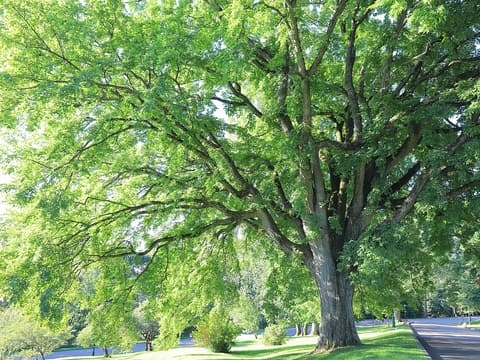
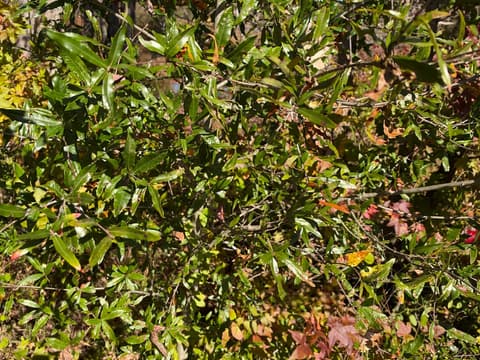
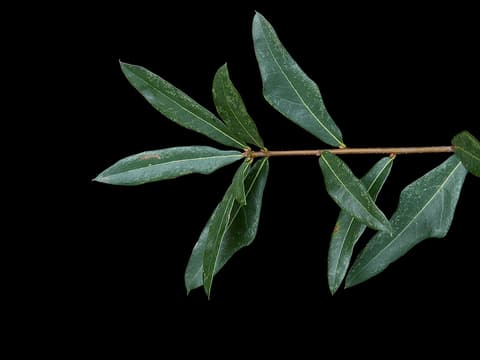
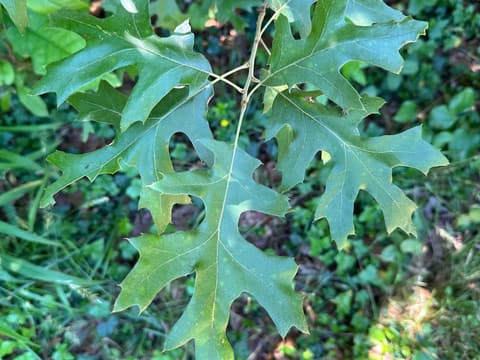
Under its canopy: Needle Palm, Dwarf Palmetto and Pinxterbloom Azalea.
More like this