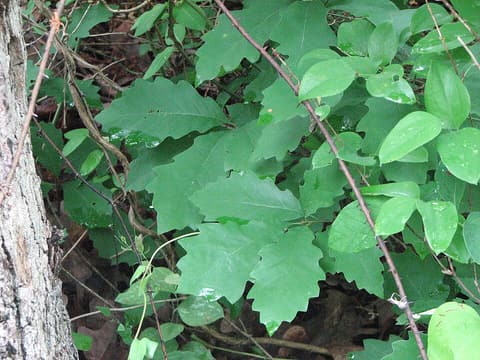
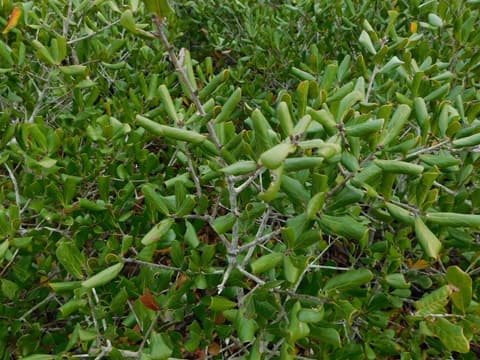
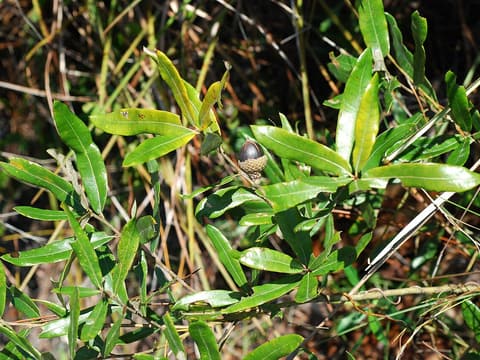
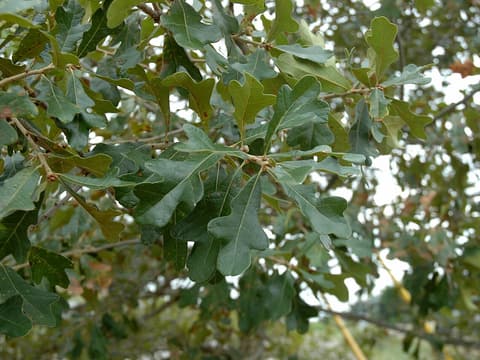
Photo: Richtid, CC BY-SA 3.0, cropped · Wikimedia Commons
Bear Oak (Scrub Oak)
Scientific name: Quercus ilicifolia
Also called scrub oak.
The scrub oak of pine barrens and ridgetops: tough, fire-adapted and a powerhouse host for moths and butterflies.
Be first when bear oak is priced
Saplings ship bare-root, usually 12 to 18 inches tall, in the dormant season, and their height and age are stated here with the price, once available.
We grow it as saplings and acorns. One email when it is listed with prices, and nothing else. Or ask, and we reply with what is ready now. Live plants ship February to May and October to November.
Limited timeSign up now and get 10% off when it is ready.
Share: copy link
Bear Oak at a glance
- Type
- Shrub
- Mature height
- 6–20 ft
- USDA zones
- 4–8
- Growth rate
- Slow
- Flowers
- April to June
- Fruit
- Acorns, August to October
- First crop
- 3 years from sprouts (in New Jersey; acorns take two seasons to ripen)
- Mature spread
- 20 ft
- Sun
- Full
- Soil moisture
- Dry
- Grows wild in
- Sandy barrens and dry uplands
- Native range
- 15 states, north to Maine, south to North Carolina and west to Kentucky See what is native in your state
List all 15
Connecticut, Delaware, Kentucky, Maine, Maryland, Massachusetts, New Hampshire, New Jersey, New York, North Carolina, Pennsylvania, Rhode Island, Vermont, Virginia and West Virginia
Bear oak ranges from Maine to the mountains of North Carolina on the poorest sands and rock. It resprouts from the root crown after fire or cutting, produces heavy acorn crops on a two-year cycle, and supports an outsized number of caterpillar species for such a small plant. Use it where nothing else will grow, or as a dense wildlife thicket. Good for a barrens restoration or a butterfly host planting on dry sand.
Size, growth and what to expect
Bear oak seedlings in one study stood 16 inches after their first season and only 16 to 23 inches three years after planting. That is under the foot a year our growth estimator models for a slow grower. In a yard expect a shrub of 6 to 20 feet, though wild stems run 3 to 30 feet tall. Each stem lives 20 to 30 years, while the root system lives on and sends up new ones.
Acorns take two seasons to ripen, and the first on New Jersey sprouts came at 3 years. The acorns are egg-shaped, about half an inch to three quarters long, under a saucer cup covering half the nut. Bears, deer, wild turkeys, grouse, jays and squirrels eat them, and the name reportedly comes from bears being the only takers of the bitter acorns. It flowers from April to June, and the acorns ripen from August in the Carolinas to early October around New York.
It grows wild from southern Maine and Ontario south through New York and New Jersey to Pennsylvania and Maryland, and down the mountains through West Virginia and Virginia to western North Carolina. In shade it stops flowering.
How to grow Bear Oak
Bear oak is a plant for the poorest ground you have: sand, gravel, thin soil over rock, in full sun. Because it spreads into a thicket, it goes 8 to 10 feet apart for cover and 10 feet from buildings. It does not want shade, rich soil or wet feet.
Like all oaks it grows a taproot early, so plant it young. Bare-root saplings go in while dormant; dig a hole twice the width of the roots and as deep as the taproot, set the root flare at grade, and backfill with unamended soil. Mulch a ring two inches deep, clear of the stem. Acorns are sown the fall they ripen, an inch deep, under hardware cloth against mice, squirrels and jays.
Water once a week through the first summer, then leave it alone. Deer and rabbits browse young oaks, so use a tube or cage for two or three years.
Bear oak is wind pollinated and will not set acorns from its own pollen, so plant two or more seedlings. Bear oak belongs to the red oak group, so it can catch oak wilt where that disease occurs. Prune only in the dormant season to avoid the beetles that spread it. Acorns take two years to mature and come in heavy crops every other year.
Heights and zones are typical ranges for the species in cultivation; local conditions and seed source shift them.
Sources (11)
- USDA Fire Effects Information System: Quercus ilicifolia
- Lady Bird Johnson Wildflower Center: Quercus ilicifolia
- USDA Forest Service, Woody Plant Seed Manual: Quercus chapter
- Virginia Tech Dendrology: bear oak, Quercus ilicifolia
- NatureServe Explorer: Quercus ilicifolia
- Flora of North America, vol. 3: Quercus ilicifolia
- Go Botany (Native Plant Trust): Quercus ilicifolia, scrub oak
- Trees and Shrubs Online: Quercus ilicifolia
- The Dawes Arboretum, Arboretum Explorer: Quercus ilicifolia, bear oak, scrub oak
- Jersey-Friendly Yards: Quercus ilicifolia, bear oak
- Native Plant Trust, Plant Finder: Quercus ilicifolia
Plan the planting
Check your site for it What to plant with it How big, how fast How much to water How to sow it How many for a crop When it flowers and fruits When to plant it where you live How far from the house and wires How old is yours
Read before planting
- Ten planting mistakes that quietly kill trees
- Transplanting young trees: timing, water and protection
- Protecting young trees from voles, rabbits, deer and squirrels
- Native trees and shrubs for dry, sandy soil: the plants of barrens and dunes, and how to grow them
- Native trees and shrubs for butterflies and moths: host plants first, nectar second
- Red oaks and white oaks, and where each belongs
We grow 42 other oaks (Quercus): see them all.
Grows in the same conditions
Plants that share its sun and soil
More like this