Photo: Cephas, CC BY-SA 4.0, cropped · Wikimedia Commons
Running Serviceberry
Amelanchier spicata
Also called thicket shadbush, dwarf serviceberry, dwarf shadbush, Amelanchier stolonifera.
A low serviceberry that spreads by runners into thickets on rocky ground, with white flowers in spring and purple-black fruit for birds in summer.
Be first when running serviceberry is priced
Saplings ship bare-root or in a pot, usually 12 to 18 inches tall, in the dormant season, and their height and age are stated here with the price, once available.
We grow it as saplings and seed. One email when it is listed with prices, and nothing else. Or ask, and we reply with what is ready now. Live plants ship February to May and October to November.
Limited timeSign up now and get 10% off when it is ready.
Share: copy link
Running Serviceberry at a glance
- Type
- Shrub
- Mature height
- 1–6 ft
- USDA zones
- 4–8
- Growth rate
- Medium
- Flowers
- April to June
- Fruit
- Berries, July to August
- First crop
- 2 to 4 years
- Mature spread
- 5 ft
- Sun
- Full, Part
- Soil moisture
- Dry, Average
- Grows wild in
- Rocky ground, dry uplands, sandy barrens, old fields and edges
- Native range
- 26 states, north and west to North Dakota and south to Georgia Also recorded, not native, in Missouri, South Dakota and the District of Columbia. See what is native in your state
List all 26
Alabama, Connecticut, Georgia, Illinois, Indiana, Iowa, Kentucky, Maine, Maryland, Massachusetts, Michigan, Minnesota, New Hampshire, New Jersey, New York, North Carolina, North Dakota, Ohio, Pennsylvania, Rhode Island, South Carolina, Tennessee, Vermont, Virginia, West Virginia and Wisconsin
Running serviceberry is a low serviceberry of rocky hilltops, ledges, open woods and fields that spreads by underground runners into thickets. Some botanists fold two other low serviceberries into it, one of the Northeast and one of the southern mountains, while others keep the three apart. Native Americans ate the fruit of most serviceberries, and this one feeds birds as well. Kentucky lists it as endangered, and NatureServe ranks it critically imperiled in Tennessee and imperiled in Maryland and South Carolina. Use it as a low hedge or a thicket on a dry, rocky or sandy bank in sun.
Size, growth and what to expect
No source rates its growth, so our growth estimator treats it as a medium grower, like our Nantucket serviceberry, about a foot a year. It makes a low shrub 1 to 4 feet tall, now and then 6, whose upright stems rise from underground runners into scattered colonies and dense thickets.
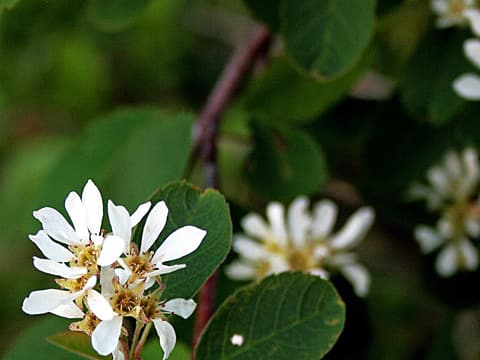
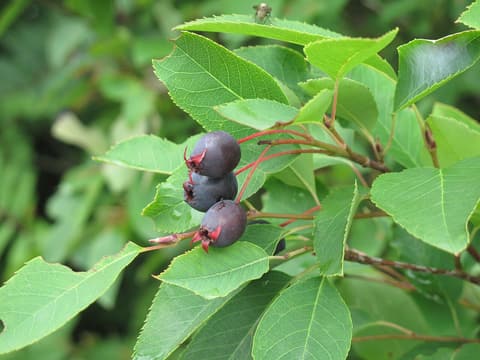
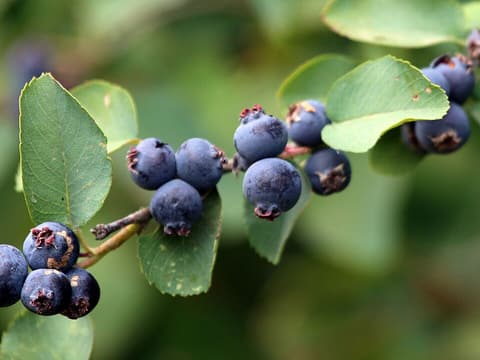
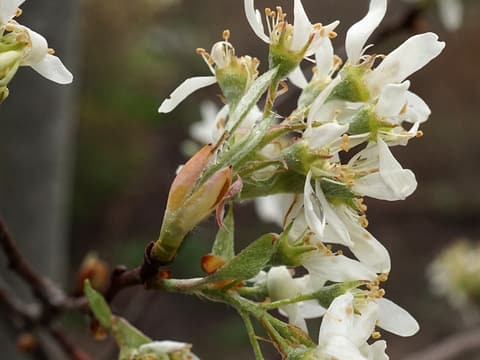
Its rounded, finely toothed leaves, about an inch and a half long, are woolly underneath at flowering. White flowers open in clusters of six to nine from April into June, as the leaves unfold. The fruits ripen in July and August, red and then purple-black, a third to half an inch across. Birds take them as they ripen, and the leaves color in fall.
It grows wild from Newfoundland west to Minnesota and North Dakota, south to Iowa, Illinois, Ohio and New Jersey, and in the mountains to the Carolinas, Georgia and Alabama. Its home is rocky summits and cliffs, open woods, clearings, shores, fields and roadsides, on acid soil. Records from Missouri, South Dakota and the District of Columbia lie outside that range.
How to grow Running Serviceberry
Running serviceberry grows in full sun or part shade. It takes dry to average soil and wants it acid, whether sandy, gravelly or peaty, and once rooted it stands drought well. Set plants 4 feet apart, and keep them 3 feet from a wall or a path, because the runners spread outward. At its size it can go within 15 feet of overhead wires.
Saplings ship bare-root or potted. Plant them dormant, from leaf fall until bud swell, in a hole wider than the roots and no deeper. Set the crown at the soil line, put the native soil back in, and keep a thin mulch clear of the stems. Sow the cleaned seed outdoors in fall, a quarter inch deep, and keep the bed mulched. For spring, hold it damp in the refrigerator for 90 to 120 days first. Many seeds wait until the second spring to come up.
Water weekly through the first summer, then only in a long drought. Deer and other browsers eat serviceberry twigs, so guard young plants with wire for the first two or three years. Prune only to take out dead stems, and cut back runners that stray past the bed.
A lone plant may set seed without pollen from another, as many serviceberries do, but two or more seedlings from different parents make a surer crop. Birds strip the fruit as it ripens in July and August, so net a few stems if you want a handful.
Heights and zones are typical ranges for the species in cultivation; local conditions and seed source shift them.
Sources (7)
- Flora of North America, vol. 9: Amelanchier spicata
- Flora of North America, vol. 9: Amelanchier, the genus
- Lady Bird Johnson Wildflower Center: Amelanchier stolonifera
- Native Plant Trust, Go Botany: Amelanchier spicata
- USDA Forest Service, Woody Plant Seed Manual (2008), Amelanchier chapter
- NatureServe Explorer: Amelanchier spicata
- NC State Extension Gardener Plant Toolbox
Plan the planting
Check your site for it What to plant with it How big, how fast How much to water How to sow it How many for a crop When it flowers and fruits When to plant it where you live How far from the house and wires How old is yours
Read before planting
- Ten planting mistakes that quietly kill trees
- Transplanting young trees: timing, water and protection
- Protecting young trees from voles, rabbits, deer and squirrels
- How fast every tree and shrub we grow gets tall: growth rate, A to Z
- The habitat around a tree is part of the tree
- Invasive vines and shrubs are what is killing your woods
We grow 7 other serviceberries (Amelanchier): see them all.
Grows in the same conditions
Plants that share its sun and soil
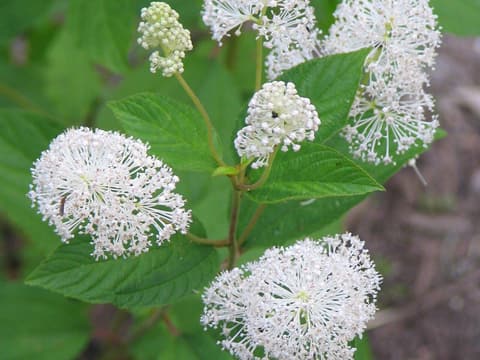
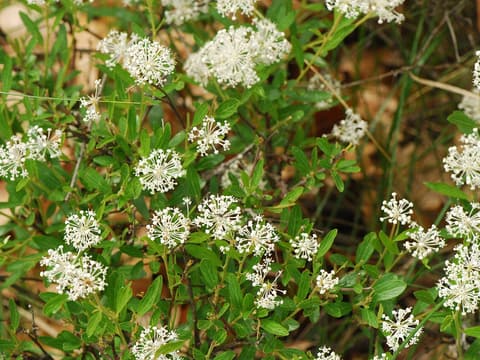
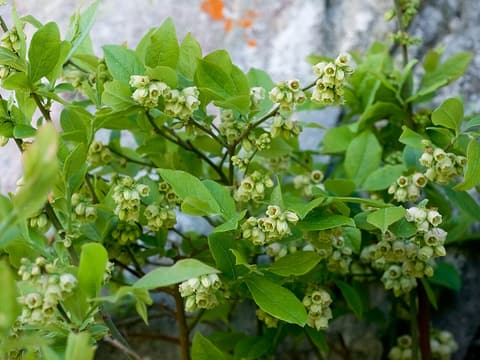
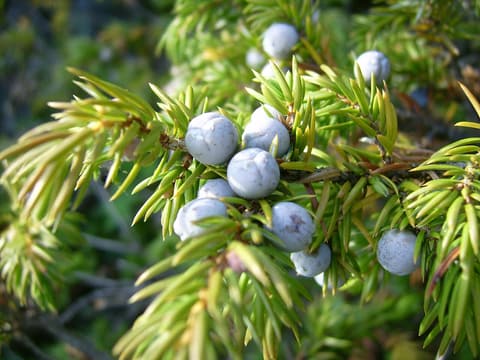
Trees to plant it under: Black Oak, Sassafras and Common Hackberry.
More like this