Photo: Jason Zhang, CC BY-SA 3.0, cropped · Wikimedia Commons
Black Chokeberry
Scientific name: Aronia melanocarpa
Also called Aronia.
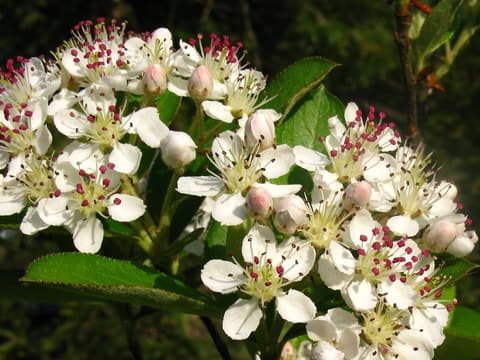
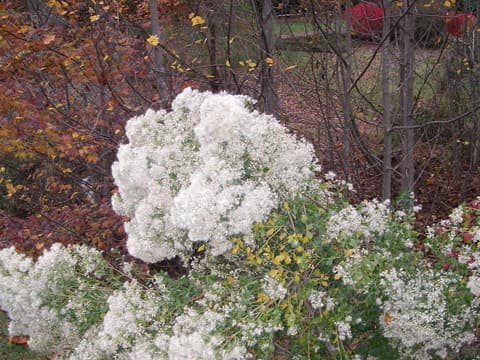
White spring flowers, glossy black antioxidant-rich berries and some of the best red fall color of any shrub.
Be first when black chokeberry is priced
Saplings ship bare-root, usually 12 to 18 inches tall, in the dormant season, and their height and age are stated here with the price, once available.
We grow it as saplings and seed. One email when it is listed with prices, and nothing else. Or ask, and we reply with what is ready now. Live plants ship February to May and October to November.
Limited timeSign up now and get 10% off when it is ready.
Share: copy link
Black Chokeberry at a glance
Showy flowers, Edible, Wildlife value, Fall color, Drought tolerant, Tolerates wet soil, Bears young, Erosion control
- Type
- Shrub
- Mature height
- 3–6 ft
- USDA zones
- 3–8
- Growth rate
- Medium
- Flowers
- May
- Fruit
- Berries, August to February
- First crop
- 2 to 3 years
- Mature spread
- 6 ft
- Sun
- Full, Part
- Soil moisture
- Dry, Average, Wet
- Grows wild in
- Dry uplands, sandy barrens, swamps and wet flats
- Native range
- 29 states and the District of Columbia, north and west to Minnesota and south to Georgia See what is native in your state
List all 30
Alabama, Arkansas, Connecticut, Delaware, Georgia, Illinois, Indiana, Iowa, Kentucky, Maine, Maryland, Massachusetts, Michigan, Minnesota, Mississippi, Missouri, New Hampshire, New Jersey, New York, North Carolina, Ohio, Pennsylvania, Rhode Island, South Carolina, Tennessee, Vermont, Virginia, West Virginia, Wisconsin and the District of Columbia
Aronia grows in bogs and on dry rocky ridges alike, in sun or light shade, from zone 3 south. The astringent berries are a commercial superfruit for juice and jam and hang on for late-winter birds. Suckers slowly into a mound; superb in a rain garden or a low hedge. It also serves to stabilize banks and control erosion. Good for a berry row in the kitchen garden or a mass planting on a dry bank.
Size, growth and what to expect
In a yard black chokeberry makes a mounded, suckering shrub 3 to 6 feet tall and wide, though it can reach 8 feet. It grows at a medium pace, roughly a foot a year in youth on an average site by our growth estimator's model for a shrub its size.
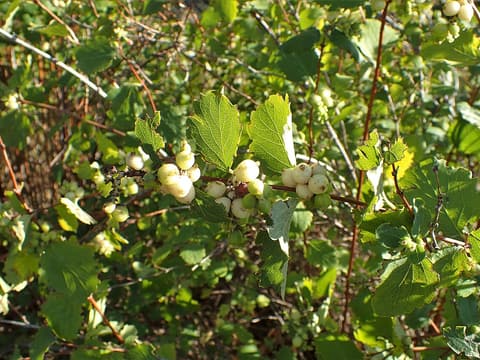
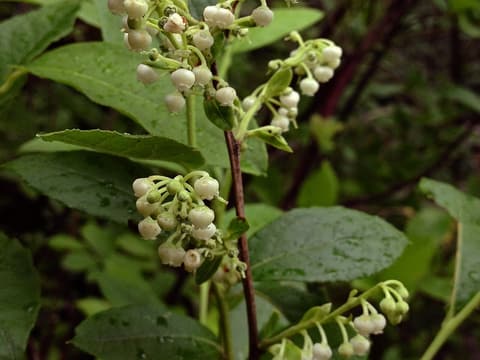
Plants begin to bear in their second or third year, and the University of Wisconsin puts significant yields at years four or five, averaging 15 to 20 pounds of fruit per plant. Clusters of small white flowers with pink anthers open in May. The shiny purplish black fruit, about half an inch across, ripens from late August into September, and birds usually take it in mid to late winter. Grouse and prairie chickens eat it, and deer and rabbits browse the stems. The name refers to the tart, astringent fruit.
It grows wild across the Great Lakes region and the Northeast and down the higher Appalachians, in moist woods and drier thickets on bluffs.
How to grow Black Chokeberry
Black chokeberry grows in full sun or part shade on any moisture from a dry ridge to a wet ditch. Fruit and fall color are best in sun. It suckers slowly outward and works in a rain garden or a low hedge, spaced 4 feet apart.
Plant dormant bare-root saplings in late fall or early spring. Dig a hole twice as wide as the roots and no deeper, keep the root flare at grade, and backfill with plain soil. Lay a mulch ring two or three inches deep that stops short of the stems. Clean the seed well, because seed left in the pulp germinates poorly. Sow it outdoors in fall a third of an inch deep, or keep it damp in the refrigerator for three to four months before a spring sowing.
Soak it once a week through the first summer. Rabbits clip the stems in winter and deer browse aronia in some areas, so a wire cage for the first two years is worth it. After a few years, cut the oldest stems to the ground in late winter to keep the bush productive.
A single chokeberry sets fruit without a partner. Seedlings begin bearing in their second or third year, with berries ripening in late August. The fruit is astringent fresh and better cooked. Few pests trouble it.
Heights and zones are typical ranges for the species in cultivation; local conditions and seed source shift them.
Sources (10)
- University of Wisconsin Extension, Crops and Soils: aronia berries
- USDA NRCS Plant Guide: black chokeberry, Aronia melanocarpa
- The Morton Arboretum: black chokeberry
- NC State Extension Gardener Plant Toolbox: Aronia melanocarpa
- USDA Forest Service, Woody Plant Seed Manual: Aronia chapter
- Lady Bird Johnson Wildflower Center: Aronia melanocarpa
- Virginia Tech Dendrology: black chokeberry, Aronia melanocarpa
- Flora of North America, vol. 9: Aronia melanocarpa
- Go Botany (Native Plant Trust): Aronia melanocarpa, black chokeberry
- Trees and Shrubs Online: Aronia melanocarpa
Plan the planting
Check your site for it What to plant with it How big, how fast How much to water How to sow it How many for a crop When it flowers and fruits When to plant it where you live How far from the house and wires How old is yours
Read before planting
- Ten planting mistakes that quietly kill trees
- Transplanting young trees: timing, water and protection
- Protecting young trees from voles, rabbits, deer and squirrels
- Native replacements for burning bush, barberry, privet, Bradford pear, boxwood, butterfly bush and forsythia
- Native shrubs and trees deer usually leave alone, and why the lists disagree
- The habitat around a tree is part of the tree
Other chokeberries (Aronia) we grow: Red Chokeberry.
Grows in the same conditions
Plants that share its sun and soil
Trees to plant it under: Black Gum (Tupelo), Redbay and Black Oak.
More like this